LightBlog
Affichage des articles dont le libellé est Latest from Android Central. Afficher tous les articles

lundi 27 juillet 2026

EBO Max review: The AI-powered family robot that gets smarter over time (and my cat adores)

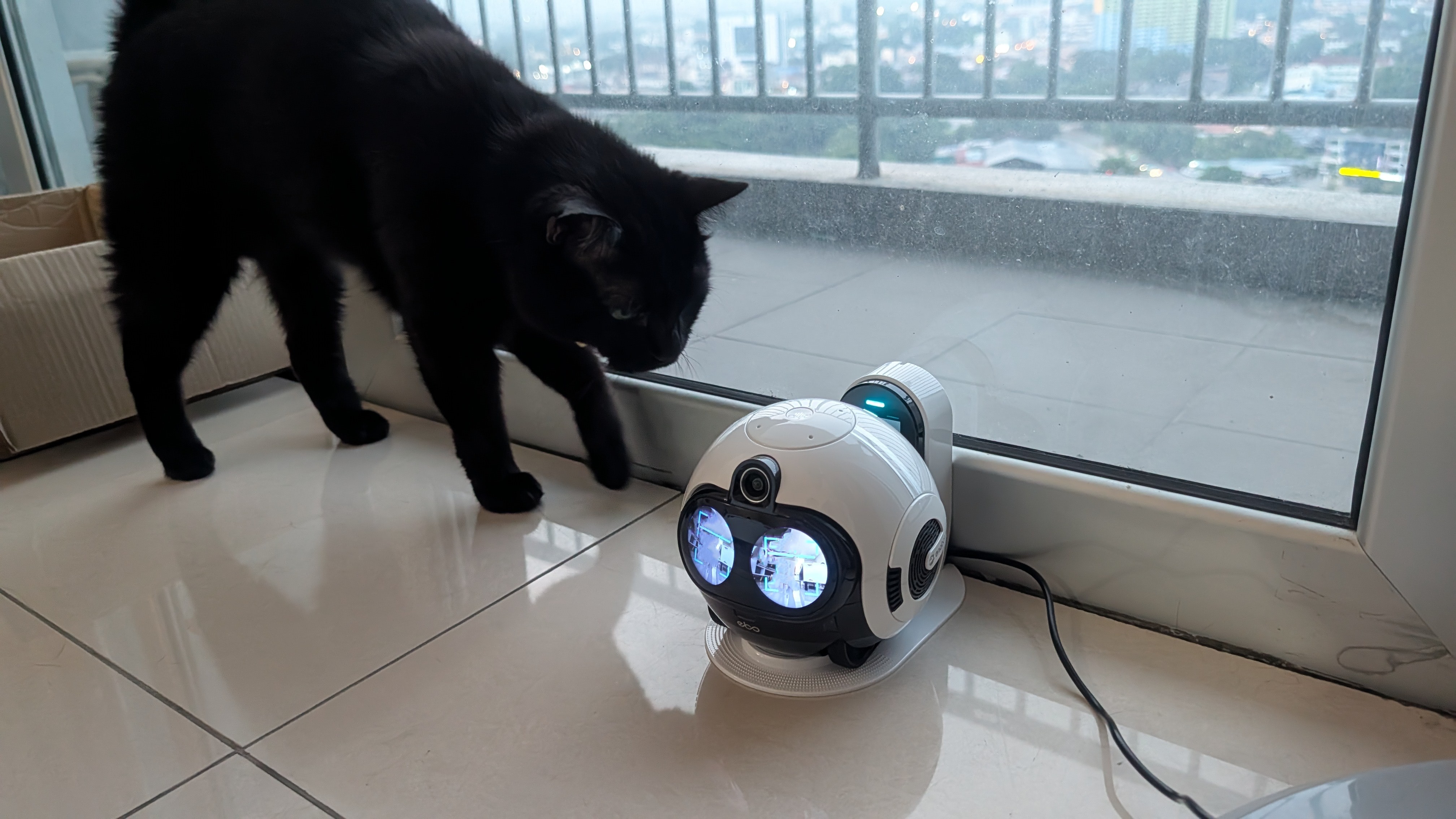
Enabot's cutesy robots on wheels are always fun contraptions, but the most perplexing thing about them is their animal magnetism. Cats can't seem to get enough of them, as witnessed not just by me but by my colleagues as well. I genuinely wonder if Enabot rubs catnip on their robots at the factory level before shipping them out.

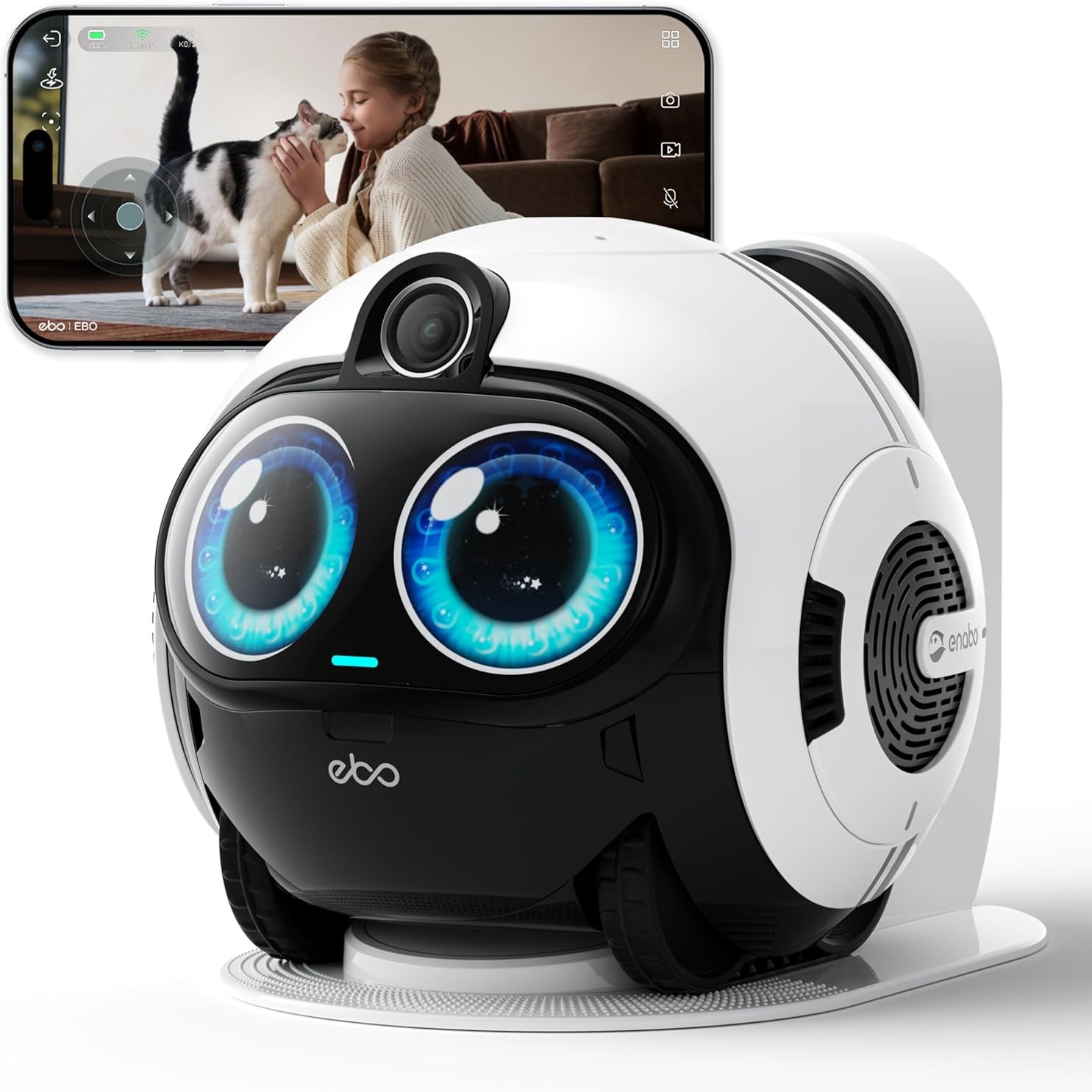
This is perfect, however, because Enabot's smart family robots are primarily advertised as pet companions, with a secondary focus on family companionship and home surveillance. It's an all-in-one security camera on wheels that monitors your beloved family members, whether two-legged or four.

The EBO Max isn't cheap
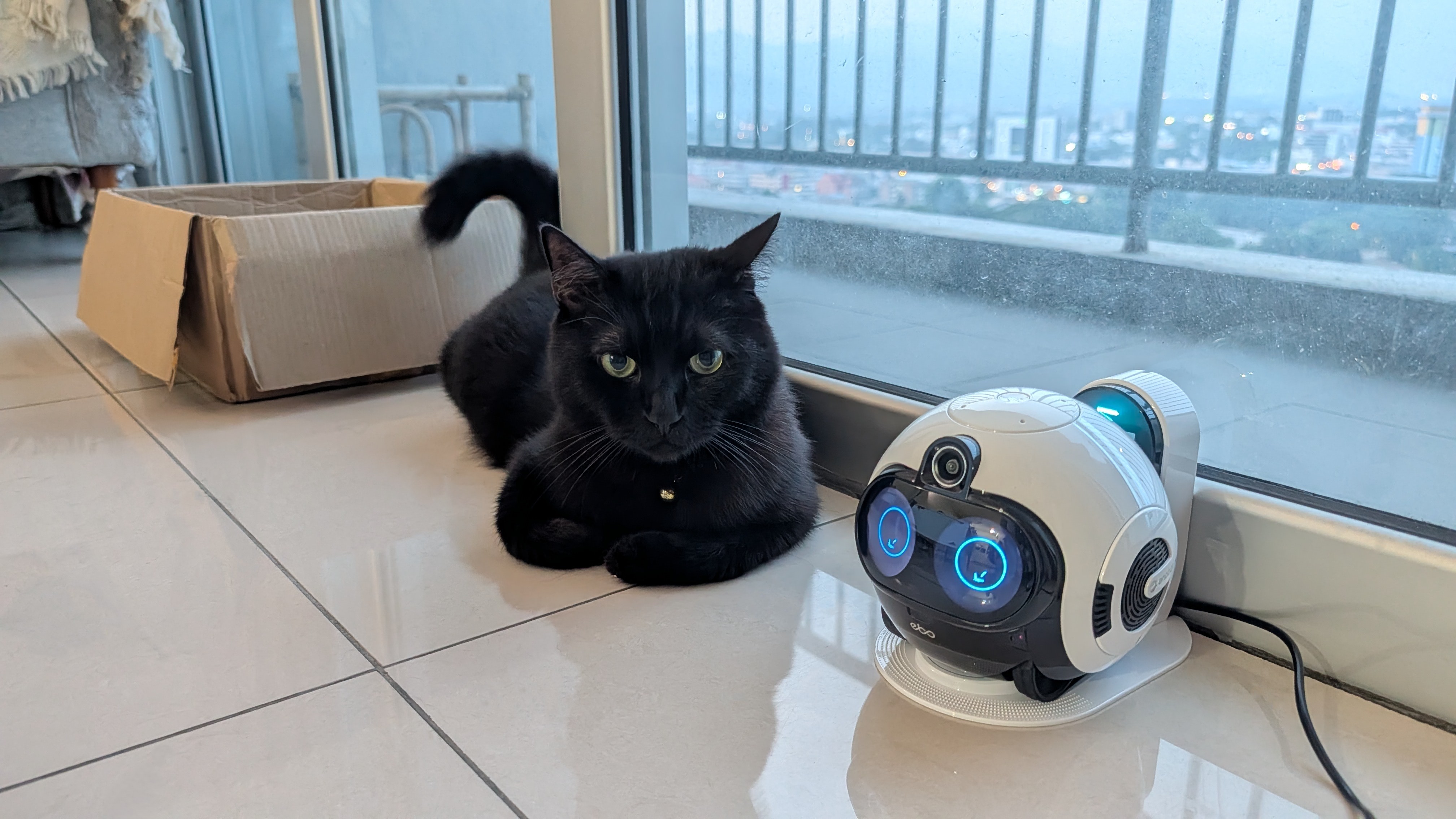
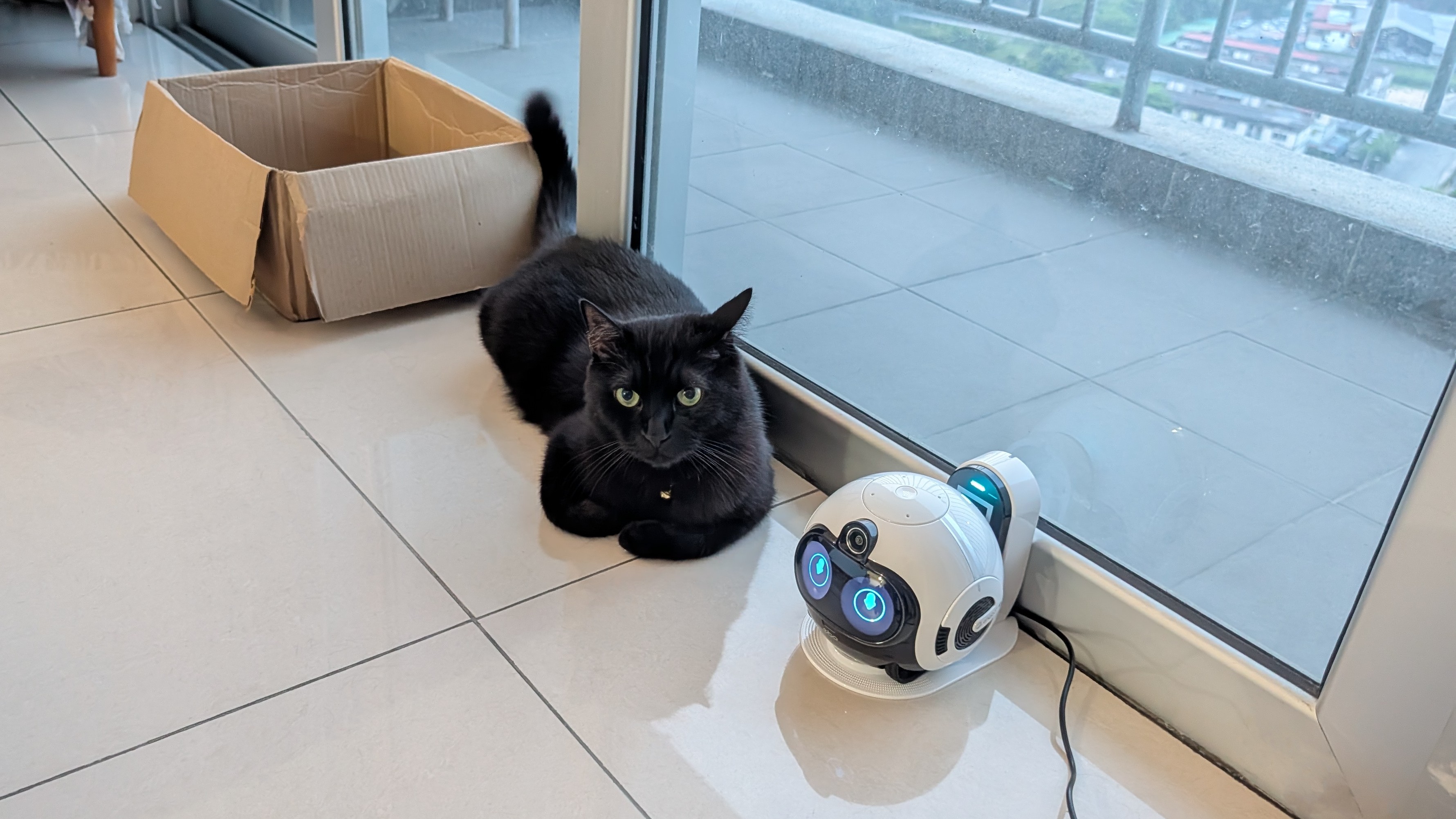
Enabot EBO Max family bot and a black cat in a house
Namerah Saud Fatmi / Android Central
Enabot EBO Max family bot and a black cat in a house
Namerah Saud Fatmi / Android Central

Enabot launched the EBO Max family bot on March 31, 2026. Priced at $599.99, it is the second most expensive such robot offered by the brand. You can also buy a EBO Max Style Pack for $29.99 that has four cosmetic add-ons, including deer antlers and rabbit ears.

The EBO Max comes with a charging dock, a 32GB SD card pre-inserted into the robot, an adapter, and a resetting pin in the box.
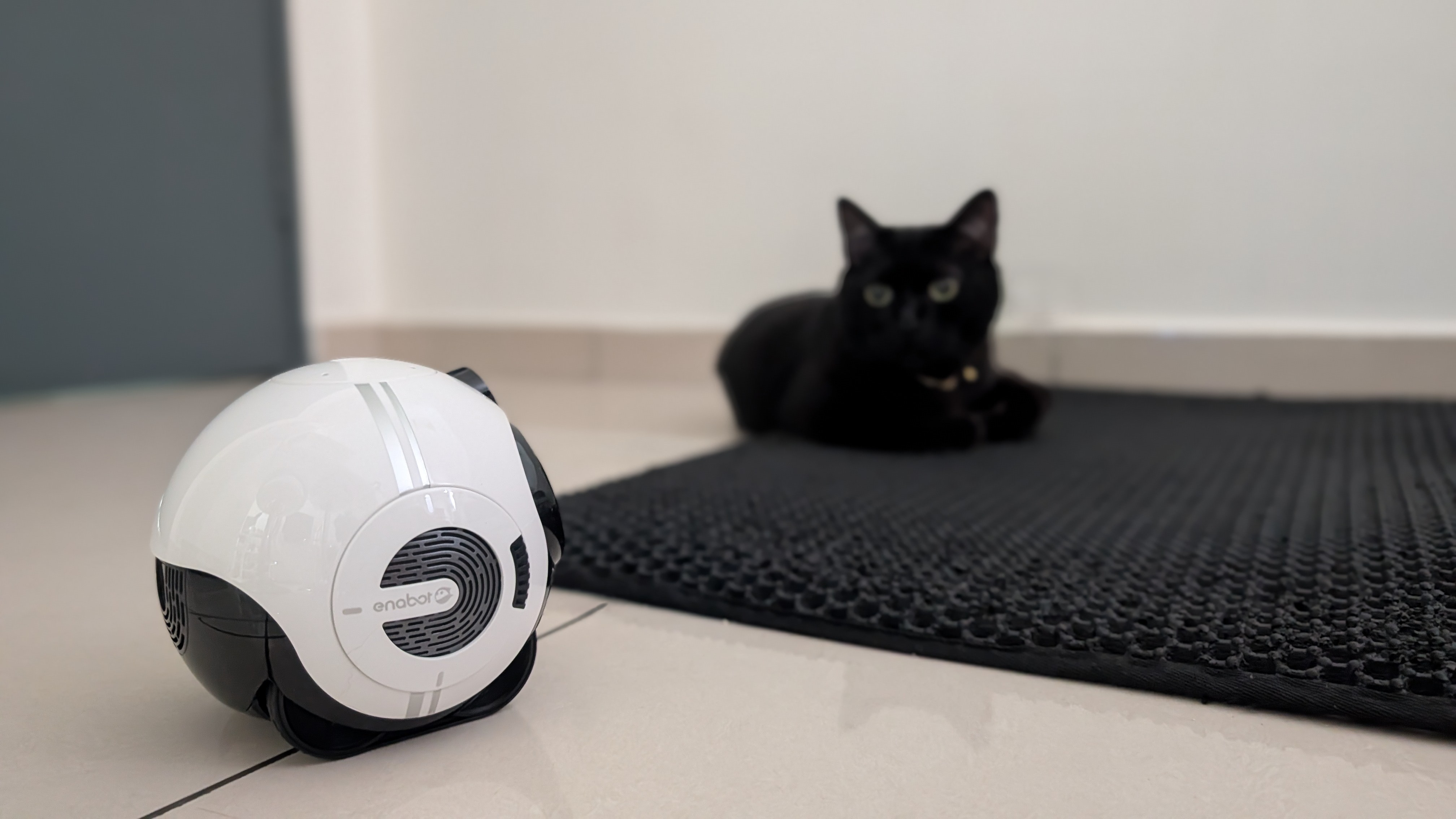
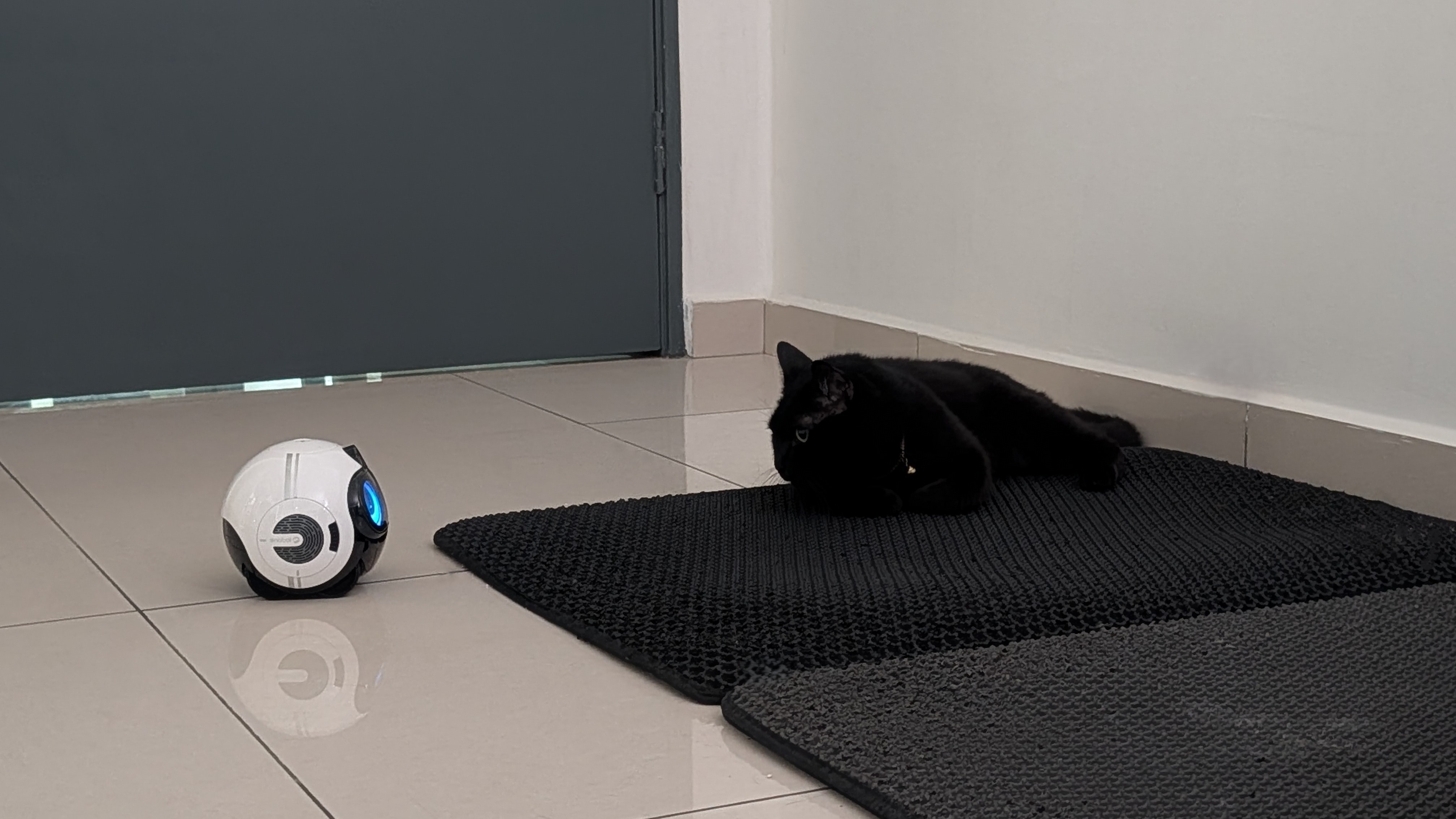
Enabot EBO Max family bot and a black cat in a house
Namerah Saud Fatmi / Android Central
Enabot EBO Max family bot and a black cat in a house
Namerah Saud Fatmi / Android Central

The EBO Max is a mid-sized robot, a lot smaller and more compact than the larger EBO X, but slightly larger than the EBO Air models. The charging dock is significantly smaller and slimmer than the EBO X and other models.

Just like other Enabot robots, you can easily take off the wheel tracks of the EBO Max for cleaning. The entire bottom unit with the wheel tracks slides off with a few clicks. This is also where the memory card slot is located.

Enabot EBO Max specs

Category

Enabot EBO Max

Camera

8MP, 4K (3840 x 2160) resolution, 131° FOV, night vision

Memory

64GB local storage (47GB available), expandable up to 256GB via memory card

Comms

Speaker, microphone

Connectivity

Wi-Fi 2.4G, 5G

Navigation

V-SLAM Navigation

Speed

20cm/s-60cm/s

Obstacle height

≤12mm

Climbing slope

≤15°

Battery and charging

2,500mAh, 4–6hrs standby/video recording, up to 3hrs continuous movement, 3-4hrs charge time

Hardware

PC+ABS, brushed gear motor, 53dB operating noise

Dimensions

129 x 127 x 117 mm, 750g

What can this robot do?

Enabot EBO Max family bot and a black cat in a house

(Image credit: Namerah Saud Fatmi / Android Central)

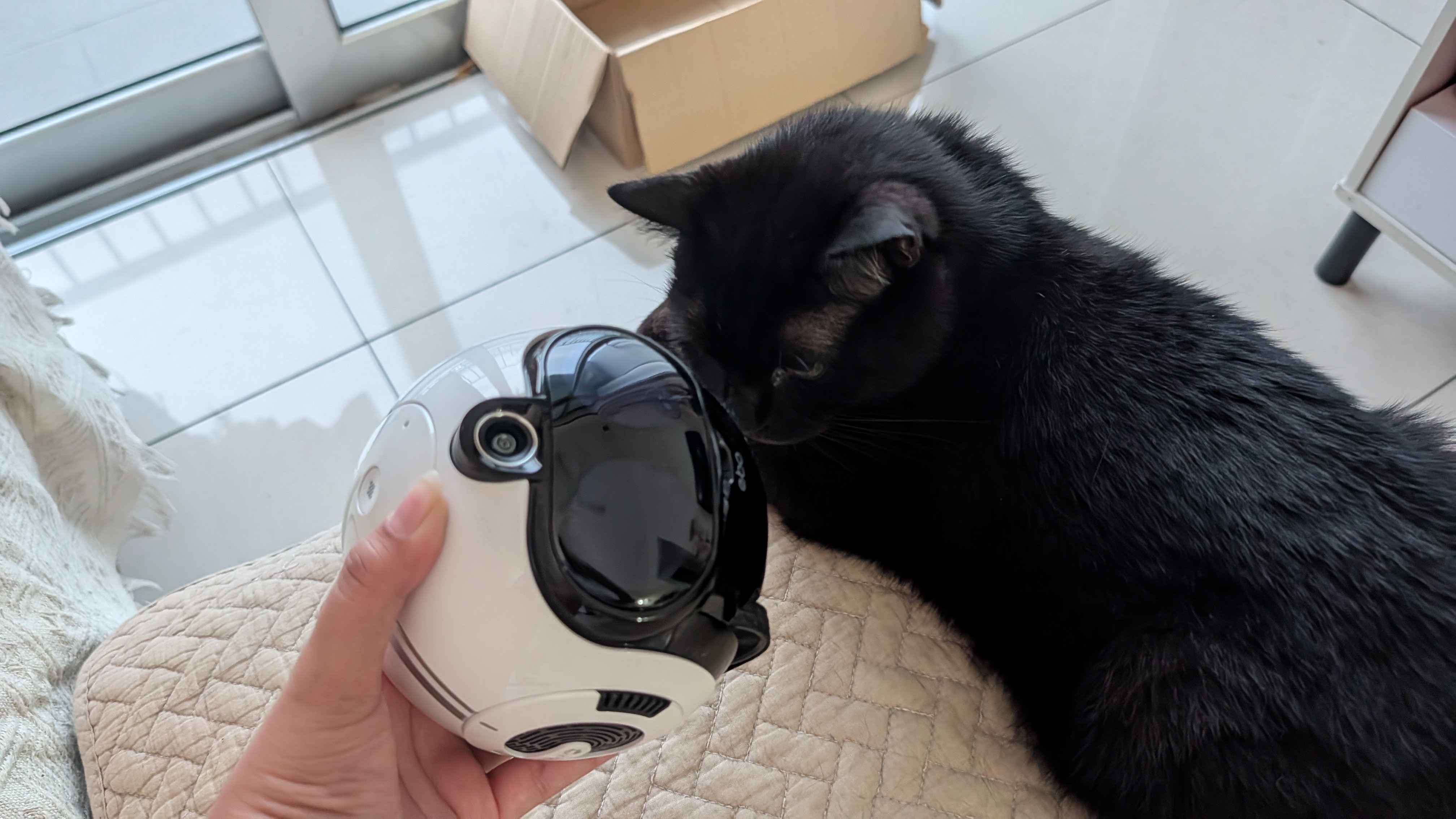
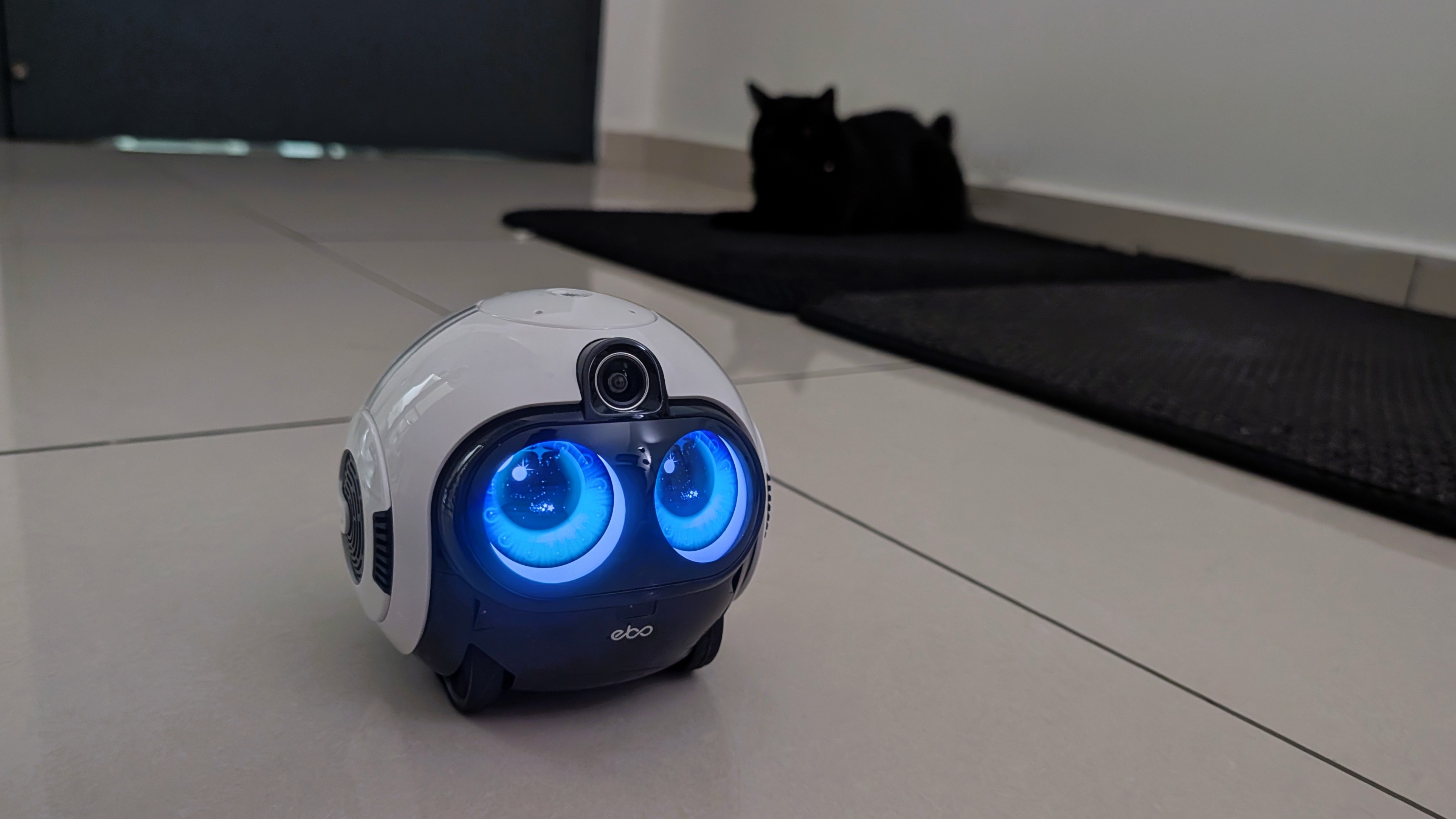
Before setting the EBO Max up, it was really important to let my cat sniff the robot to his heart's content. This helped ease him into a new element in the house, as cats tend to hate change and can be very nervous around moving objects.

Once he was happy with the smell and familiarized himself with it, I set up the EBO Max charging dock and turned it on. My cat was more curious than afraid, and he even started cuddling with the bot right away.
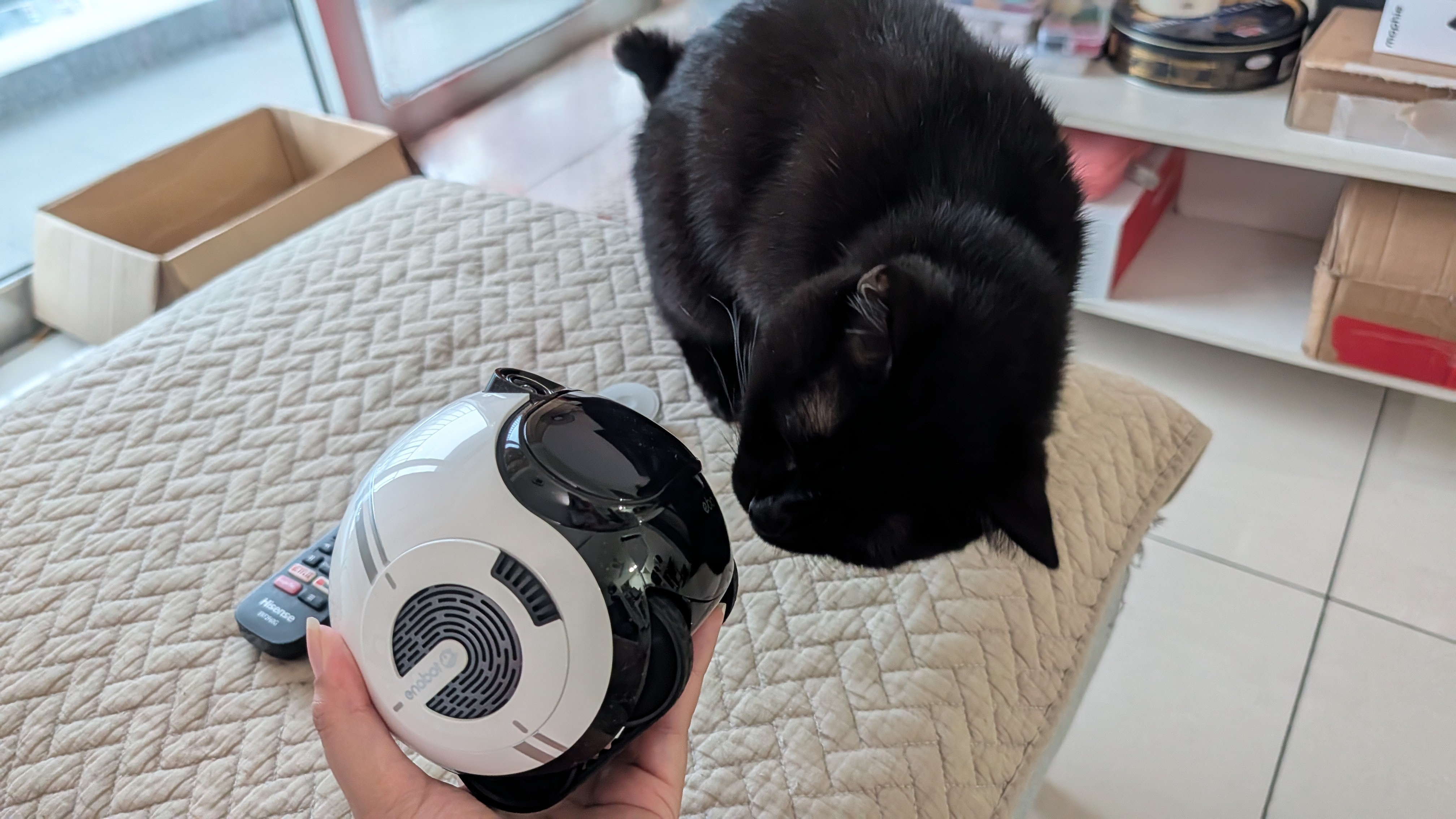
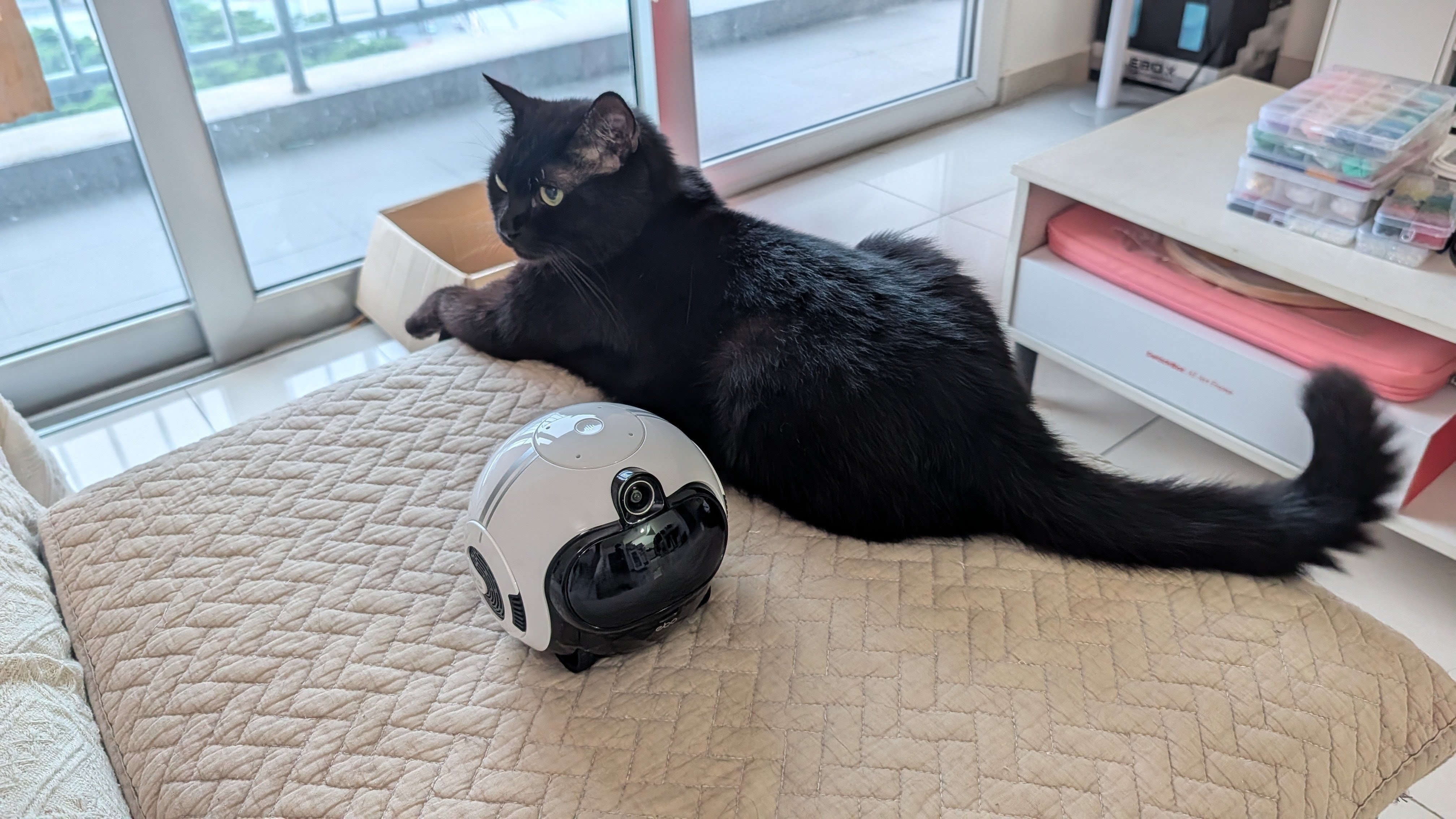
Enabot EBO Max family bot and a black cat in a house
Namerah Saud Fatmi / Android Central
Enabot EBO Max family bot and a black cat in a house
Namerah Saud Fatmi / Android Central
Enabot EBO Max family bot and a black cat in a house
Namerah Saud Fatmi / Android Central

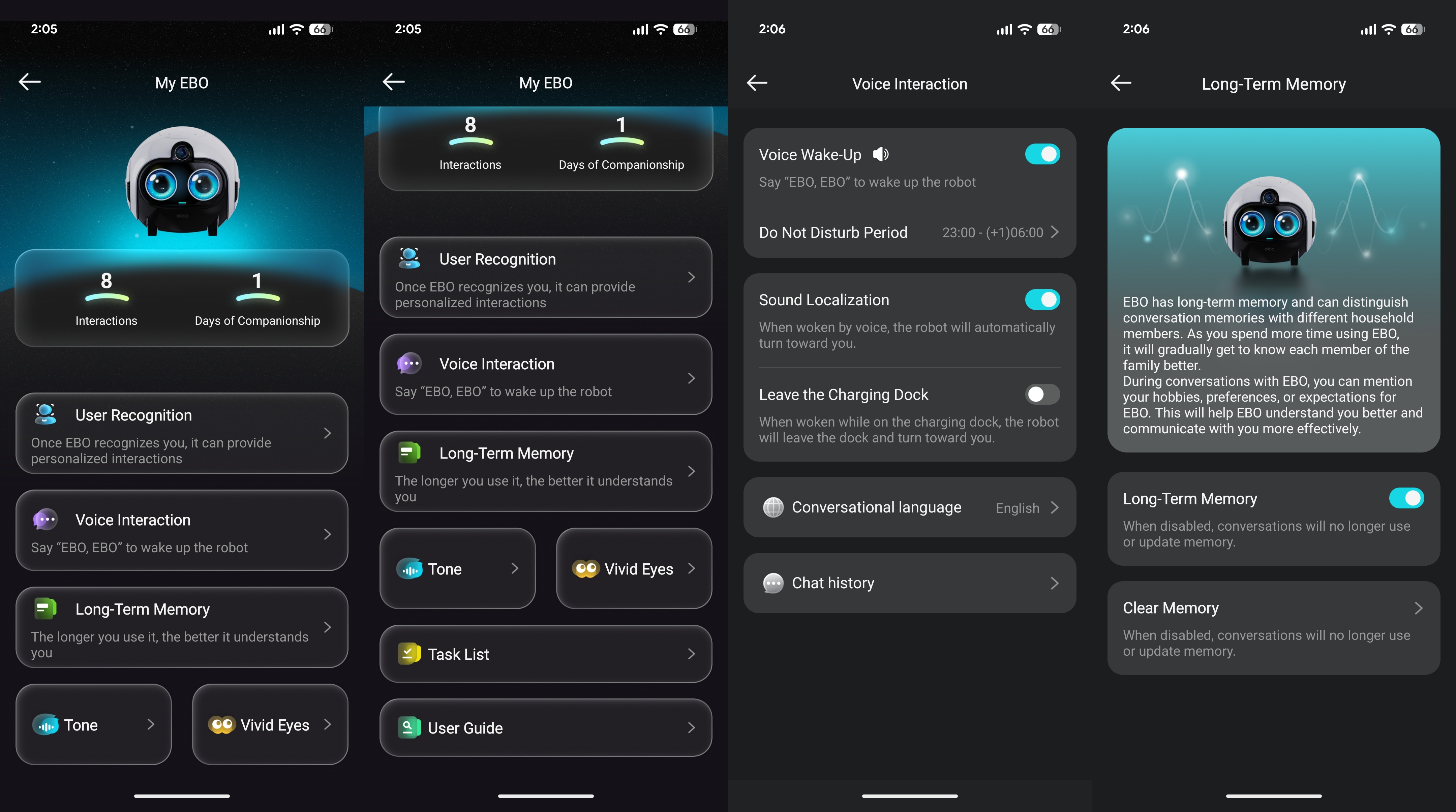
Initial setup involves the EBO HOME app, which immediately gives you a comprehensive walkthrough of the robot's capabilities. This is helpful because there's a lot to learn and explore in the app, which is the robot's main control center.

The EBO Max bot can use V-SLAM Navigation to map out your house. It can recognize family members once you've registered their faces and voiceprints, and once those are saved, you can set up voice calling settings for those members. If a fall is detected, you can select certain family members to be notified.

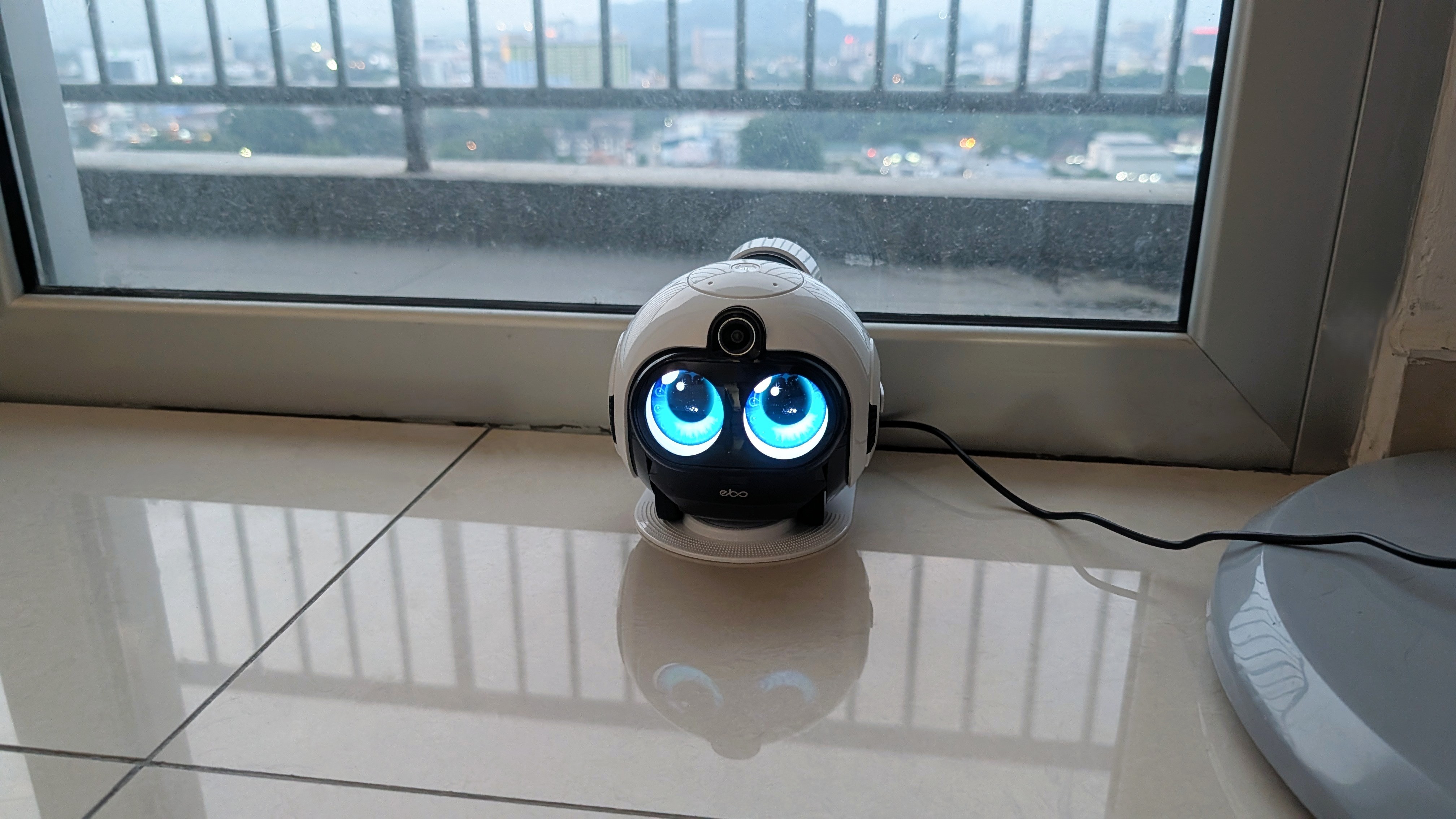
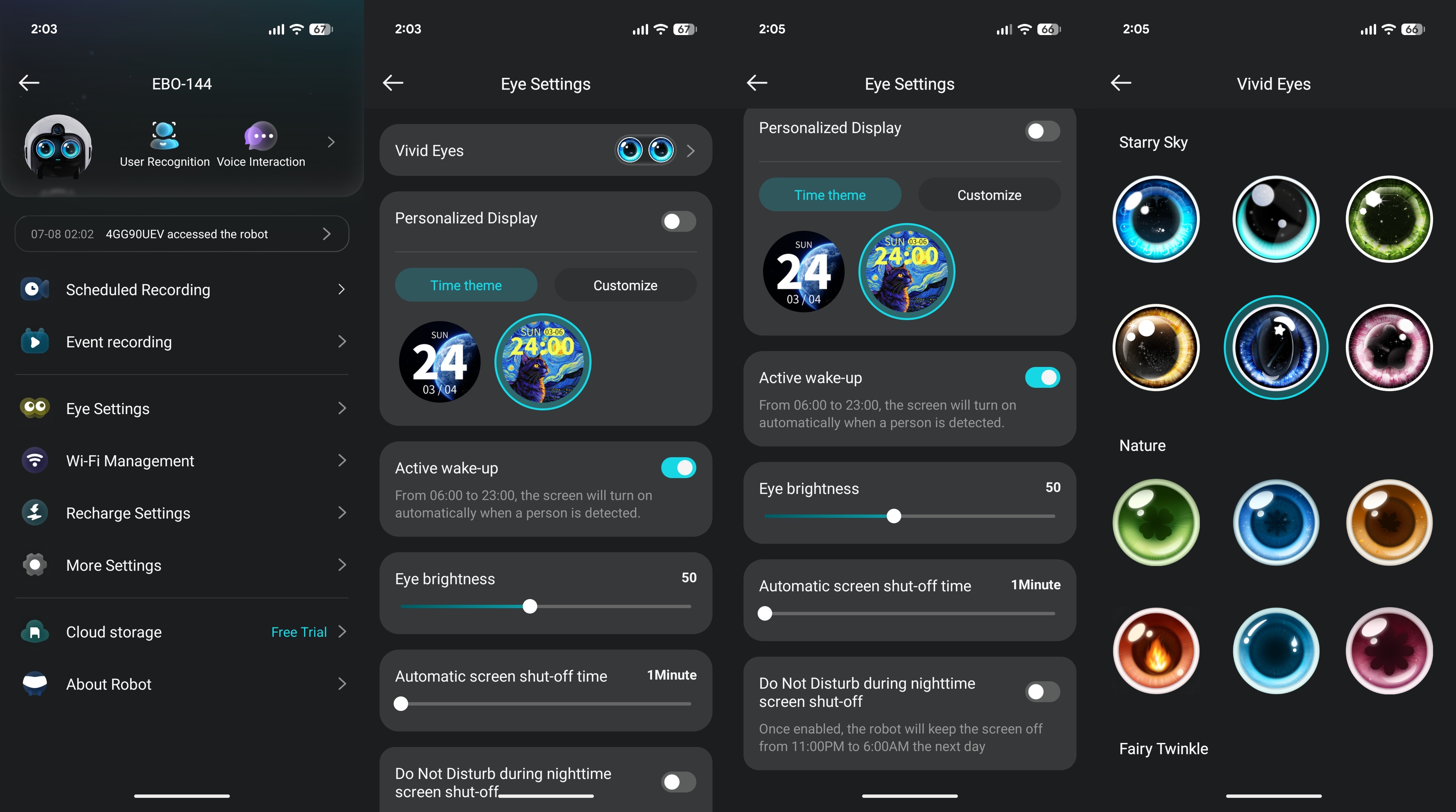
You can change the style and color of the "eyes" of the EBO Max robot, which are incredibly expressive. They follow you around, almost in a sentient manner, which can be cute and human-like — but also really creepy at 3 AM. There is a sound localization feature that makes the robot turn to you when it hears your voice. Thankfully, the bot can be scheduled to "close its eyes" during your chosen "Do Not Disturb" hours.
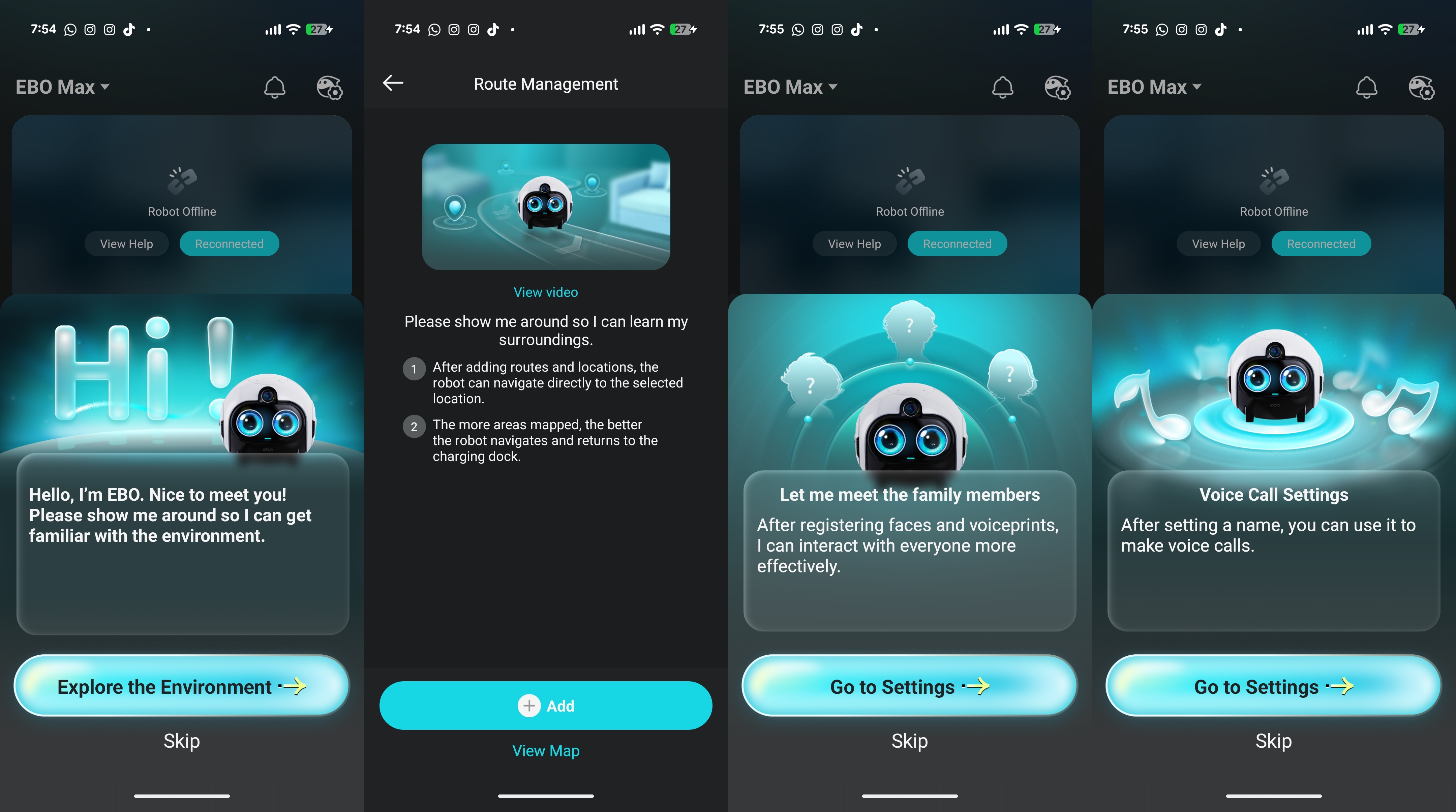
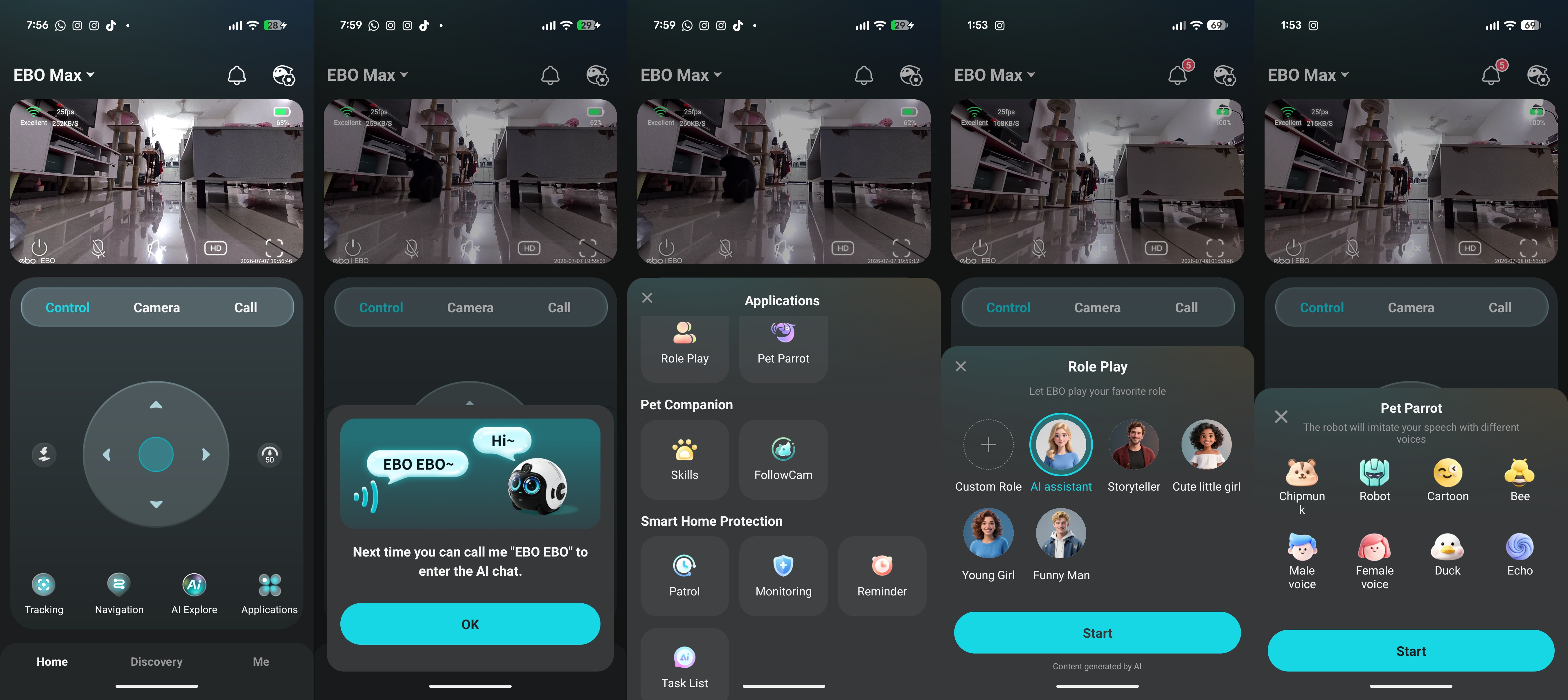
Enabot EBO Max all features in the app
Namerah Saud Fatmi / Android Central
Enabot EBO Max all features in the app
Namerah Saud Fatmi / Android Central
Enabot EBO Max all features in the app
Namerah Saud Fatmi / Android Central
Enabot EBO Max all features in the app
Namerah Saud Fatmi / Android Central
Enabot EBO Max all features in the app
Namerah Saud Fatmi / Android Central

Because the EBO Max has two-way comms, family members can even receive voice calls when fall detection is triggered. You can take this one step further with activity detection, so if no movement is detected for your selected number of days, you and your chosen family members will be notified.

The robot can be scheduled to patrol and play or monitor people and/or pets at home during your selected hours, and you can set it to smartly patrol the house on your chosen route once the house is mapped. Additionally, you can adjust event recording settings to automatically record photos and videos of interactions. When the EBO Max runs low on battery, it returns to the charging dock on its own.

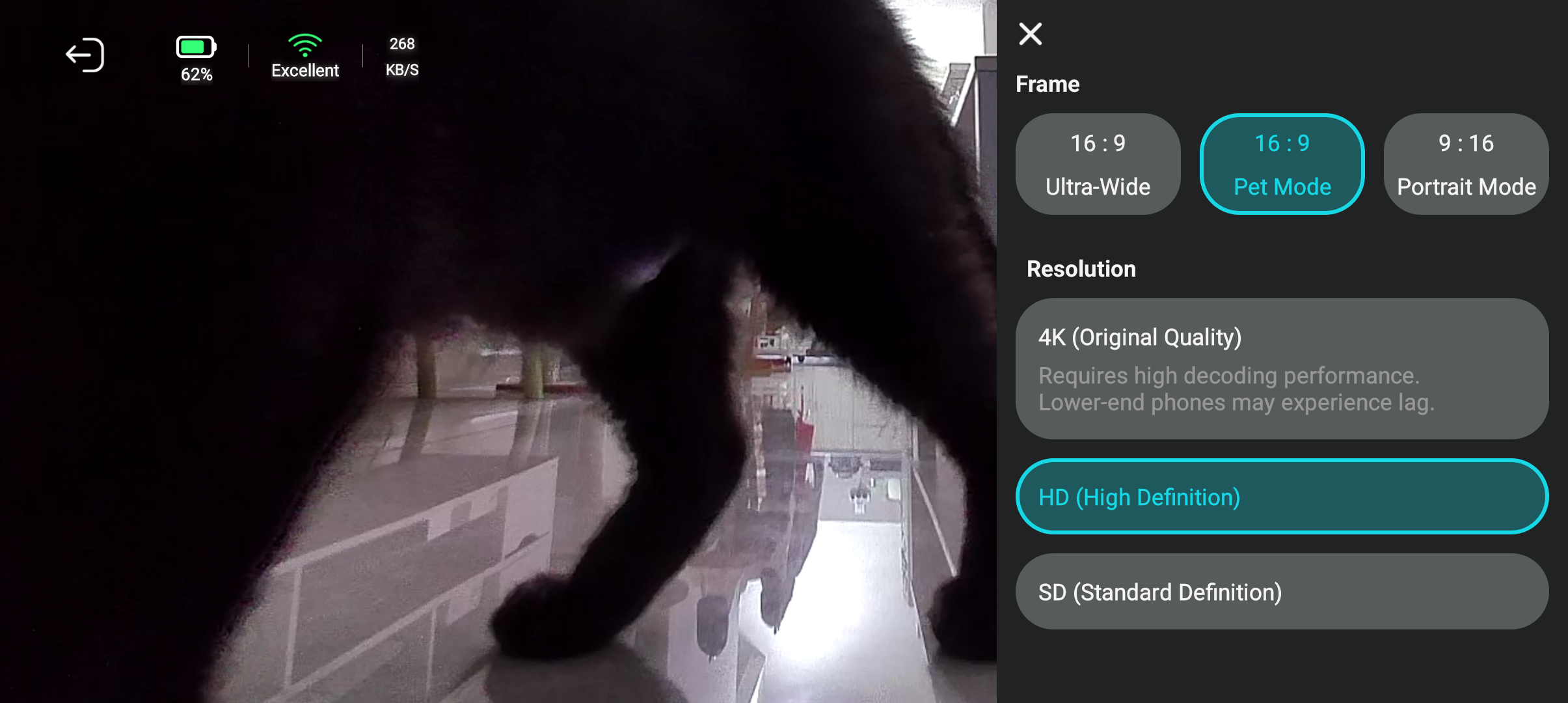
The EBO Max can be remotely controlled via the app as it has Wi-Fi. It sports an 8MP camera with a 4K resolution, a wide 131° field of view, and night vision, so the image quality is very crisp and clear in diverse lighting scenarios.
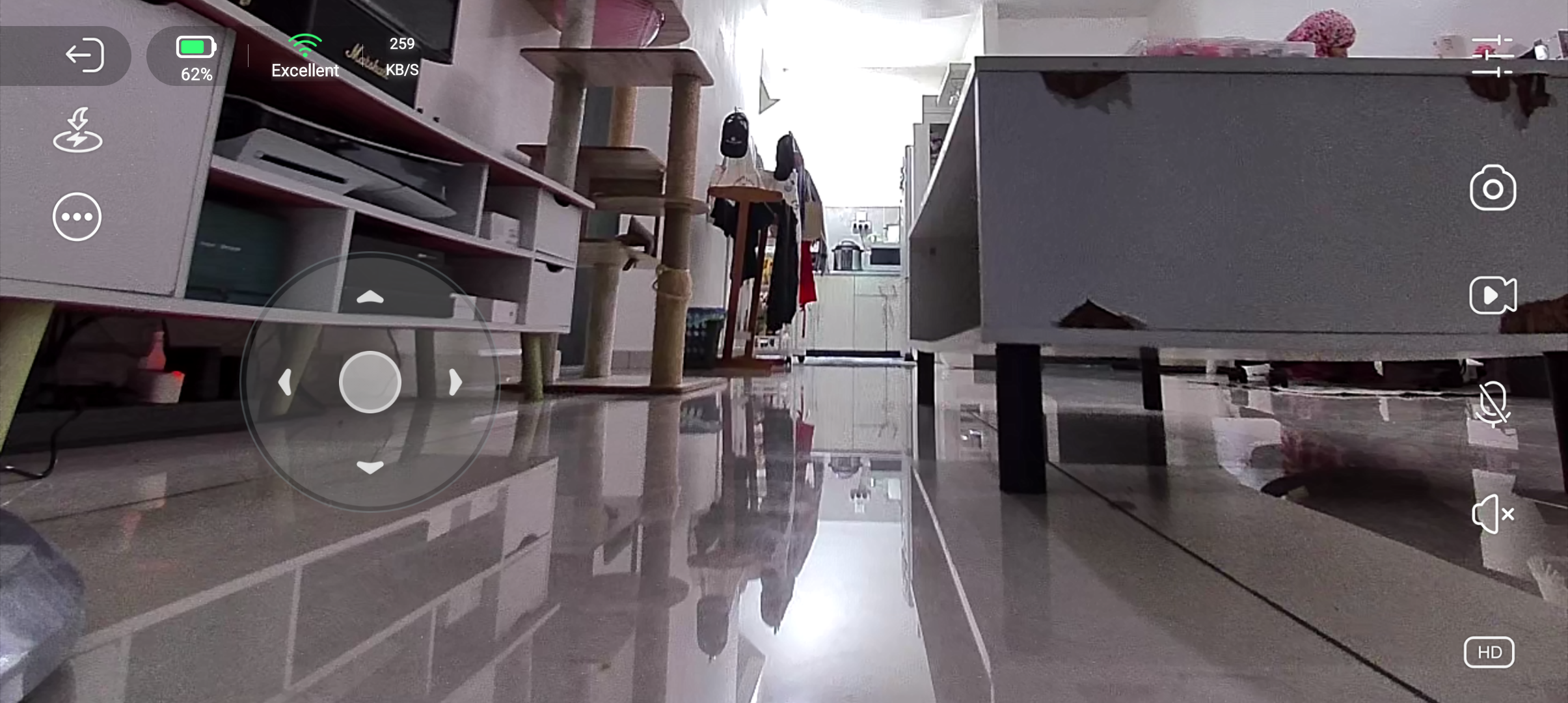
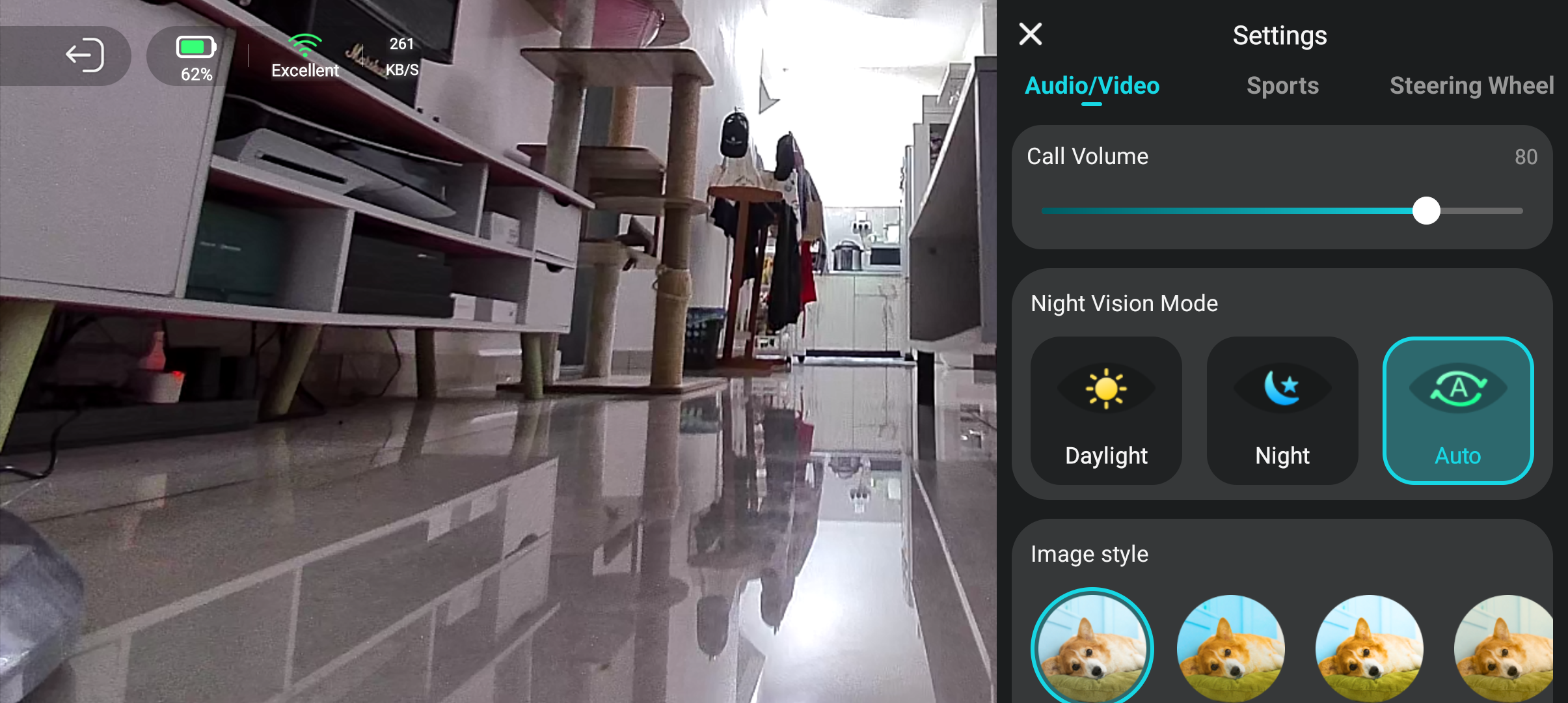
Enabot EBO Max control mode view in the app
Namerah Saud Fatmi / Android Central
Enabot EBO Max control mode view in the app
Namerah Saud Fatmi / Android Central
Enabot EBO Max control mode view in the app
Namerah Saud Fatmi / Android Central
Enabot EBO Max control mode view in the app
Namerah Saud Fatmi / Android Central
Enabot EBO Max control mode view in the app
Namerah Saud Fatmi / Android Central
Enabot EBO Max control mode view in the app
Namerah Saud Fatmi / Android Central
Enabot EBO Max control mode view in the app
Namerah Saud Fatmi / Android Central

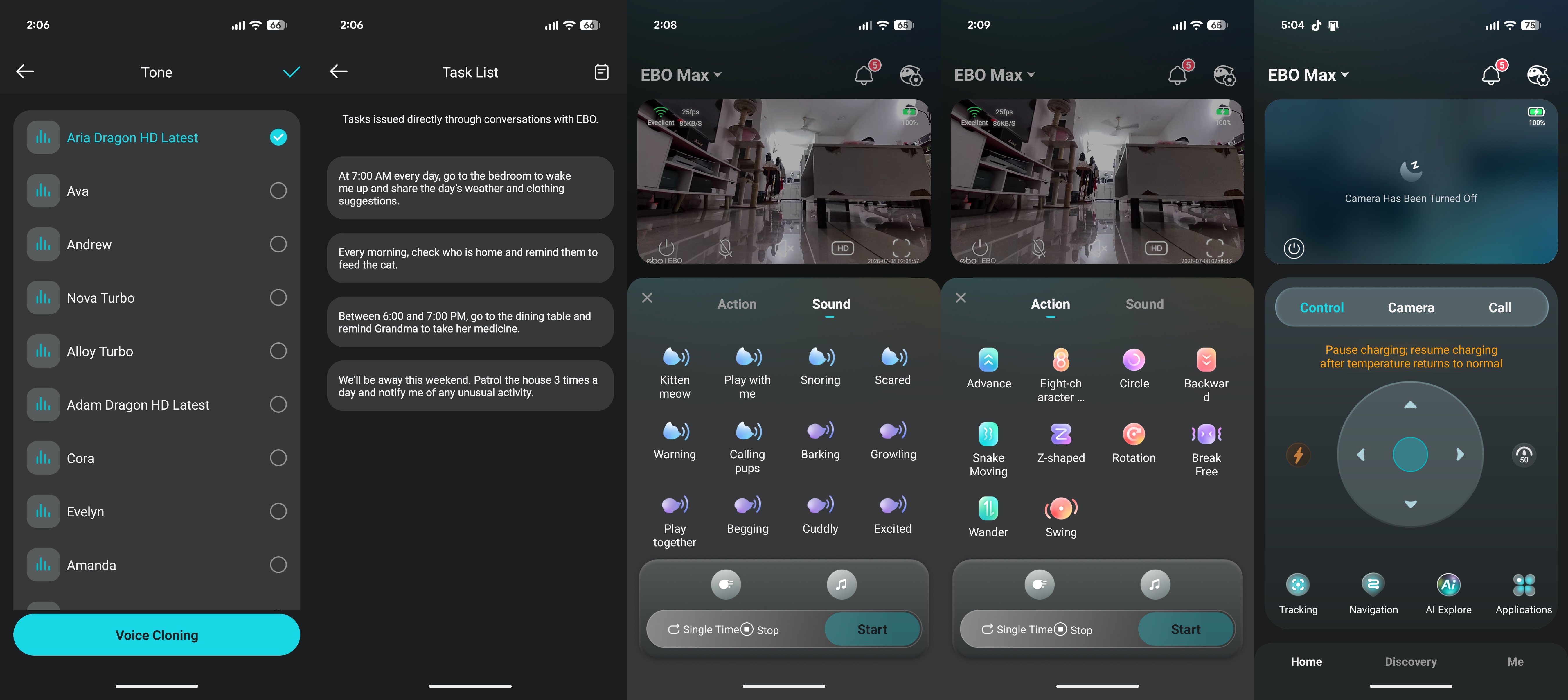
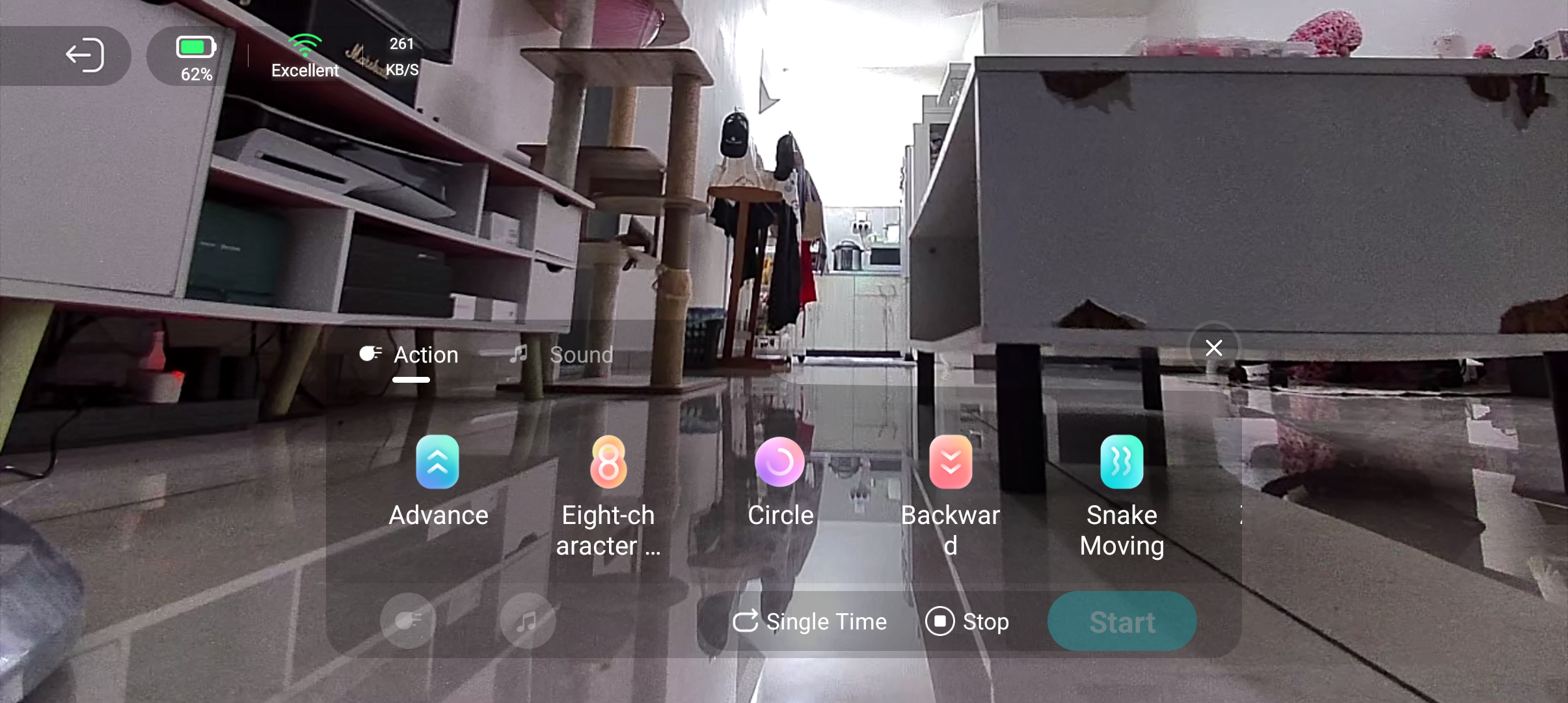
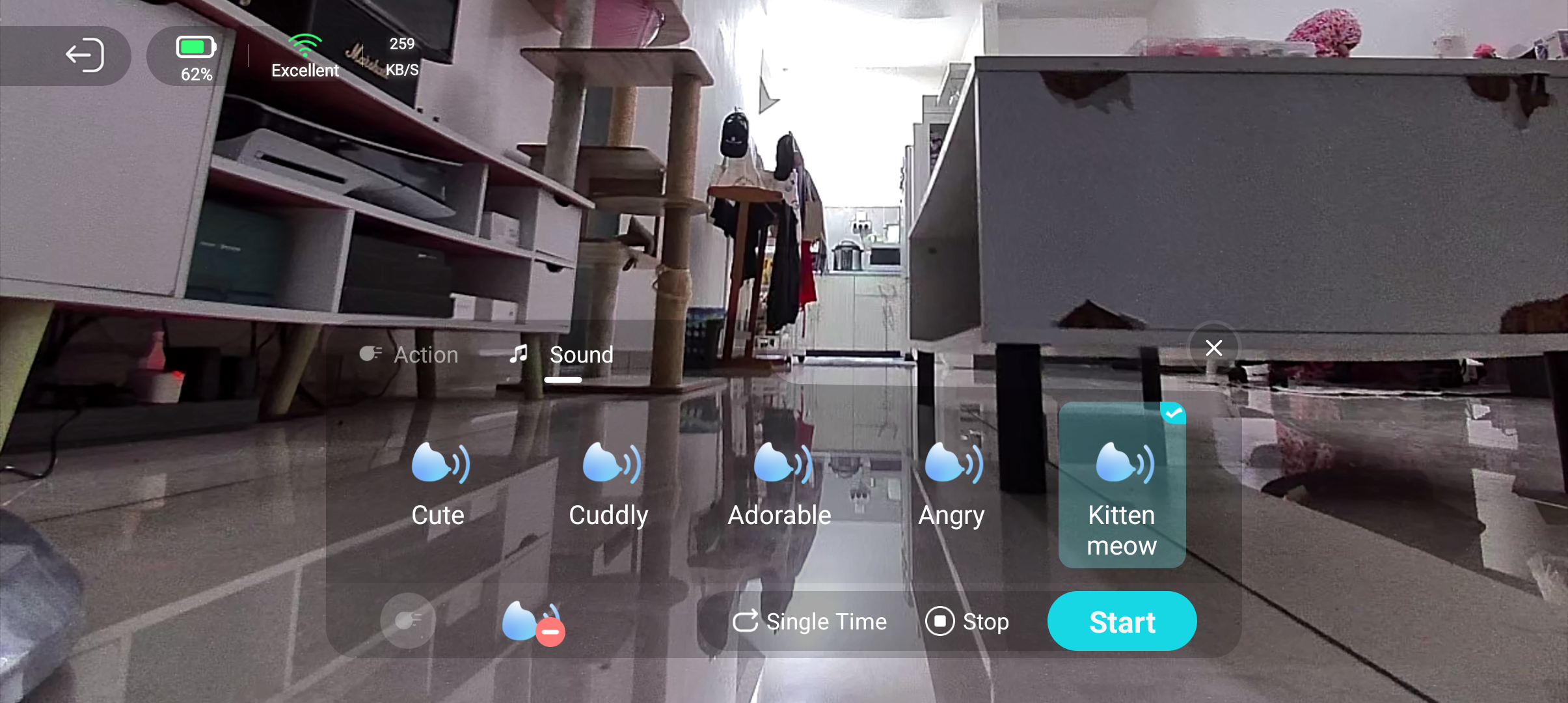
You can queue actions and sounds, individually or together, when playing with children or pets. There are plenty of cat and dog sounds, as well as many movements, including some of the best actions from other EBO bots, like the figure-eight dance from the EBO X.

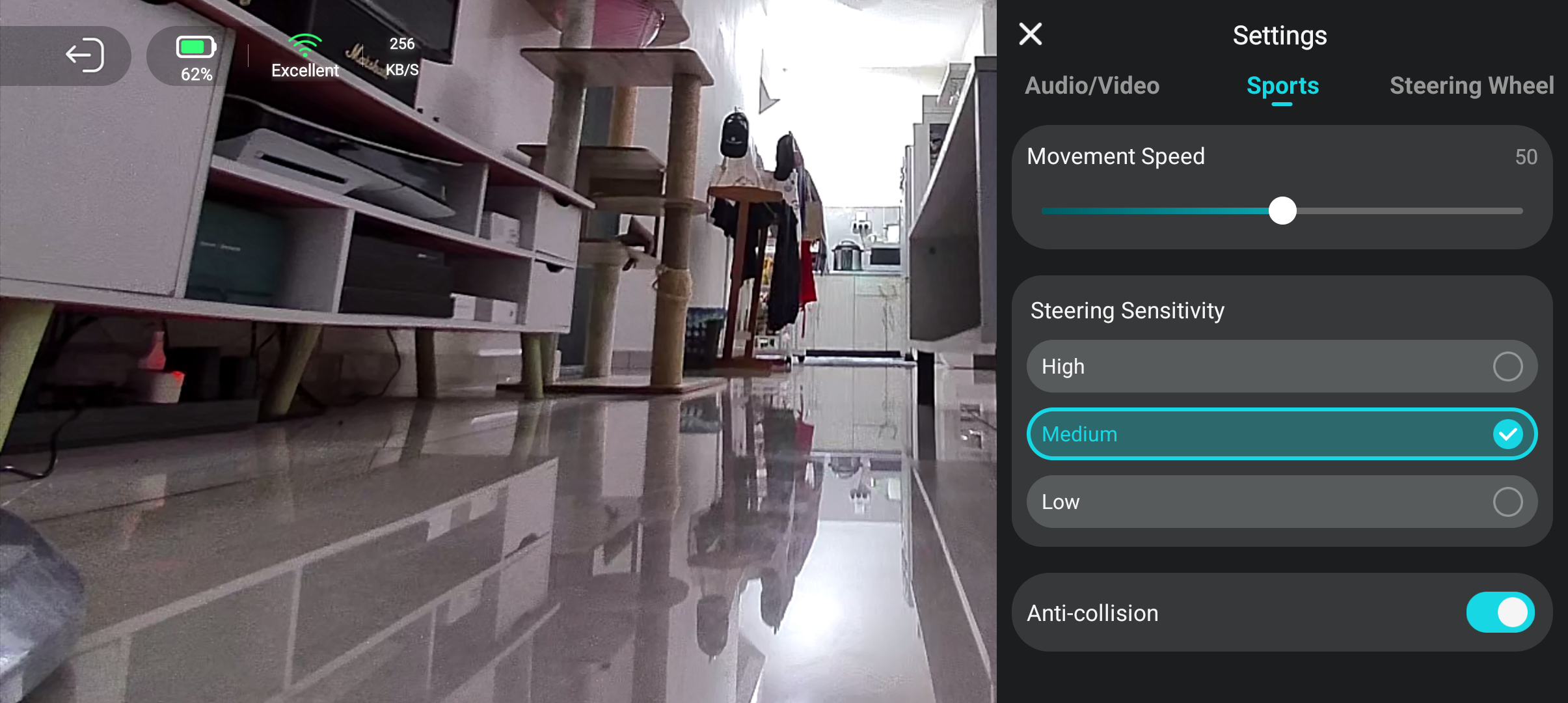
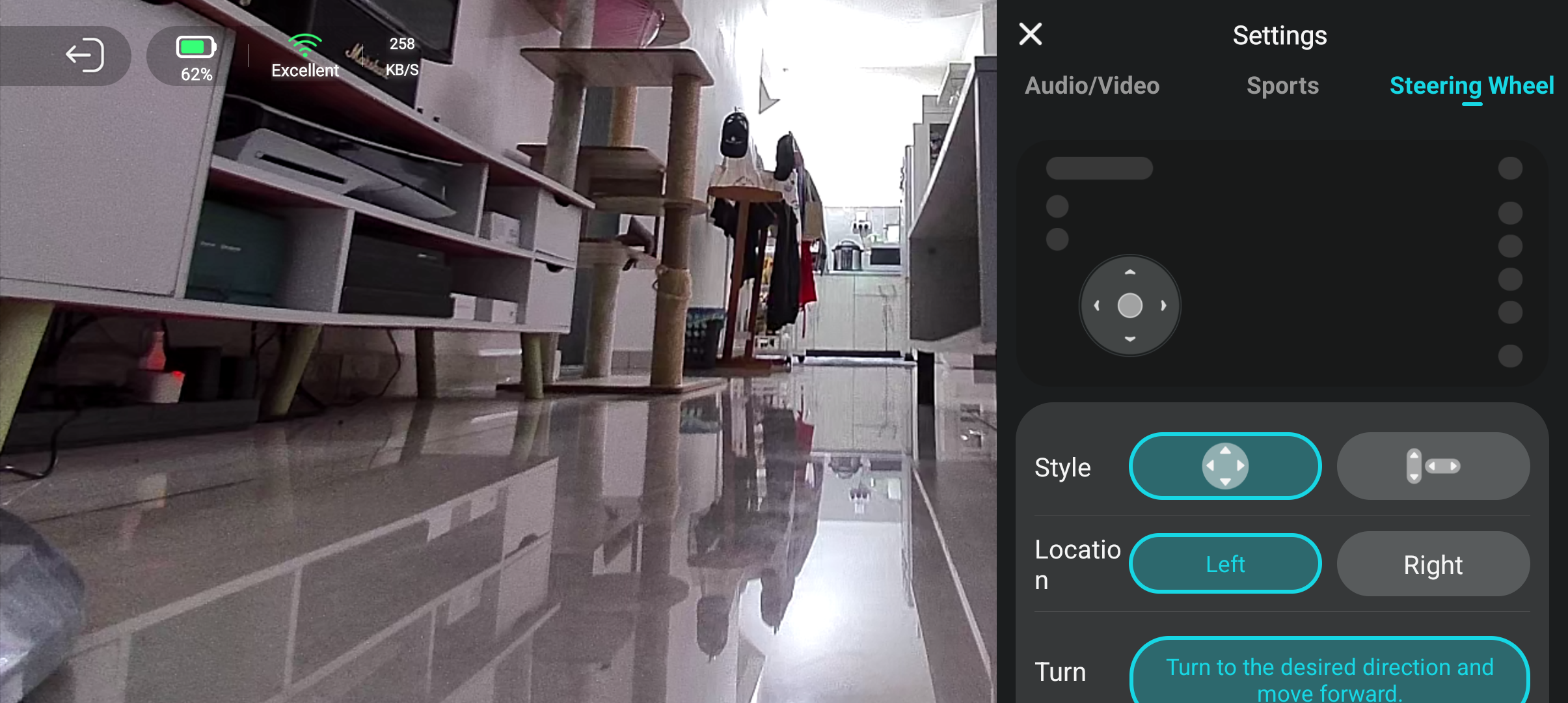
Everything from the robot's movement speed and the audio and call volume settings can be adjusted too. There's no manual mic and video shut-off button or shutter, though, which is a bit of a privacy oversight.

However, the "Do Not Disturb" mode can be used as an alternative. You can set the robot's active "wake up" hours, and even choose to have the screen (or the "eyes" of the bot) automatically shut off during your selected DND nighttime hours.

Because of course there's AI
Enabot EBO Max family bot and a black cat in a house

(Image credit: Namerah Saud Fatmi / Android Central)

The EBO Max family bot has a wide array of useful AI features. You start by saying "EBO EBO" to initiate conversations or give instructions, all in natural language. You can use the "EBO EBO, follow me" command to make the robot leave the charging dock and follow you around the house.

Other features include setting timers, reminders, or alarms; asking about the weather; asking the robot to find a certain family member; and more.

You can change the AI voice tone or clone your voice to be used as the robot's voice using the Pet Parrot feature. So, the EBO Max can read your text when you send it to the robot.
Enabot EBO Max family bot and a black cat in a house

(Image credit: Namerah Saud Fatmi / Android Central)

Enabot gave the EBO Max family bot an AI-powered brain, so it literally learns from all the information it absorbs and gets smarter the longer you use it. This adaptive behavior means the bot remembers patterns and perceives its surroundings, and it can even role-play depending on the role you assign it.

You can also assign more complex commands. For example, you could say, "I'm going on holiday for two days starting tomorrow. Patrol the house three times a day and alert me of any unusual activity. Record a video of any movement," and the EBO Max robot will do just that.

Eventually, it can even distinguish memories and learn about your habits, hobbies, preferences, and daily home life. This can be helpful for questions like "Did Grandma take her morning medicine yesterday?" or similar scenarios.
(Image credit: Namerah Saud Fatmi / Android Central)

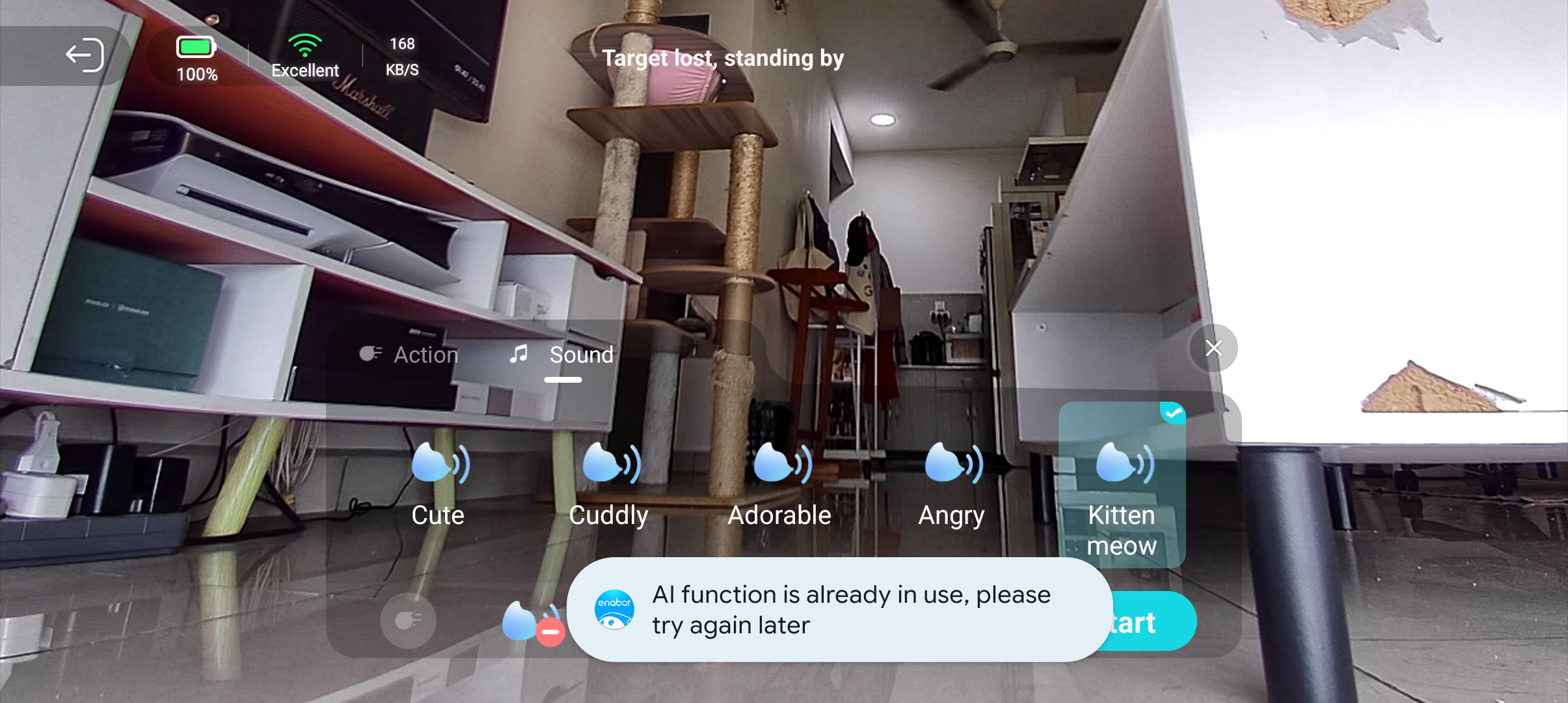
Using the AI functions sometimes causes the robot to run a little hot, and the AI also hangs or glitches at times, especially after being asked a few questions simultaneously. Also, when you're using an AI feature, this prevents you from queuing movements or animal sounds when remotely controlling the robot.

Unfortunately, there is no smart home integration with Gemini or Alexa, so you miss out on automations and options like playing music or switching on your TV. There is also no Bluetooth speaker mode. I find both features incredibly useful on the EBO X, so this was a bummer.

Should you buy the Enabot EBO Max?
Enabot EBO Max family bot and a black cat in a house

(Image credit: Namerah Saud Fatmi / Android Central)

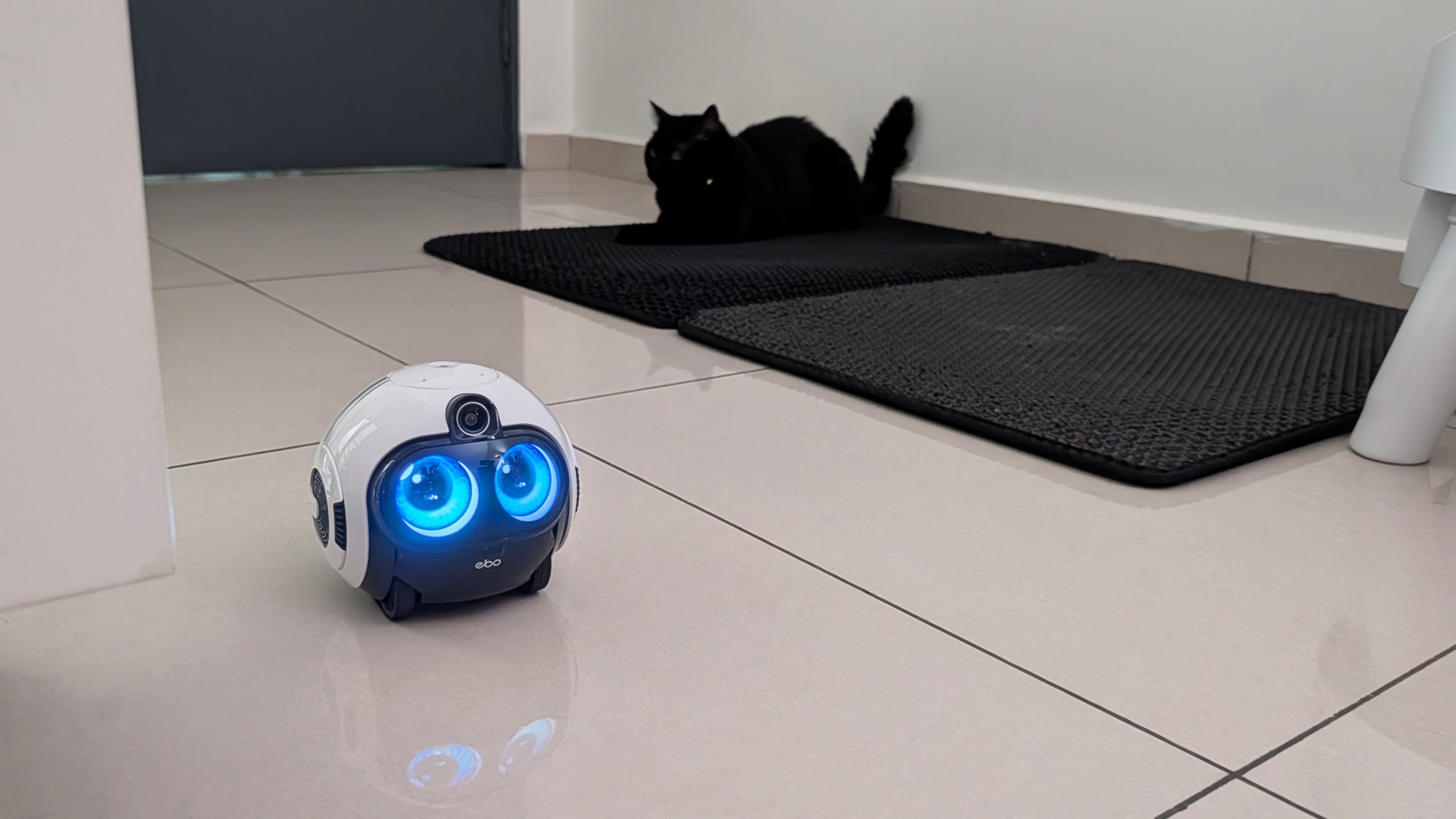
In many ways, this is the smartest robot Enabot has ever made, although it's missing smart home integration and some refinement. Native Matter support would've made this a monumental leap in the smart home world.

Once the EBO Max builds memories and learns enough, and with the help of firmware updates, I truly believe the small hiccups will iron themselves out. Enabot is very good with updates — I got one as soon as I installed the EBO Max robot.

At $599, the EBO Max is a lot cheaper than the $999 EBO X, which includes Alexa and physical shut-off buttons for the mic and the camera. So getting a large portion of its features and an AI-powered brain that gets wiser over time, all for $400 cheaper, is a bargain if you ask me.

If you need a smart home camera that can follow and monitor your loved ones or even keep your kids and cats entertained, EBO Max is an outstanding family robot for you.


from Latest from Android Central https://ift.tt/ZhprEtb
via IFTTT

I couldn't sign into the PlayStation App on Android, but I found an easy way to get around Sony's finicky 2FA

Sony has been doing all the wrong things of late, but I'm not here to rant about them canceling physical game discs today. I'm here to help you fix a very annoying, yet somehow super prevalent, problem. If you use the PlayStation app on your smartphone, you might have come across this issue.

I signed out of my secondary PlayStation account on my phone a few weeks ago and tried to log in to my primary PS profile, which has 2FA enabled for security. Unfortunately, I wasn't receiving any two-factor authentication text messages from Sony. It was the start of the weekend, which meant I'd have to wait two days before Sony's customer support came online.

So here's what I did to fix it and finally log back into my account.

How to regain access to your PlayStation app when two factor authentication fails

Usually, the correct thing to do is to use your backup codes when 2FA fails. And trust me, Sony's PlayStation app regularly fails to send a 2FA SMS. Just go to Reddit, and you'll find countless accounts of this happening (here, here, and here). PlayStation account users have even been prevented from logging in to their PS4s and PS5s because of this problem.

Anyway, I kept my backup codes in such a safe place that even I couldn't find them. So here's what I did.

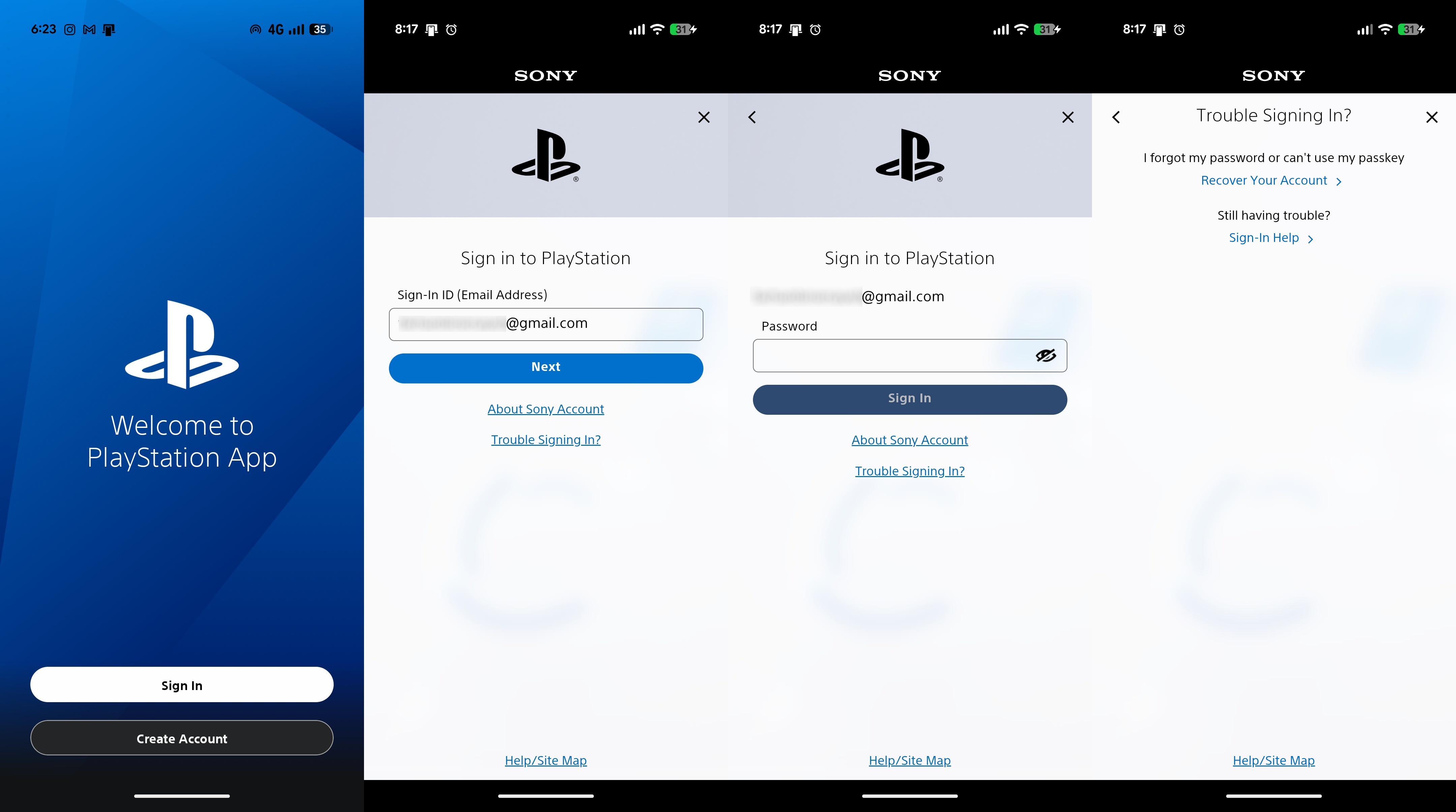
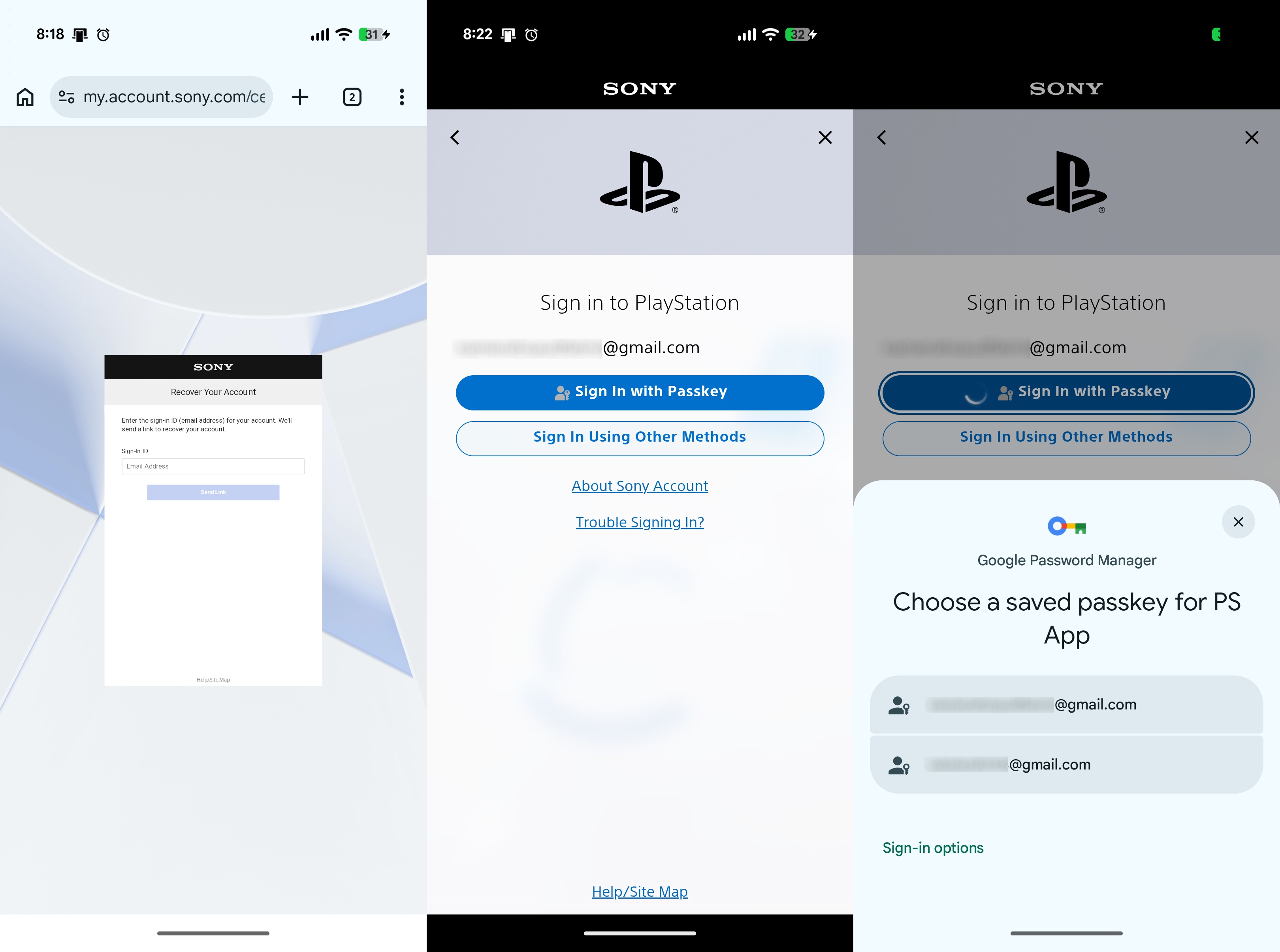
1. Open the PlayStation app and tap Sign In.

2. Enter your email address and tap Next.

3. Instead of entering your password, select the Trouble Signing In? option.

(Image credit: Namerah Saud Fatmi / Android Central)

4. You'll have to reset your password now by selecting the Recover Your Account > option.

5. You will be redirected to the account recovery portal. Enter your email address there and tap Send Link.

(Image credit: Namerah Saud Fatmi / Android Central)

6. Once the password recovery email arrives, choose to set up a passkey instead of a password. This automatically disables two-factor authentication.

7. Once your passkey is set up, sign in to the PlayStation app using your passkey instead.

The PlayStation app can be your savior when you're locked out of your PSN account

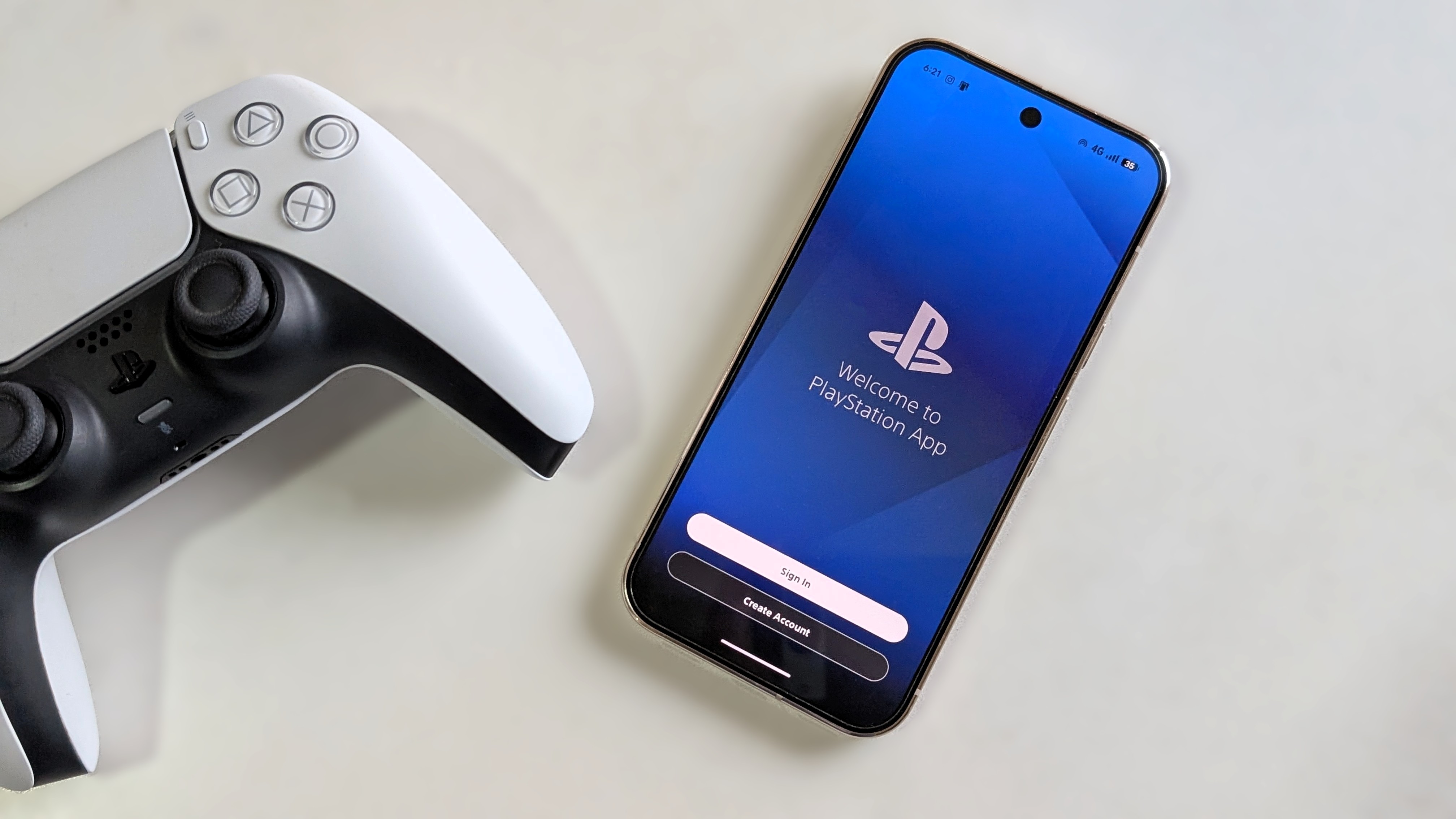
PlayStation app on a Google Pixel 10 Pro

(Image credit: Namerah Saud Fatmi / Android Central)

Previously, PlayStation Network (PSN) users could use 2FA on their PlayStation 5 or PlayStation 4 if they weren't sent a verification code via SMS. But that option is no longer available. So if you can't get your two-factor authentication code via text, you need to rely on your backup codes.

Thankfully, even if you've misplaced your backup codes, this hack lets you reset everything without relying on 2FA. Once a passkey is set up, it is tied to your password manager. So just make sure you don't get locked out of that!


from Latest from Android Central https://ift.tt/910qzta
via IFTTT

Samsung's next tri-fold could finally be a phone you can actually buy

What you need to know

  • Samsung is reportedly planning a second-generation Galaxy Z TriFold for 2027.
  • The next TriFold is expected to keep the same display size, suggesting Samsung is focusing on scaling the product rather than redesigning it.
  • Samsung could launch four foldables in 2027 — Galaxy Z Flip 9, Z Fold 9, Z Fold 9 Ultra, and the new TriFold — expanding its premium lineup.

Samsung’s first tri-fold phone wasn’t supposed to be a blockbuster hit, but it seems the company is already planning a much bigger successor. Samsung has reportedly started work on a second-generation Galaxy Z TriFold, with a launch apparently scheduled for 2027, and this time the company may be ready to sell it to far more people.

Korean publication ETNews reports that Samsung has already shared details of the new device with component partners, meaning that development is well underway ahead of launch. While details about the hardware are still scarce, the report indicates that the next TriFold will likely retain the same display size as the current model. The hardware is not that interesting, but the production strategy of Samsung is.

That’s a huge departure from Samsung’s original Galaxy Z TriFold, which was launched as an experimental device in limited quantities and markets. The company treated it more like a technology showcase than a volume seller, making it difficult for most buyers to get their hands on one. If the latest report is to be believed, Samsung now looks confident enough to bring the concept closer to the mainstream by ramping up manufacturing and increasing availability.

The report also claims that Samsung might launch four premium foldables instead of three in the second half of 2027: the Galaxy Z Flip 9, Galaxy Z Fold 9, Galaxy Z Fold 9 Ultra, and the second-gen Galaxy Z TriFold. That would also put to rest recent rumors suggesting that this year's Galaxy Z Flip 8 might be the last of Samsung's clamshell foldables.

Samsung is also said to be expanding the Galaxy S family. Previous reports have suggested that the Galaxy S27 range could include the Galaxy S27, S27 Plus, S27 Pro, and S27 Ultra. If that happens, Samsung would have a “4+4” flagship strategy — four Galaxy S devices in the first half of the year and four foldables in the second half.

It is still early for now. Samsung has made no announcements around any of these plans, and a lot can change before 2027 rolls around.

Android Central's Take

I fully support Samsung's efforts to push the boundaries of foldables, but a tri-fold only matters if most people can actually buy it. A flashy concept with limited production and sky-high pricing doesn't advance the industry. The real upgrade would be if Samsung is finally serious about making its next TriFold more broadly available.


from Latest from Android Central https://ift.tt/PnGWxi7
via IFTTT

Google's next Pixel Watch update could fix the one thing that annoys me daily

What you need to know

  • Google is developing a new "Phone to Watch Unlock" feature that automatically unlocks your Pixel Watch with your Pixel phone.
  • The feature works in reverse of today's Watch Unlock, eliminating the need to enter your watch PIN repeatedly.
  • Code strings suggest the feature will be exclusive to the Pixel Watch and Pixel phone ecosystem through Connected Services.

Google could finally fix the one thing that's been annoying me about using a passcode on my Pixel Watch.

For quite some time now, Google has offered a feature called Watch Unlock that lets your Pixel Watch unlock your Pixel phone. If your Pixel Watch is already unlocked and on your wrist, your phone automatically unlocks without asking for your passcode. The problem is that it doesn't work the other way around.

Thankfully, that could finally be changing.

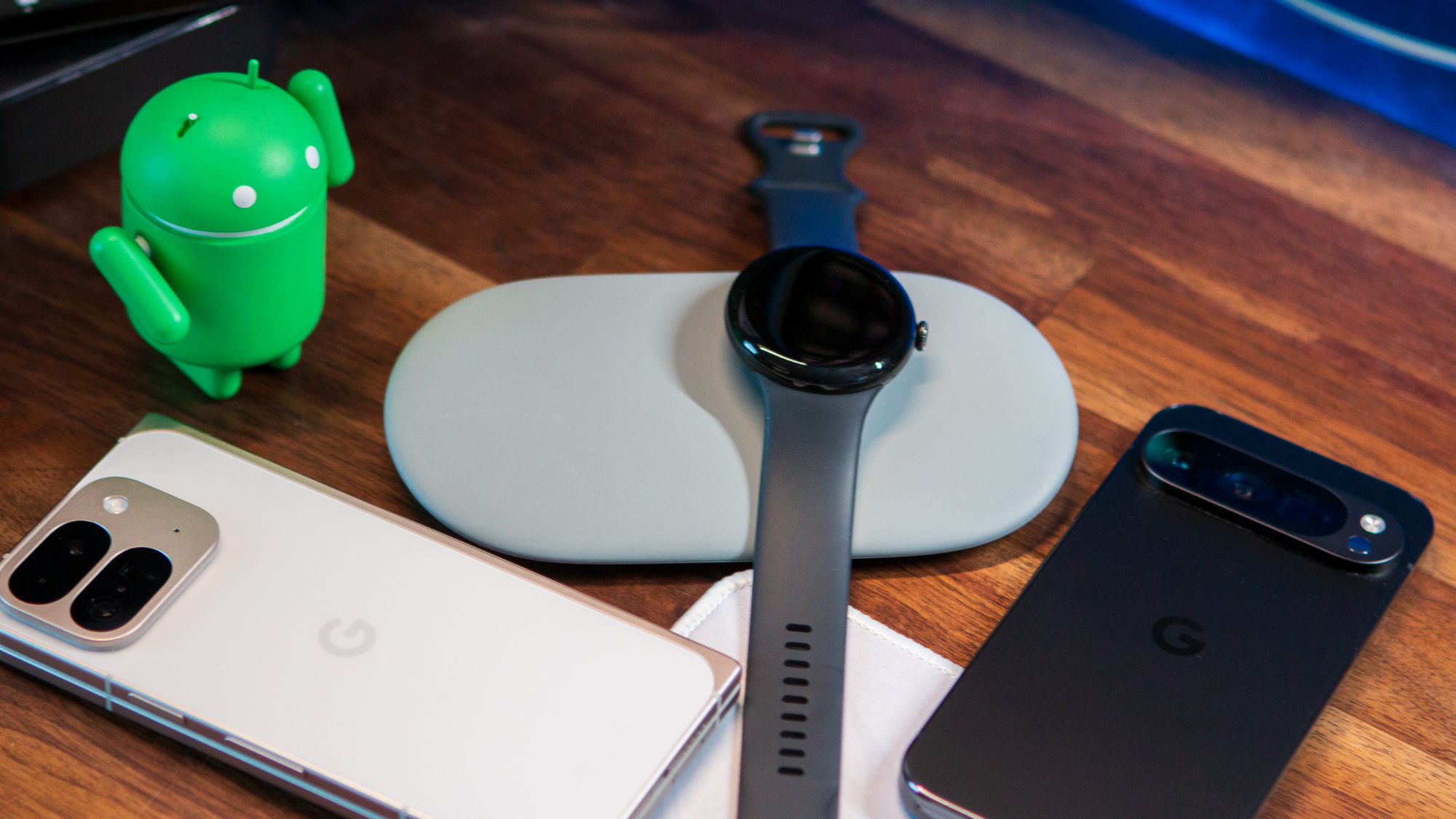
As spotted by Android Authority, Google is working on a new feature called Phone to Watch Unlock that would automatically unlock your Pixel Watch whenever you unlock your paired Pixel phone.

Google TV Streamer with Pixel Watch 3, Pixel 9 Pro and Pixel 9 Pro Fold

(Image credit: Andrew Myrick / Android Central)

Unlike the current implementation, where an unlocked Pixel Watch can unlock your phone, this feature would work in reverse. Once you unlock your Pixel phone, your Pixel Watch will automatically unlock as well. It's something that's been bugging me for a long time, so I'm glad to see Google finally working on a fix.

Unfortunately, it looks like this feature will be exclusive to the Pixel ecosystem. The code strings were discovered in Google's Connected Phone and Watch Services app, suggesting it will only work between Pixel phones and Pixel Watches.

From what it appears, Google will prompt users to enable the feature during setup. You'll first need to enter your current watch PIN as a one-time verification, after which your Pixel Watch will automatically unlock whenever you unlock your Pixel phone.

There's currently no word on when the feature will roll out. However, since it's already been spotted in the app's code, there's a good chance Google is preparing to launch it sooner rather than later.

Android 17's first major Feature Drop is expected next month, so it's possible this feature could arrive as part of that update.


from Latest from Android Central https://ift.tt/30ls6xZ
via IFTTT

samedi 25 juillet 2026

The Soundcore Liberty 5 Pro series has a mind-blowing feature you have to hear to believe

This year, Soundcore brings both subtle improvements and awe-inspiring upgrades that every pair of earbuds on the market should be replicating. And I don’t say that lightly. While still not market-leading, they’ve even improved their weakest point: active noise-canceling strength.

Overall, I’ve been completely floored by what Soundcore has been able to accomplish, so let’s get to it, and I’ll tell you why the Soundcore Liberty 5 Pro and Liberty 5 Pro Max are more than just an upgrade over the 5; they’re a “must-have.”

Soundcore Liberty 5 Pro specs

Categories

Liberty 5 Pro

Liberty 5 Pro Max

Conectivity

Bluetooth® 6.1, Multipoint support for up to 3 devices

Bluetooth® 6.1, Multipoint support for up to 3 devices

Case

0.96 TFT Touch screen

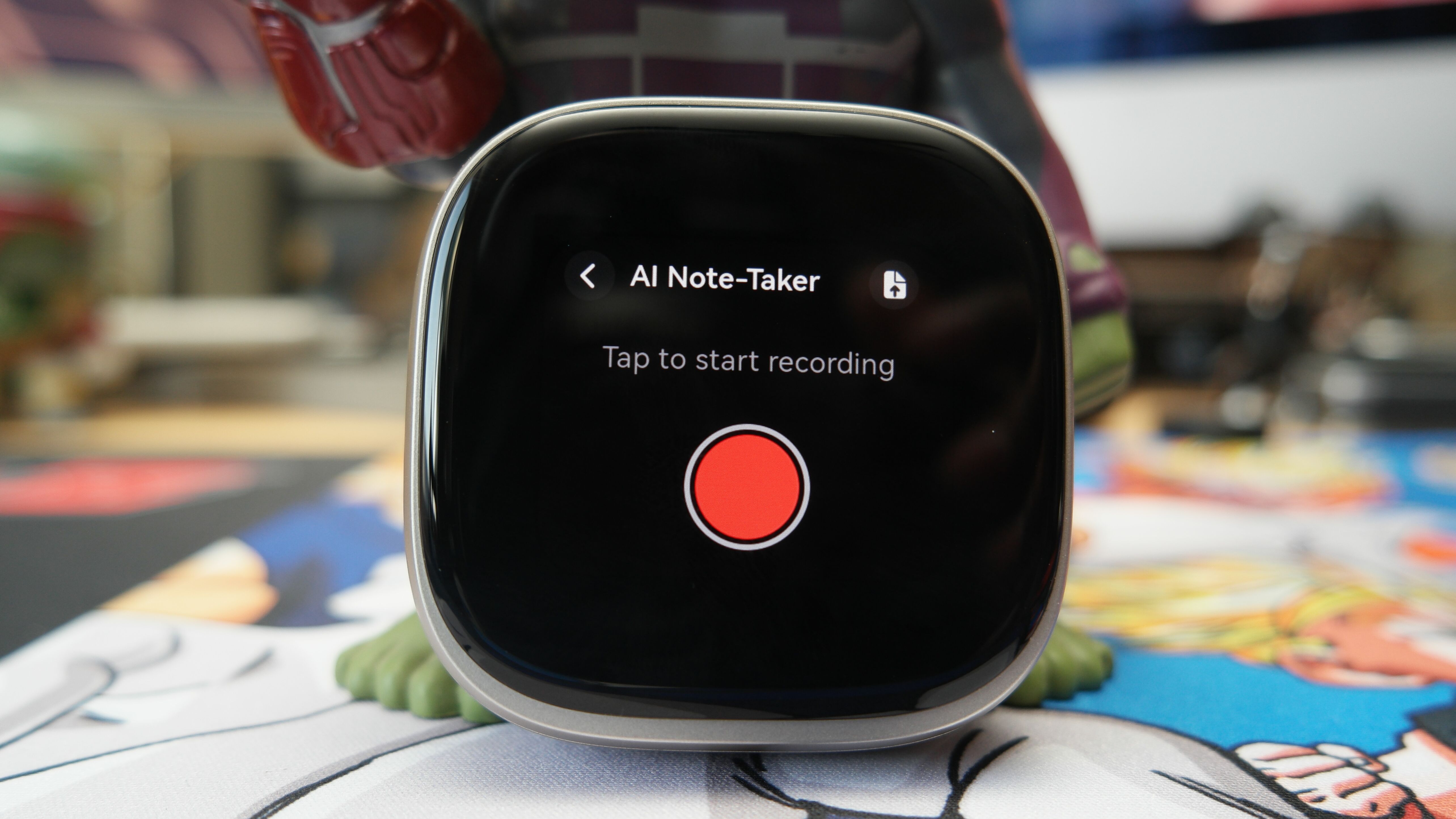
1.78" AMOLED screen, Screen wallpaper, AI recording/transcriptions/face-to-face translations

Drive units

9.2mm Wool-Paper Diaphragm Drivers

9.2mm Wool-Paper Diaphragm Drivers

Codec support

SBC, AAC, LDAC

SBC, AAC, LDAC

Dolby Atmos support

Yes

Yes

Battery life

Up to 6.5 hours (ANC on), 28 hours with case

Up to 4 hours, 17 hours all features on

Up to 6.5 hours (ANC on), 28 hours with case

Up to 4 hours, 17 hours all features on

Charging

Wireless & USB-C, 1 hr for earbuds, 3 hrs for case + earbuds full charge; 5 mins charging for up to 4 hrs playtime

Wireless & USB-C, 1 hr for earbuds, 3 hrs for case + earbuds full charge; 5 mins charging for up to 4 hrs playtime

Durability

IP55

IP55

App support

Android, iOS

Android, iOS

Audio tuning

8-band EQ (app), HearID 5.0 for personalized sound

8-band EQ (app), HearID 5.0 for personalized sound

Microphone

8 mics + 2 VPU + AI Large Model

8 mics + 2 VPU + AI Large Model

Colors

Midnight Black, Pearl White, Pearl Blue, Rose Gold

Titanium Gold, Midnight Black

Soundcore Liberty 5 Pro vs Pro Max: Visual differences

Anker Soundcore Liberty 5 Pro Max

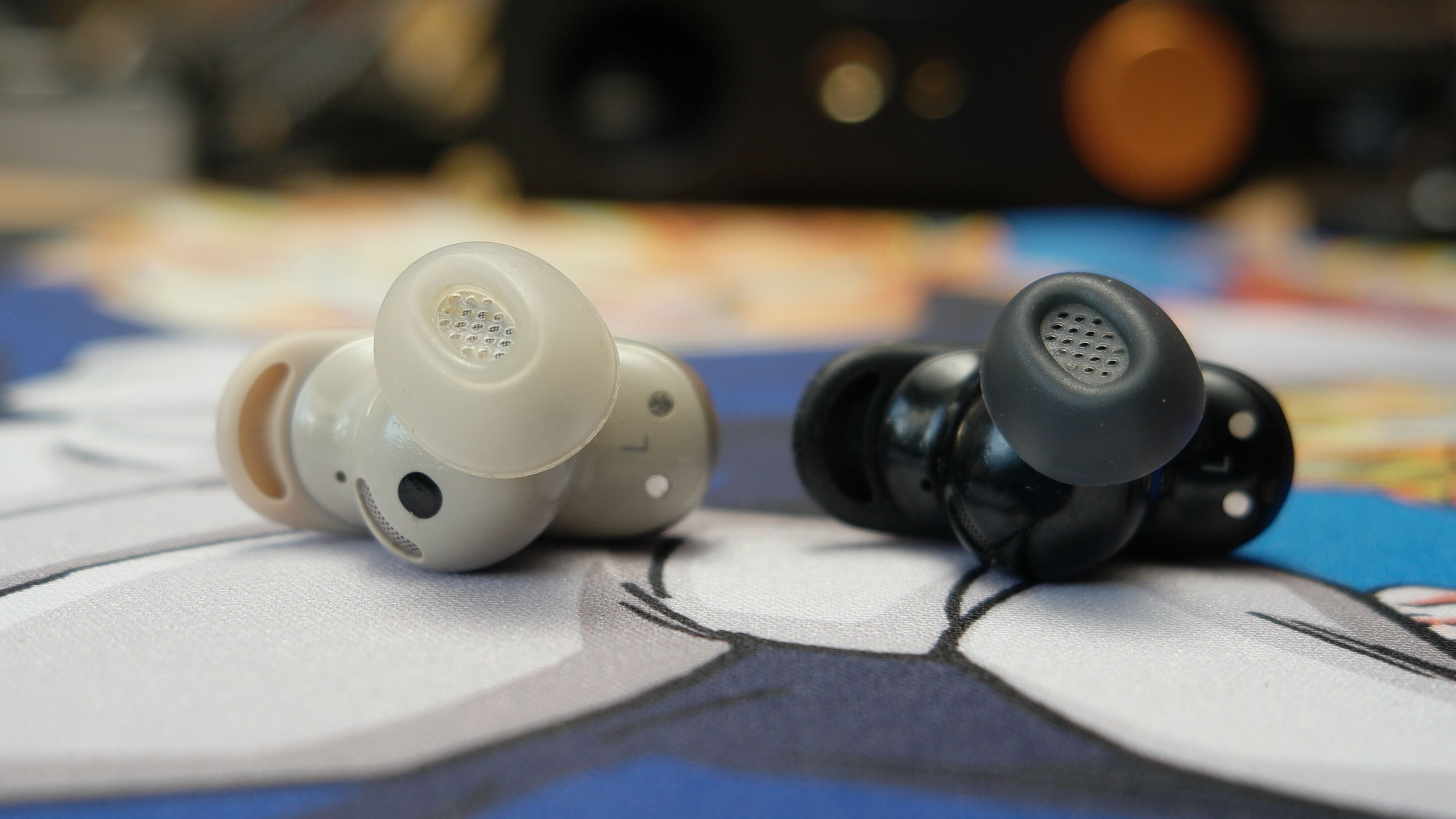
Liberty 5 Pro Max (L), Liberty 5 Pro (R) (Image credit: @tshakaarmstrong)

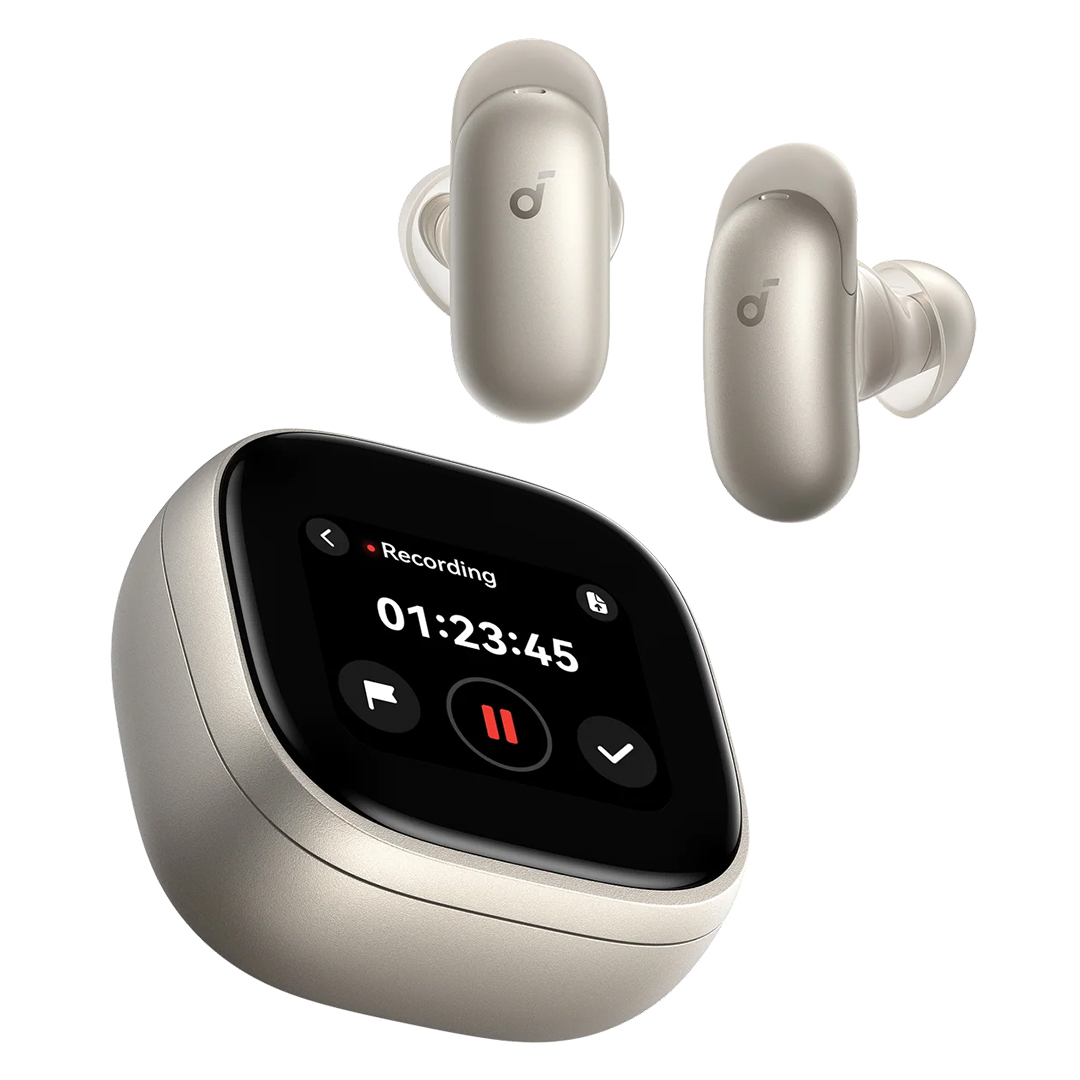
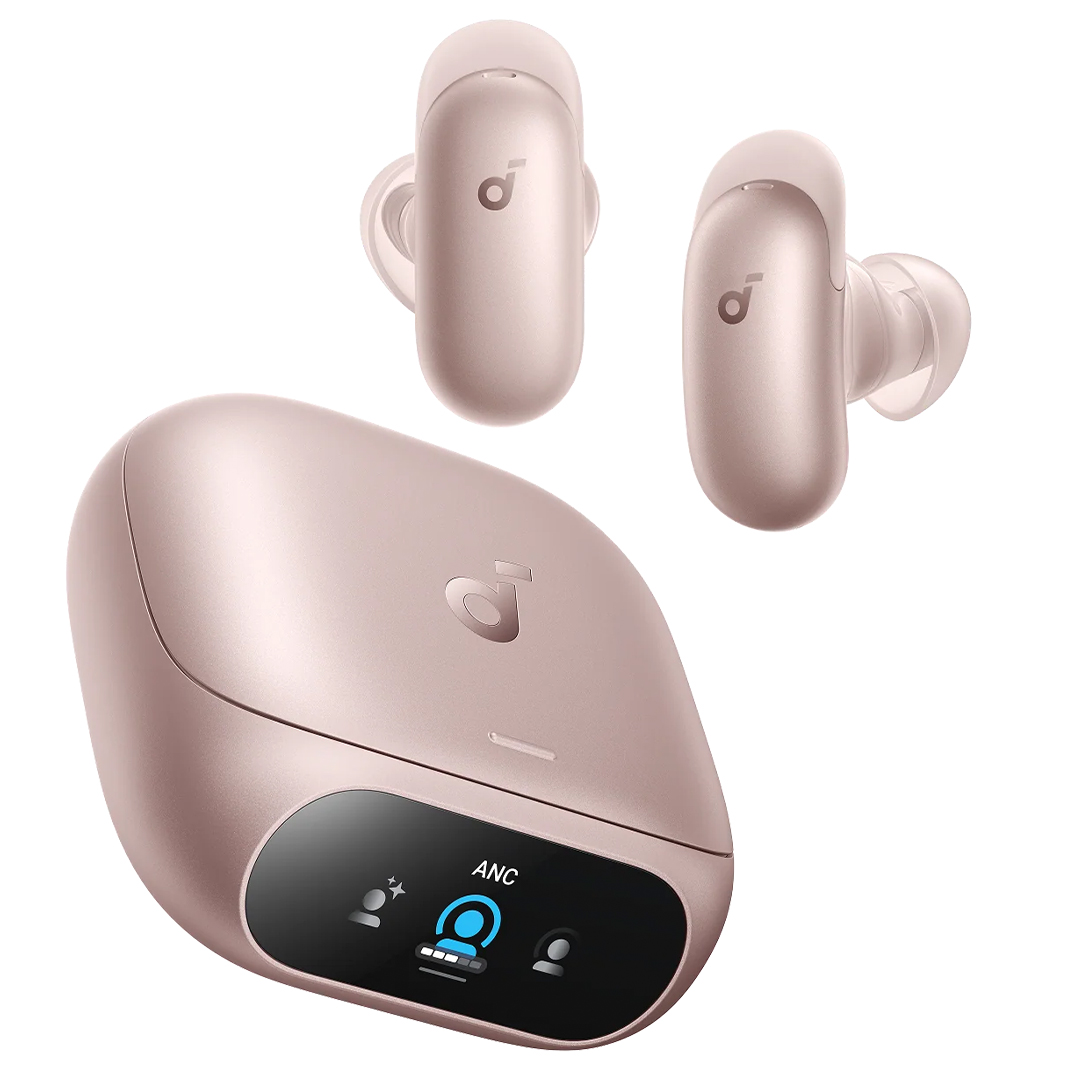
I started my review period with the pricier, new Liberty 5 Pro Max, but I’ve been using both Pro models interchangeably. Both new cases' lids slide up like the Liberty 5, and now they have external “smart displays.” Though the dimensions of both new Pro models are similar, the Pro Max is taller and brighter, thanks to its 1.78-inch AMOLED smart display (the Pro’s is .96 inches).

Anker Soundcore Liberty 5 Pro Max

(Image credit: @tshakaarmstrong)

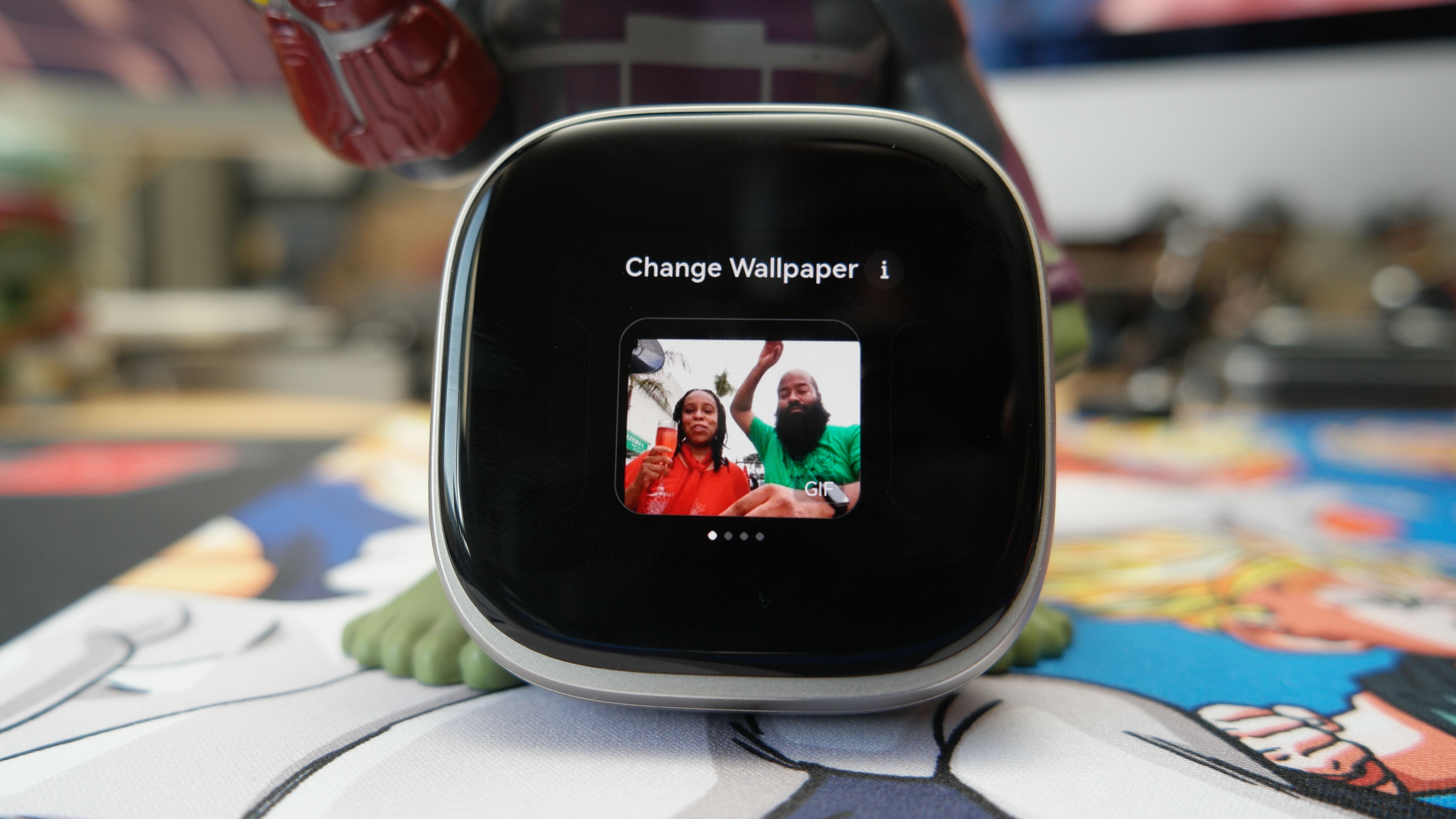
Both displays are responsive and easy to read in direct sunlight. The Pro Max allows you to upload wallpaper, both stills and animations, which display on the screen when it’s awake. Using the case, swiping left or right lets you control ANC modes, EQ, and playback. Swiping up from the bottom gives you access to all the apps, and swiping down from the top brings up quick-access shortcuts for various settings. All of that without pulling out your phone.

The only downside is that while the case is pocketable for a 6 ’ 215lb man like me (it fits in my pants coin pocket), it will be large for others with smaller frames when you compare it to the Pixel Buds or Galaxy Buds 3 Pro cases (see comparison in the gallery above).

Anker Soundcore Liberty 5 Pro Max

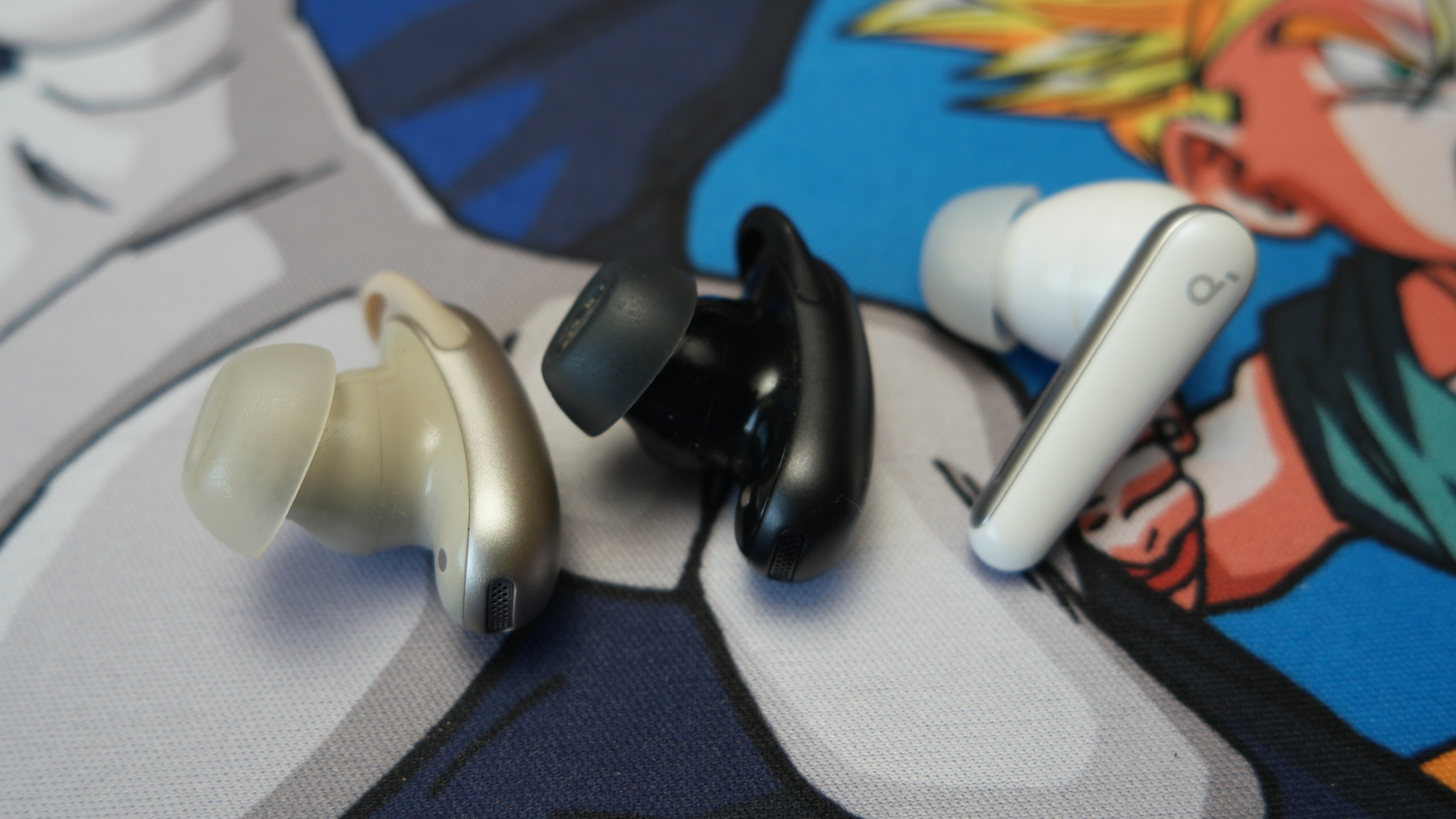
Liberty 5 Pro Max (L), Liberty 5 Pro (Center), Liberty 5 (R) (Image credit: @tshakaarmstrong)

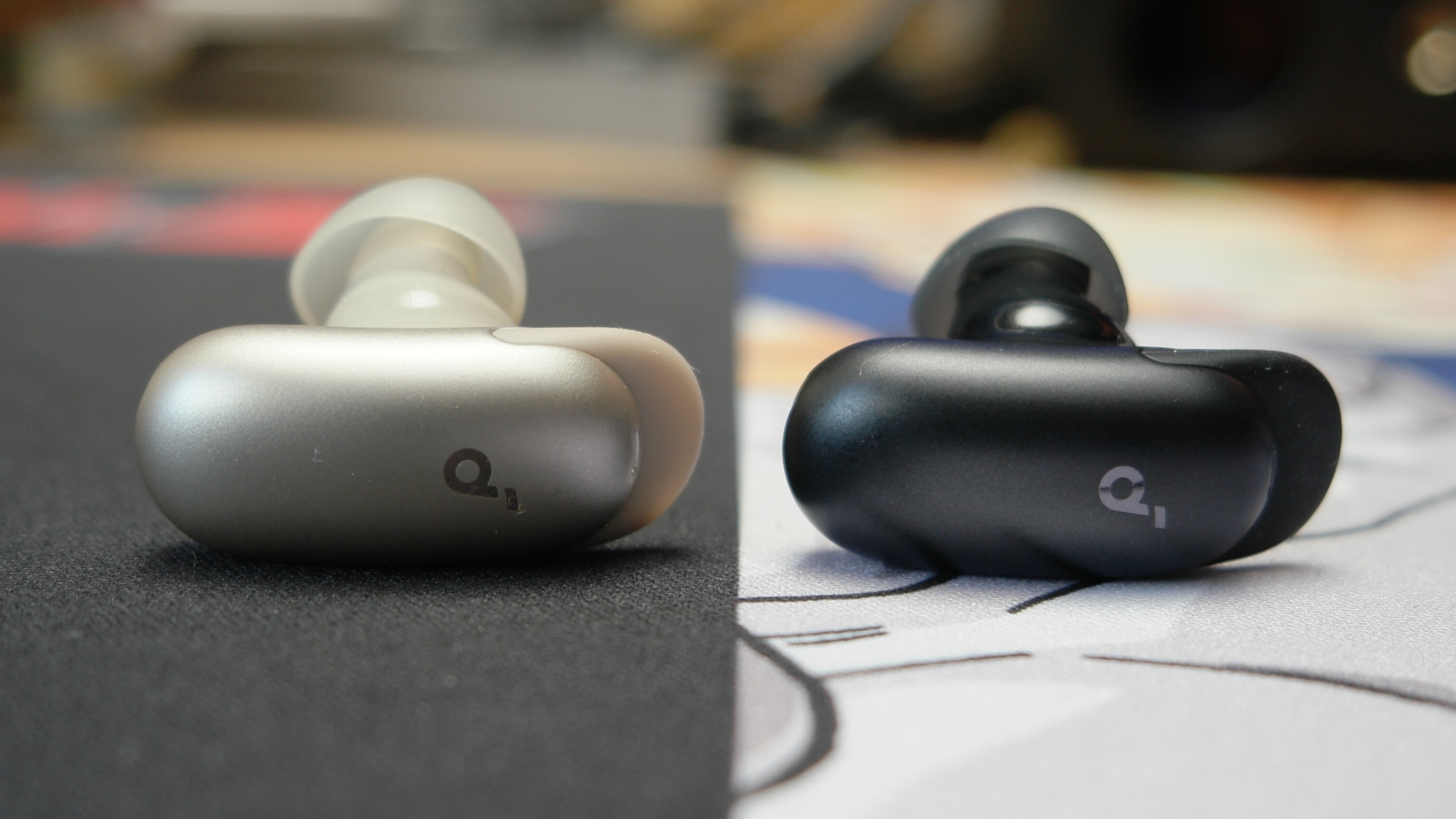
This year, the new Liberty 5 Pro models have been redesigned so they’re no longer stem-style earbuds; instead, they have an earbud with a “surfboard” sitting over the backside. And, like some surfboards, the new models have rear fins which come in three different sizes, including the one already installed.

The fins, along with plenty of eartip options, made it easy to get the right fit. And it’s a locked-in fit that feels as secure as my favorite gym earbuds, the Powerbeats Fit!

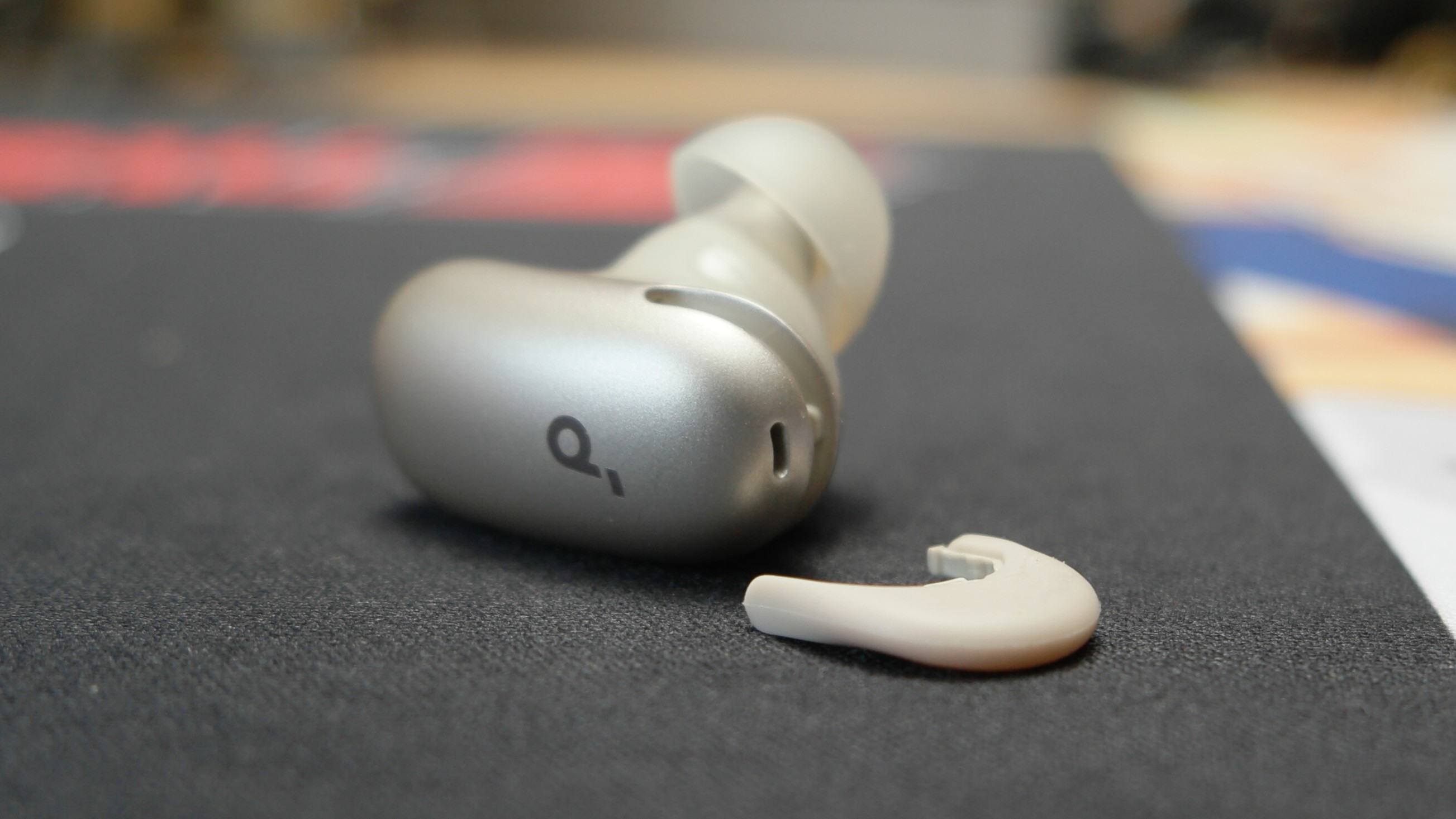
Soundcore Liberty 5 Pro Max with earfin removed

Soundcore Liberty 5 Pro Max with earfin removed (Image credit: @tshakaarmstrong)

When placing the earbuds in my ears, the idea is to twist slightly to get the earfins to lock in. Not doing that, they have a looser fit, but they still feel quite secure, and that’s how I’ve worn them most of the time. For the gym, I just twist and lock in, and they’re great!

Generally, I hate the fit of oval-shaped eartips and have not found them comfortable across quite a few earbuds I’ve tested over the years, but with the Liberty 5 Pro models, they feel just right.

Mind-blowing, record-setting call quality

According to Soundcore, the new Liberty 5 Pro models earned a Guinness World Records title for the clarity of their calls, and after my testing, I believe them! The most fascinating aspect of my time with the Pro and Pro Max has been the call quality enabled by the new Anker Thus AI audio chip embedded in the earbuds.

One day during my 45-minute commute home, I gave my friend a call using an iPhone 16 Pro Max with the Liberty 5 Pro connected. He’s a broadcast engineer who intimately knows the ins and outs of audio and video.

We chatted the entire time I was driving, and when I made it home, I asked him where he thought I was calling him from. He told me it sounded like I was in a quiet room and my voice sounded great.

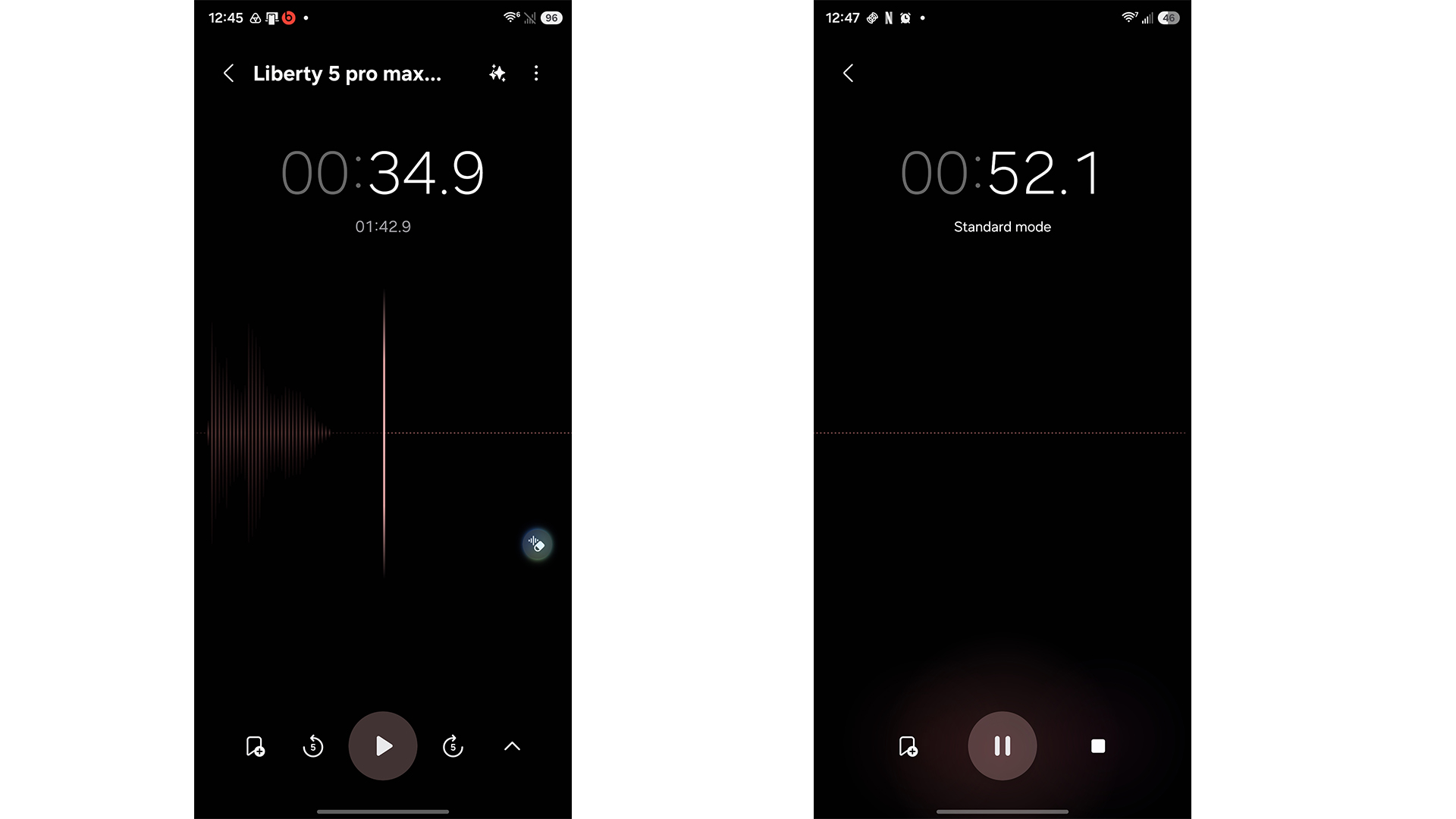
The audio meter on the Voice Recorder app is flat, despite having the literal sound of an airplane blasting at the reviewer. (Image credit: @tshakaarmstrong)

I recorded myself talking using the Voice Recorder app on a Samsung Galaxy S25 Ultra while playing 80dB of airplane cabin and urban traffic noise. I thought I was in the Twilight Zone when I played that audio back because not only was there not even the slightest hint that 80dB of noise was literally blasting in my face from less than two feet away, My voice was still clear, though very slightly muddy, but it didn’t sound like I was underwater, and there were no dropouts from the AI being overwhelmed.

While recording, I intentionally stopped talking to see how the new Anker Thus AI chip handled background noise when I was silent, and the audio waveform was completely flat (as pictured above), detecting no sound despite 80dB of noise!

These are easily the best earbuds I’ve used for phone calls in years. Jabra was my previous champ, along with AirPods, Technics AZ100, and a couple others, but nothing has come close to achieving exactly what Anker Soundcore has.

The Anker Thus AI chip powers some very useful features and upgrades

Anker Soundcore Liberty 5 Pro Max

(Image credit: @tshakaarmstrong)

The Anker Thus AI chip enables more than just what I believe to be market-leading call quality. The Pro Max’s case is Bluetooth-enabled and connects directly to your phone, letting you use it as a microphone and speaker for translating conversations. I used this functionality a few times, and it works well.

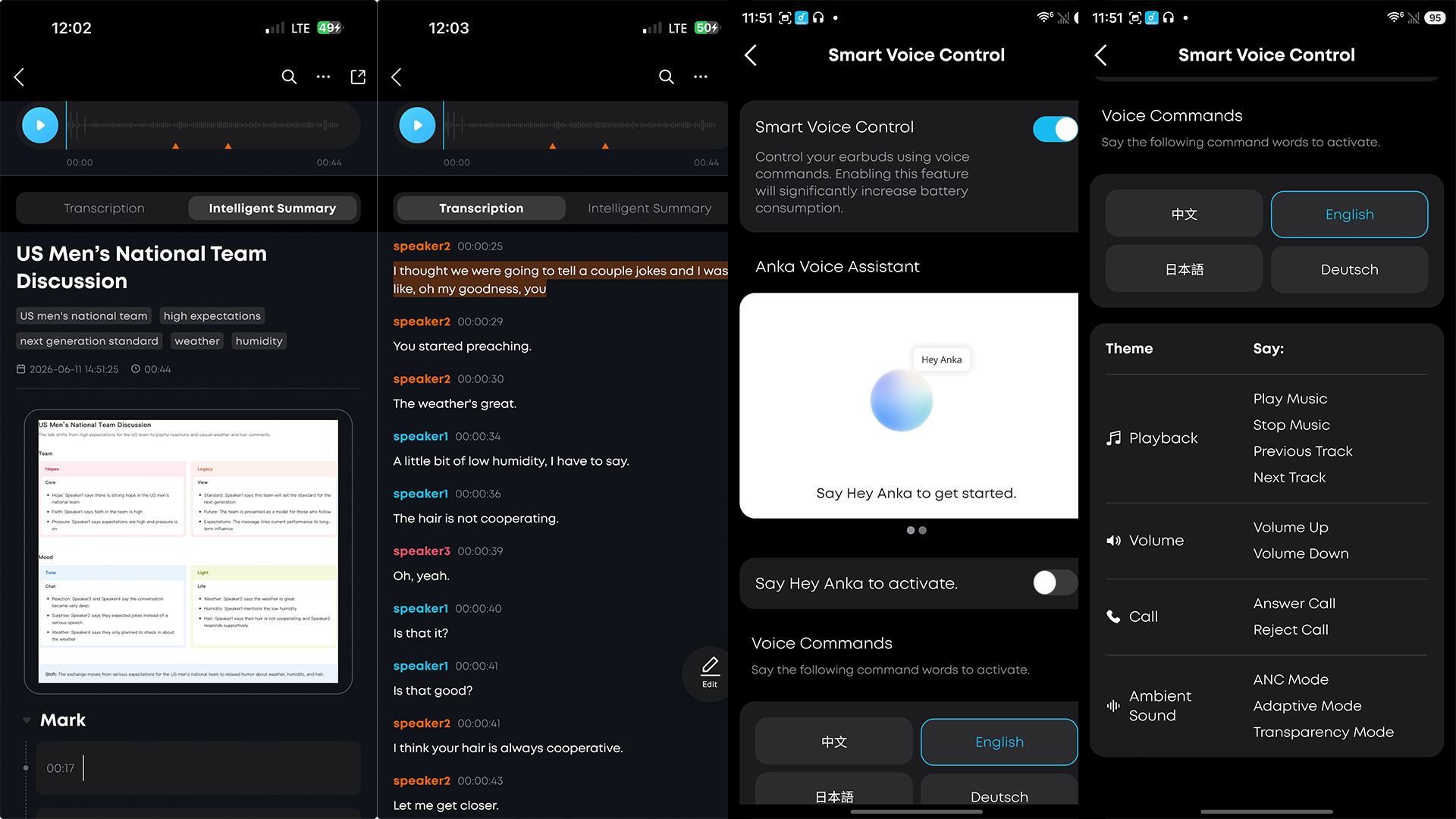
The AI Note Taker feature is really good! It works much like Otter AI or Zoom call transcription, in that it recognizes individual speakers and does so well (see image below). The only time it gets confused about who is speaking is when people speak over each other.

(Image credit: @tshakaarmstrong)

The Anker Thus chip also enables highly responsive voice commands that control many functions without an internet connection, like Sony and Samsung’s flagship earbuds (see above). The only thing I found a bit hit-or-miss was voice chat with the Soundcore personal assistant, Anka.

You can chat with it and ask it to do things, but I found more complex “asks” to be a bit less reliable than the excellent offline voice commands.

The rest of the experience: The highs and lows

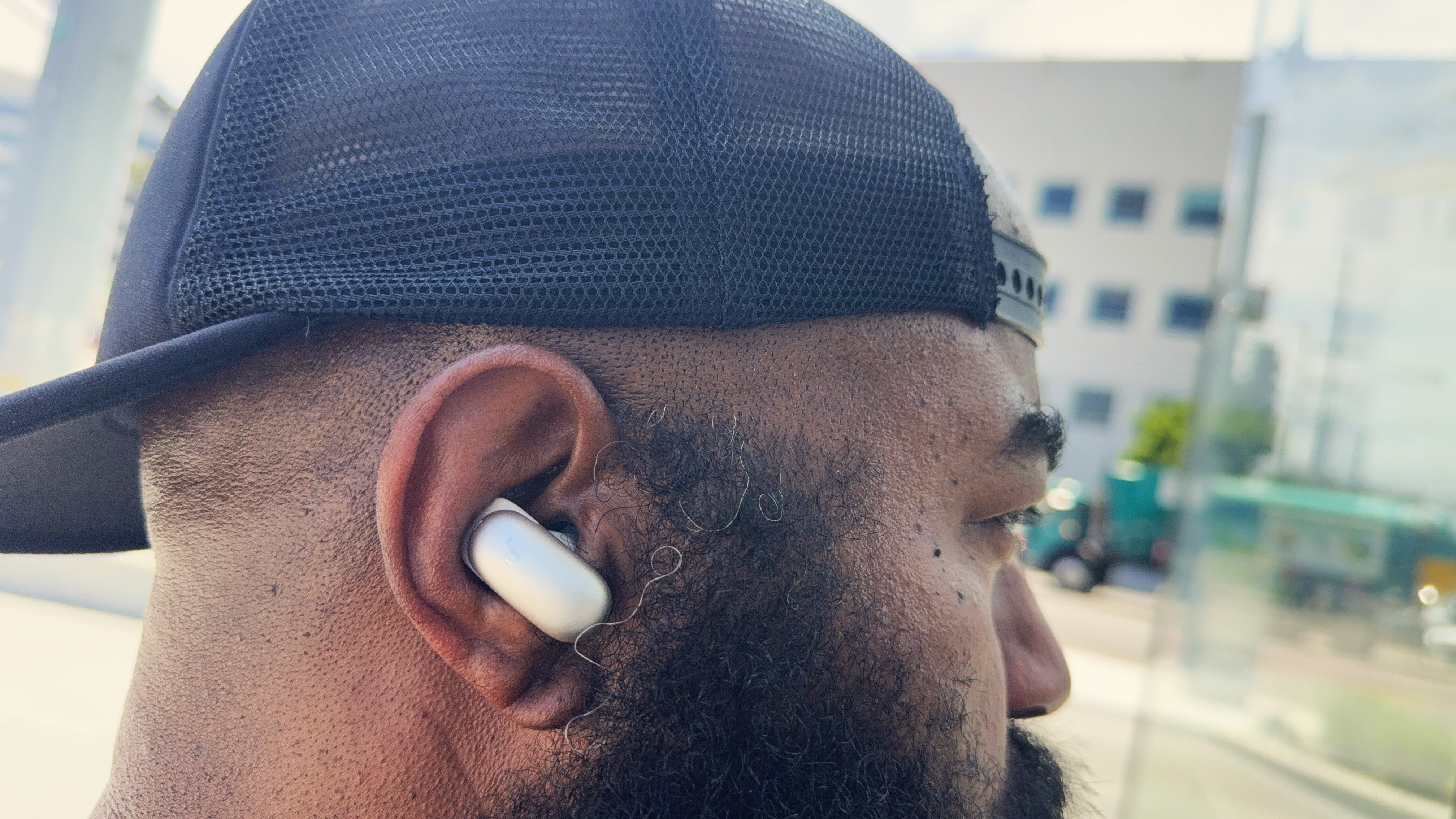
Reviewer wearing the Anker Soundcore Liberty 5 Pro Max on a busy metro street

(Image credit: @tshakaarmstrong)

Listening to the chaotic Jazz romp “Moanin’” performed by Charles Mingus and crew, the Liberty 5 Pro Max did an admirable job of not turning the most chaotic moments of the song into a pot of mashed potatoes, handling the chaotic mix better than the venerable Sony WF-1000XM6.

The only area lacking was the high frequencies in the pop and hip-hop genres. Listening to Jamiroquai’s “Starchild,” his vocals are clear, and while definitely not buried in the mix, highs feel a bit subdued.

Top-end smoothness is a treat when listening to various genres of rock music. System of a Down’s “Toxicity” is delightful, and nothing ever came across even remotely sibilant.

You’re definitely getting popular, low-end-emphasized tuning out of both Pros, but thanks to features like HearID and their excellent choice of sound EQ’ing options, you really can effectively tune the audio frequencies to your liking.

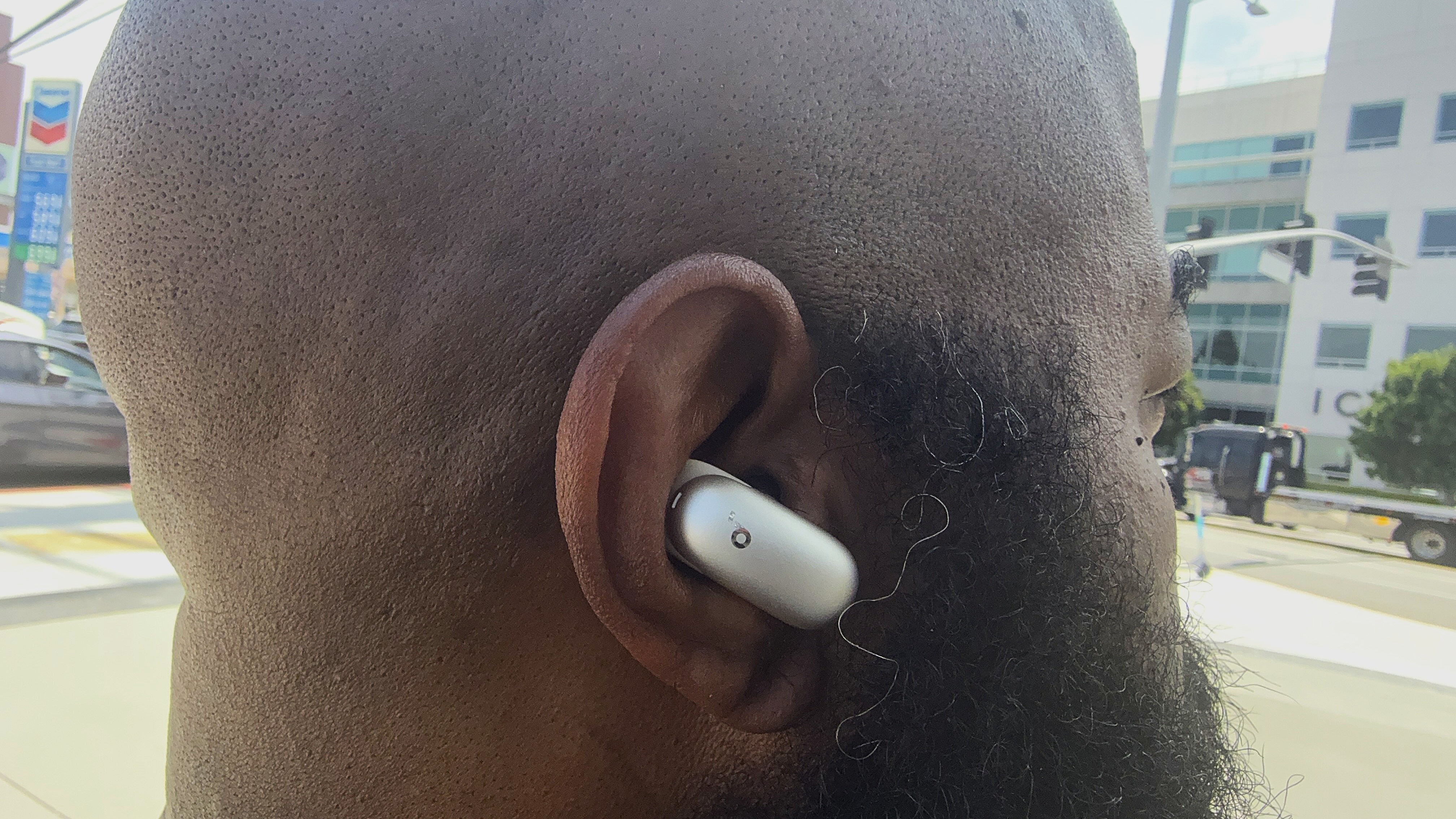
Reviewer wearing the Soundcore Liberty 5 Pro Max on a busy metropolitan street

(Image credit: @tshakaarmstrong)

ANC is also noticeably improved. Mid-range noise, like voices in the background, and higher-frequency sounds, like the clank of weight plates in the gym, are noticeably softened compared to the Liberty 5. With the improved ANC activated, LDAC HiRes enabled, and AI functionality, I still found myself getting around 6 hours of battery with the ‘buds.

The only place I found noise controls lacking at this price point was in the ability to quickly attenuate unexpected loud noises, such as dropping a weight or a pan, while in Transparency mode. My Powerbeats Fit immediately mutes unexpected loud noises, but the Liberty 5 Pro doesn’t respond fast enough.

A noteworthy upgrade

Anker Soundcore Liberty 5 Pro Max

(Image credit: @tshakaarmstrong)

While the ANC is improved but not a market leader, the microphones absolutely are now, and that begs the question: Liberty 5 Pro Max or Sony WF-1000XM6? Market-leading active noise canceling or market-leading call quality?

For most people, the audio quality when listening to music or movies is close enough that it isn’t a major point of contention between the two, but it’s very easy to recommend the Liberty 5 Pro series to you because they’re that good, and they’re roughly $100 cheaper than Sony’s flagship. In this economy, that means a lot!


from Latest from Android Central https://ift.tt/hY27NRL
via IFTTT

I spent a year with the Galaxy Z Flip 7 — these are 3 things I love and 3 things I don't

In the flip phone market, Samsung lives in Motorola's shadow. Even with the Motorola Razr Ultra 2026's price hikes, it will be the flip phone for the Galaxy Z Flip 8 to beat. Before you decide whether to buy the Razr Ultra 2026, the Galaxy Z Flip 8, or an older model, you might want to know how the Samsung Galaxy Z Flip 7 is holding up one year later.

I've spent exactly a year with the Galaxy Z Flip 7, testing Samsung's foldable against the older Galaxy Z Flip 6 and the entire Motorola Razr 2026 lineup. Truth be told, the Galaxy Z Flip 7 is slightly underrated. It's easy to ridicule the flip phone for its poor cover screen software, but beyond that, the Galaxy Z Flip 7 features polished hardware and great hardware support.

It's still going strong in 2026, and these are the things I love (and don't love) about the Galaxy Z Flip 7 after long-term use.

Samsung's flip design is still better than Motorola's

The Samsung Galaxy Z Flip 7.

(Image credit: Brady Snyder / Android Central)

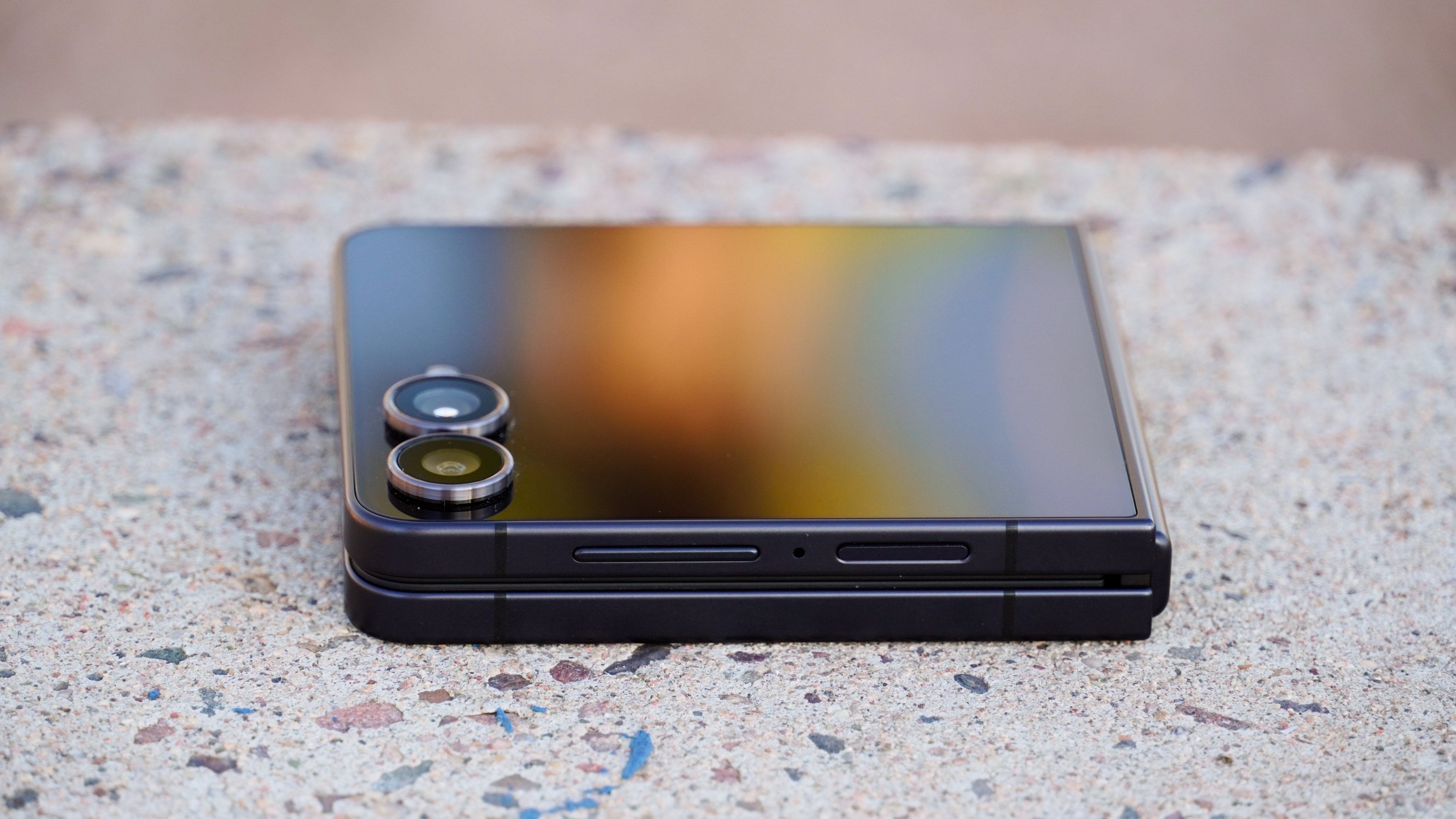
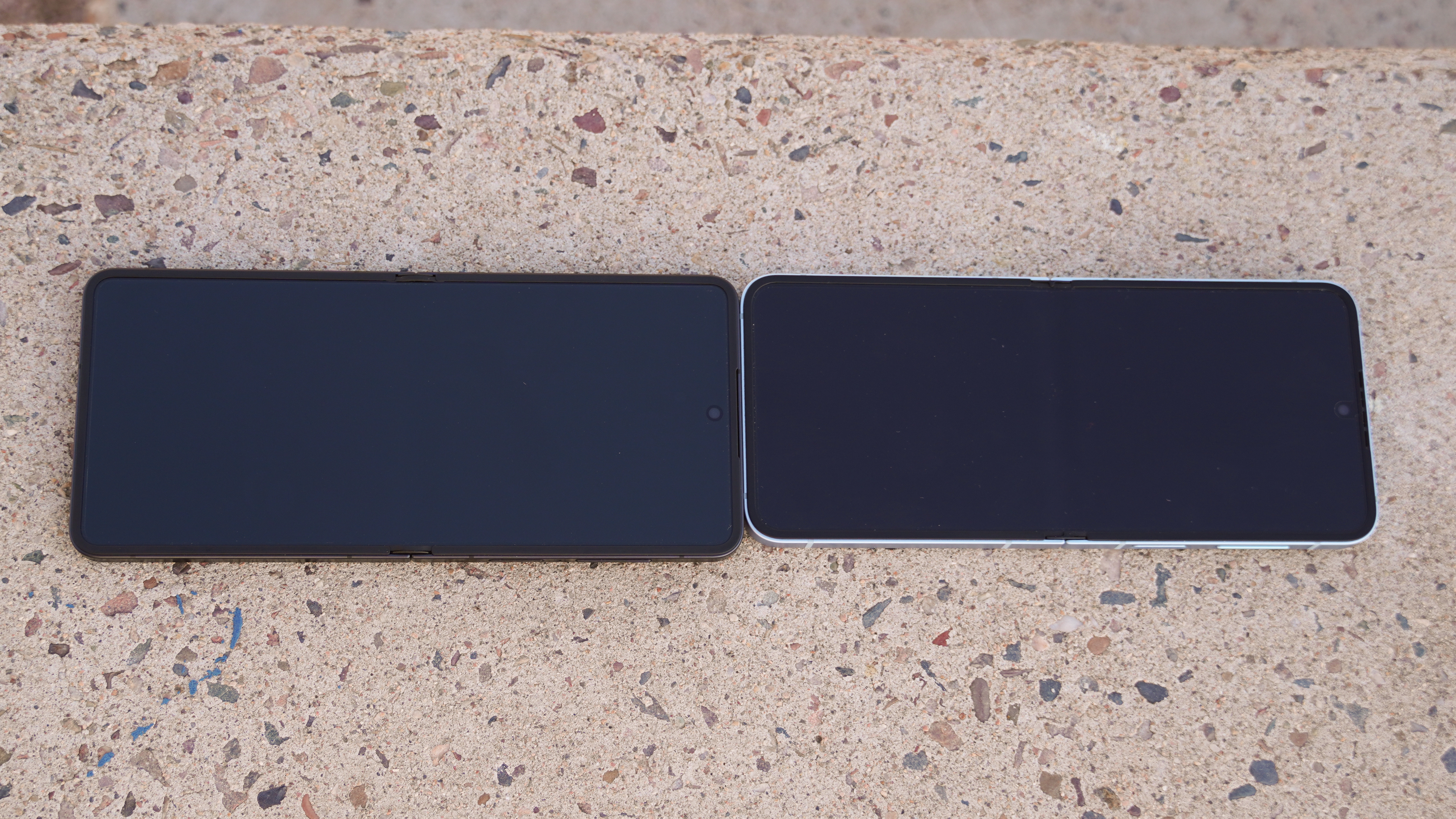
The Samsung Galaxy Z Flip 7's IP48 certification won't win any awards, but overall, this is the best-built foldable you can buy in North America. It's sturdy, with a strong hinge and a nearly crease-less display. My favorite part about the Galaxy Z Flip 7 is its form factor. The flip phone weighs only 188 grams and measures just 13.7mm when folded, seriously undercutting the Razr Ultra 2026.

I can guarantee you'll notice the thinner, lightweight build of the Galaxy Z Flip 7 as you live with it for months. It's no Galaxy Z Fold 7 — flips simply have less internal space to work with, resulting in thicker builds — but it's still impressive. More importantly, I'm fond of the Galaxy Z Flip 7's rectangular shape. It feels polished and premium, whereas I find the Razr Ultra 2026's curvy design to make it look thicker than it actually is.

Motorola gets credit for the stylish PANTONE colorways available throughout the Razr line, but I'll take the Galaxy Z Flip 7's footprint anyway.

The Galaxy Z Flip 7's cover screen software is still disappointing

The cover screen experience on the Samsung Galaxy Z Flip 7 compared to the Galaxy Z Flip 6.

(Image credit: Brady Snyder / Android Central)

The one Galaxy Z Flip 7 drawback that is borderline disqualifying is the phone's cover screen software. It's more limited than the Motorola Razr Ultra 2026 — you need to use extra apps like MultiStar to get basic apps running on the Galaxy Z Flip 7 cover screen. The real problem is the Galaxy Z Flip 7's Flex Window software pales in comparison to the Galaxy Z Flip 6.

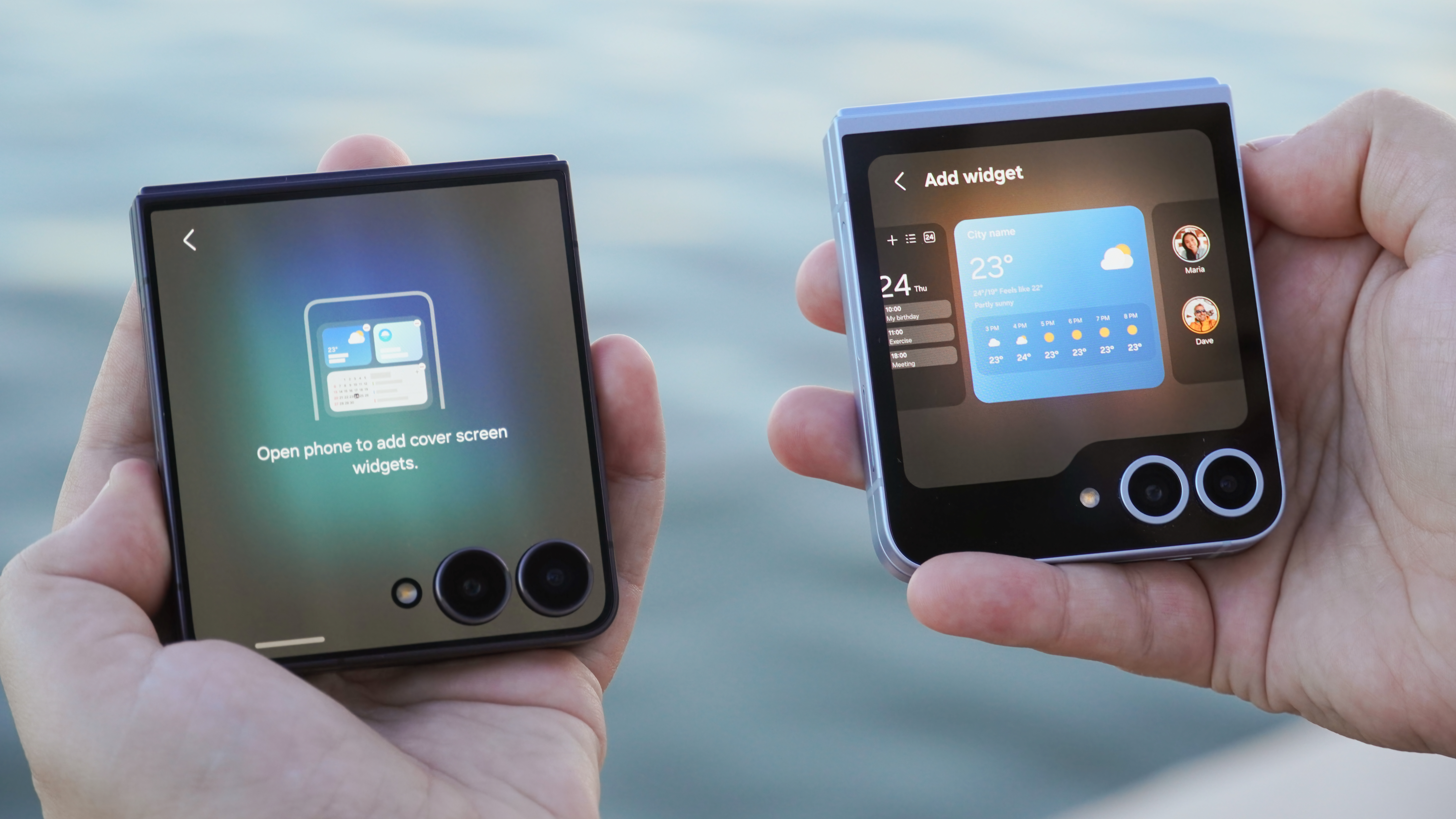
You used to be able to add widgets and use full-screen widgets on the cover screen. Now, you have to open the phone to add widgets, and the largest widgets (with the exception of launchers) are 2x2. As such, you can see fewer bits of information on the Galaxy Z Flip 7 cover screen than on the Galaxy Z Flip cover screen. I've hoped for updates to improve cover screen functionality, but running One UI 8.5, it's the same story.

If running full-screen apps on the cover screen and enjoying data-dense widgets are important to you, the Galaxy Z Flip 7 unfortunately isn't a real option. You'll have to go with a Motorola flip.

The folding display's aspect ratio is nearly perfect

The Samsung Galaxy Z Flip 7.

(Image credit: Brady Snyder / Android Central)

After using the Galaxy Z Flip 6 and Galaxy Z Flip 7, it's clear that the wider screens can't be understated. The 6.9-inch folding display on the Galaxy Z Flip 7 measures 68.6 millimeters wide. This makes it feel just like a Galaxy S25 Edge or Galaxy S26 Plus, and the Galaxy Z Flip 7 is a joy to use as a result. Foldables typically compromised the traditional smartphone experience with narrow screens and odd aspect ratios, but the Galaxy Z Flip 7 doesn't.

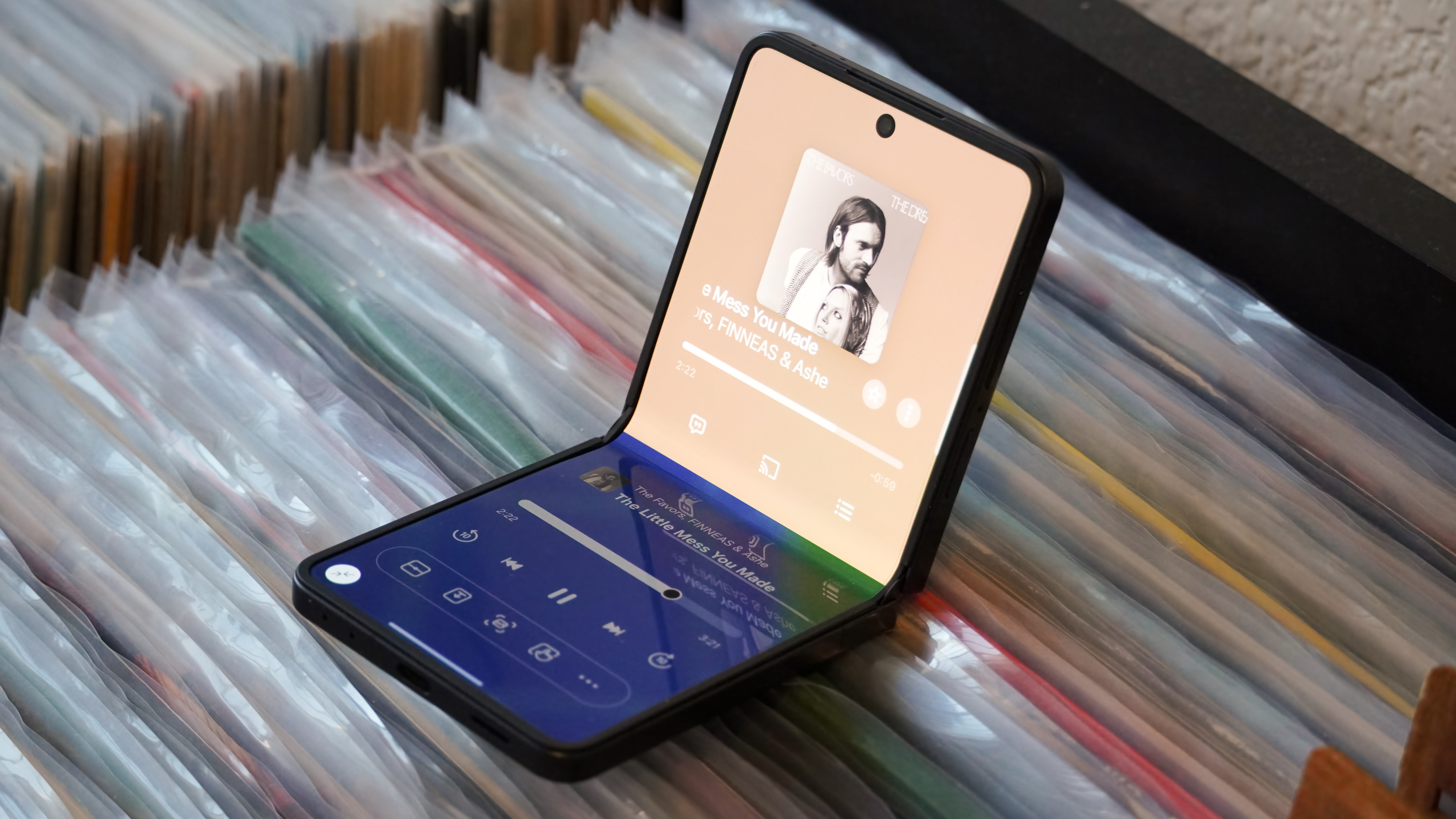
Although the cover screen software leaves a lot to be desired, the Dynamic AMOLED 2X panel inside is outstanding. The aspect ratio and size are two big reasons why, but the 120Hz refresh rates and 2,600 nits of peak brightness are others. This is more like a slab phone you can fold in half, rather than a flip phone with a cover screen designed to keep you from opening it. A year with the Galaxy Z Flip 7 taught me that Samsung and Motorola's flips might serve different audiences.

The camera sensors are lackluster, even for a foldable

The Samsung Galaxy Z Flip 7.

(Image credit: Brady Snyder / Android Central)

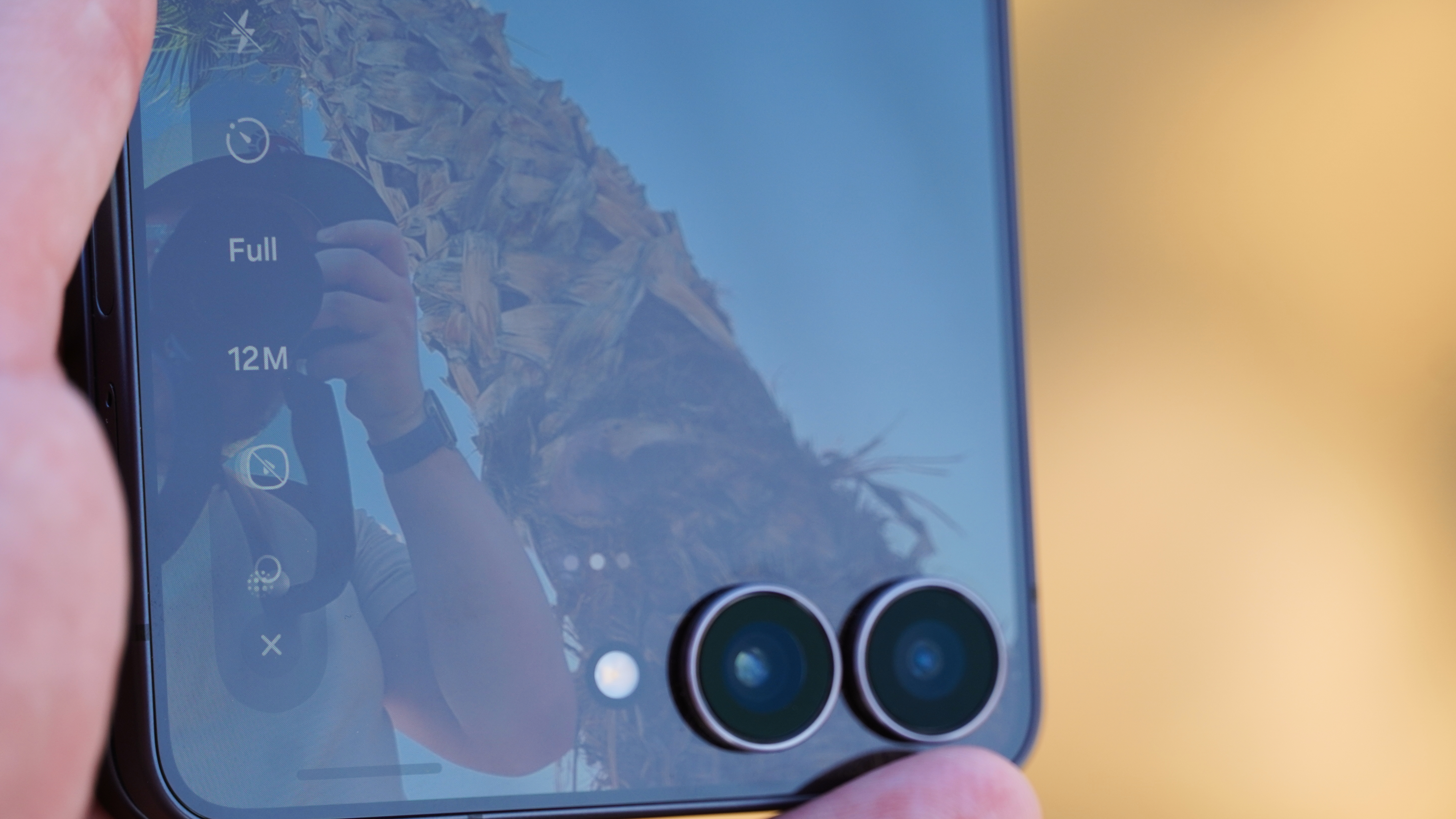
Samsung's slow pace of smartphone upgrades is well documented, and the Galaxy Z Flip 7's camera system is further evidence. There's a 50MP main camera and a 12MP ultrawide camera, which isn't great compared to Motorola's dual 50MP sensors on the Razr Ultra 2026.

Yes, Motorola's phone is a year newer and more expensive, but the brand's last-gen Razr Ultra 2025 also had dual 50MP rear cameras — and it costs less than the Galaxy Z Flip 7 today. I didn't find the Galaxy Z Flip 7's camera system to be terrible, but there are certainly flip phones with better offerings.

One UI is superb and there's long software support

The Samsung Galaxy Z Flip 7.

(Image credit: Brady Snyder / Android Central)

It's easy to forget that, outside of the Galaxy Z Flip 7's cover screen limitations, the foldable ships with great software. One UI 8 was excellent out of the box, and One UI 8.5 is better. Soon, the flip phone will get the boost to One UI 9. For a lot of people, One UI will feel smoother, cleaner, and more versatile compared to Motorola's My UX.

The big thing to remember is the phone's software support. With a seven-year guarantee, the Galaxy Z Flip 7 will get updates for years to come. The Razr Ultra 2026 is supported for less than half as long, with only three guaranteed Android OS upgrades. Especially considering the high cost of Motorola foldables, the Galaxy Z Flip 7 (and the new Galaxy Z Flip 8) feel like the better deal due to software support.

Battery life and charging could use some work

The Samsung Galaxy Z Flip 7.

(Image credit: Brady Snyder / Android Central)

As silicon-carbon batteries become more common on phones sold in the U.S., the Galaxy Z Flip 7's battery looks worse. It's only a 4,300mAh battery with slow 25W wired charging, and no Qi2 magnets. Compared to the 5,000mAh Razr Ultra 2026, it's not even a competition. Even though the Galaxy Z Flip 7 has a larger battery than the Galaxy Z Flip 6, I found that battery life was about the same between generations.

The Galaxy Z Flip 7 might be old news with the Galaxy Z Flip 8 arriving, but that doesn't mean it's down for the count. This is still a great phone that can rival Motorola's best in a few areas. It's also woefully outdated in others. If you already have a Galaxy Z Flip 7, though, there's no need to replace it yet.


from Latest from Android Central https://ift.tt/zTYH83M
via IFTTT

Gemini gets better memory: smart home update refines automations and more

What you need to know

  • Google is rolling out several smart home updates, including one for Gemini that expands its "conversational memory" to 15 minutes.
  • Gemini Live arrives on first-gen Home Mini and Nest Hub devices, alongside improved Automation guidance and smart lock alerts for removed users.
  • Recent updates for Google Home include Pet Memory for Gemini and Suggested Automations.

Google is rolling into the weekend with a few updates to its smart home systems that you should check your devices for.

Gemini for Home's early access is getting a few refinements this week. Google states Gemini Live is now available on first-gen speakers and displays. The patch notes list first-gen Home Mini and Nest Hubs as devices receiving Gemini Live this week. Keep in mind that only Google Home Premium subscribers can access this. On a related note, Gemini's memory is getting stronger.

Google says the AI's "conversational memory" now lasts for 15 minutes. This will be present "across the entire Gemini for Home experience." Users can follow up on something they've previously asked Gemini to do, so long as it's within those 15 minutes. Automations in the Home app will provide clearer "saving guidance." Google explains that the app will inform users if they're trying to save an automation with conditions but no starter.

Improved controls and labels for smart blinds and window coverings in Automations are included, alongside smart lock "security actions disclaimers." If users remove someone's access from their locks, the app will tell you that their passcodes "need to be changed or removed."

A July 2026 update is rolling out for Nest Cameras. This applies to the wired, third-gen Nest Cam Indoor, Nest Cam Outdoor (wired, 2nd-gen), and the Nest Doorbell (wired, third-gen). Additionally, Google now supports more of Walmart's Onn cameras: Outdoor Plug-In and Outdoor Floodlight Hardwired. Bug fixes make up the remainder of these updates, and you can view them in full.

The Home is looking smarter

The new redesigned Google Home app for Fall 2022

(Image credit: Nicholas Sutrich / Android Central)
Android Central's Take

You'd imagine that bringing AI and smart devices into the home would make life easier. It's touched on that, but Google acknowledges that there's more work to be done. Users reporting problems and offering feedback helps a bunch, too. Giving Gemini better memory is a highlight for me. Imagine if I told it to turn the lights on in one room, but then changed my mind. I don't have to restart the entire conversation from scratch now.

This conversational memory update for Gemini reminds us of the Continued Conversations patch from April. Asking the AI to do something is common with so many smart devices to control. What can get frustrating is having to repeat yourself to a computer. Continued Conversations aims to solve that. Google said this highly requested feature helps Gemini "remember" what's going on. It helps make the experience seamless, which is another area Google's been working on.

Gemini would keep its mic open for a few extra seconds, in case there's something to add. This memory upgrade takes this concept and expands on it. Even after Gemini closes its mic, you can still follow up, and it'll (hopefully) remember your conversation from two minutes ago. Pet Memory was another recent patch for Gemini that lets users customize how the AI recognizes their fur babies.

Instead of the generic sentences (i.e., "dog is walking in the living room), users can let the AI know the little one's name.


from Latest from Android Central https://ift.tt/t1pEvlC
via IFTTT

vendredi 24 juillet 2026

Samsung Galaxy Watch 10: Everything we know so far and want to see

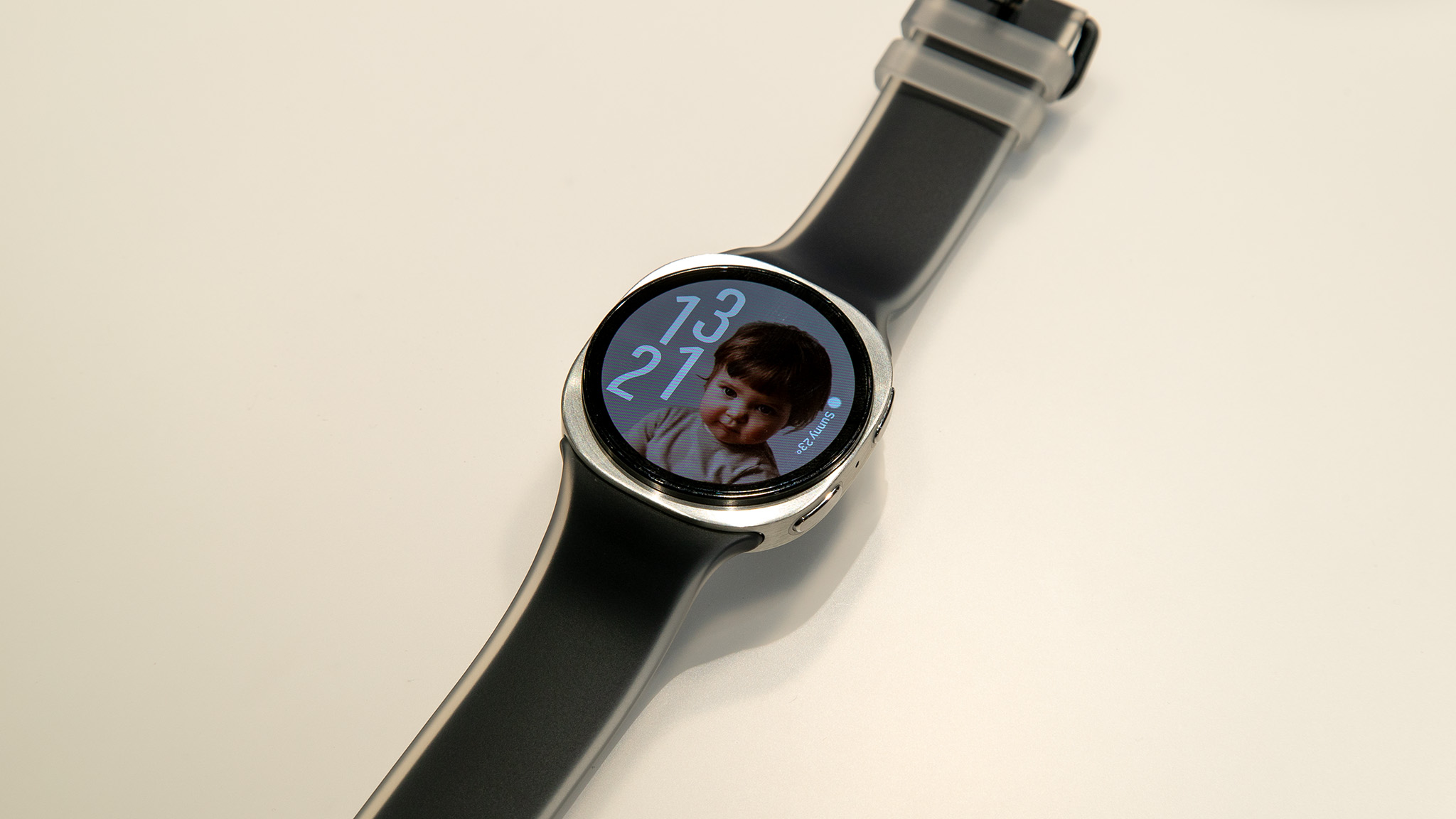
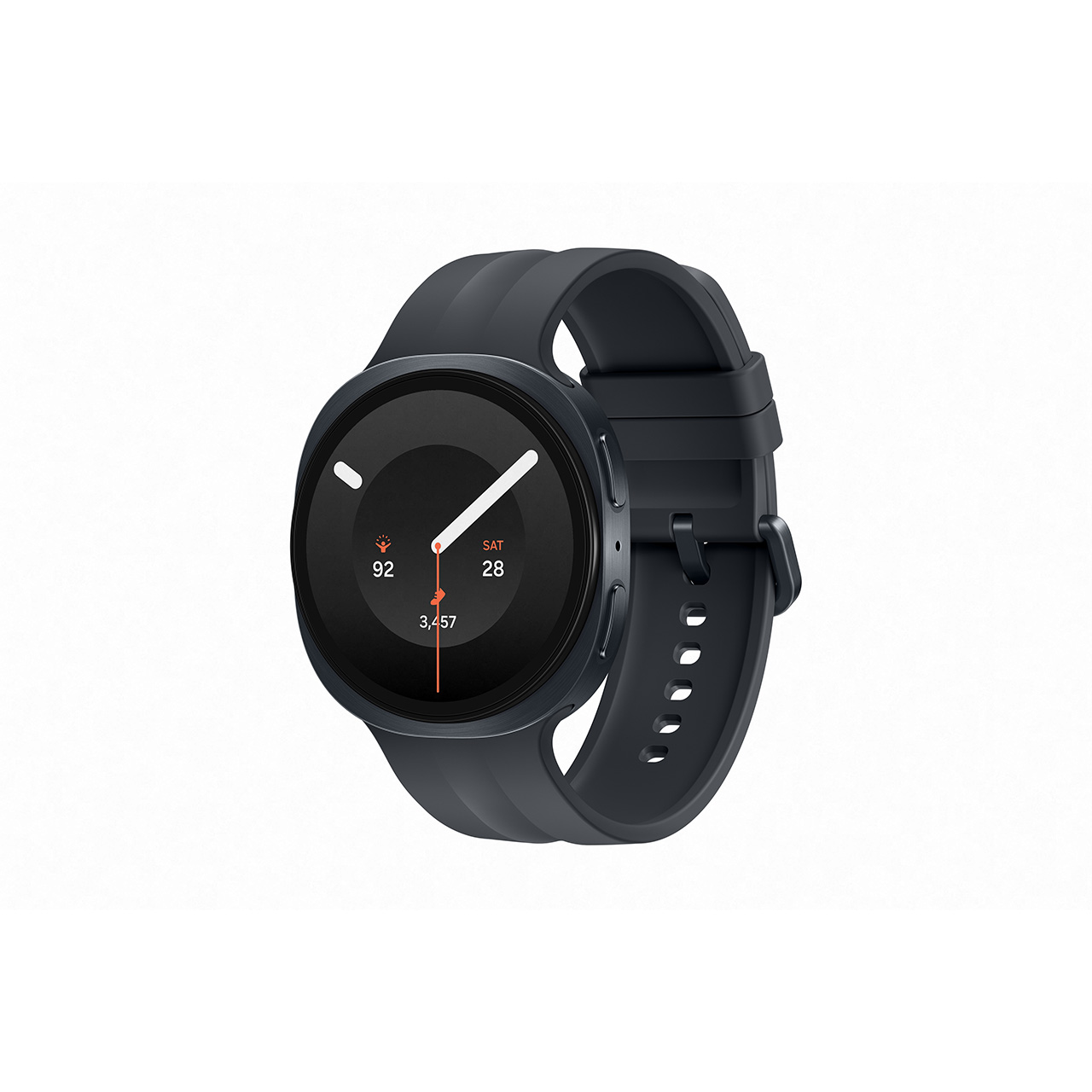
The Galaxy Watch 9 is now on sale globally, and while it has a slightly bigger battery and runs Qualcomm's silicon, the design is identical to last year. Samsung didn't change too much with the smartwatch, and it's the software where the brand focused most of its attention.

If anything, it's the Galaxy Watch Ultra 2 that got most of the upgrades this time, and that's also understandable — last year's model missed out on any new changes. By that logic, Samsung should offer meaningful upgrades with the Galaxy Watch 10 next year, and while there isn't much in the way of information about the smartwatch at this moment in time, that will change over the coming months. In the meantime, I'm listing a few features that I want to see in next year's smartwatch.

Samsung Galaxy Watch 10: Pricing and availability

Hands-on with the Samsung Galaxy Watch 9

(Image credit: Derrek Lee / Android Central)

Samsung increased prices across the board this year, with the 40mm Galaxy Watch 9 starting at $379 (a $30 increase from last year), and the 44mm starting at $409 (also $30 higher than last year). The LTE models got the same $30 price hike, and while smartwatches aren't quite as affected by the RAM and storage crisis, it is entirely likely that the Galaxy Watch 10 will see a similar uptick in pricing.

That's just the way the industry is going, and with the RAM shortage set to continue well into 2027 and beyond, we could see brands raise prices next year as well. Obviously, it's too early to talk about what the Galaxy Watch 10 could cost, but I'm predicting a $399 starting price.

Samsung Galaxy Watch 10: What I want to see

Hands-on with the Samsung Galaxy Watch 9

(Image credit: Derrek Lee / Android Central)

The one upgrade I want on the Galaxy Watch 10 is improved battery life. Samsung put a massive battery in the Galaxy Watch Ultra 2 while somehow making it thinner, so it shouldn't be difficult to do the same with the Galaxy Watch 10. While the Galaxy Watch 9 lasts two days, I want to see at least three days before needing to charge the smartwatch, and this is something Samsung needs to address next year.

In a similar vein, I want charging to be faster; Samsung doesn't quite do enough in this area, and that needs to change in 2027. I also want Samsung to increase durability to 10ATM, just like the Watch Ultra 2. A better selection of colors would be nice, as Samsung doesn't make all color variants available in all regions.

Also, we need a model with a rotating bezel. I still don't get why Samsung doesn't offer this as standard on one of the Galaxy Watch 9 models, and there isn't a Classic option this time either. Samsung must've noticed that the rotating bezel is an oft-requested feature from long-time users, so it isn't quite clear why the brand doesn't prioritize it.

Where Samsung has an advantage is with the software, and this year saw an influx of AI-assisted features. Of course, this isn't just with the smartwatches, with Samsung heavily pushing Galaxy AI on the Galaxy Z Fold 8 Ultra and Z Fold 8. It is likely that Samsung will continue to lean into AI with next year's devices as well.

There's higher-than-usual interest in the Galaxy Watch 10 given that this year's model didn't have many upgrades, and I will update this post as soon as we have any tangible information around the 2027 model. In the meantime, if you need a smartwatch, the Galaxy Watch 9 is the best bet.


from Latest from Android Central https://ift.tt/DXfVRuJ
via IFTTT