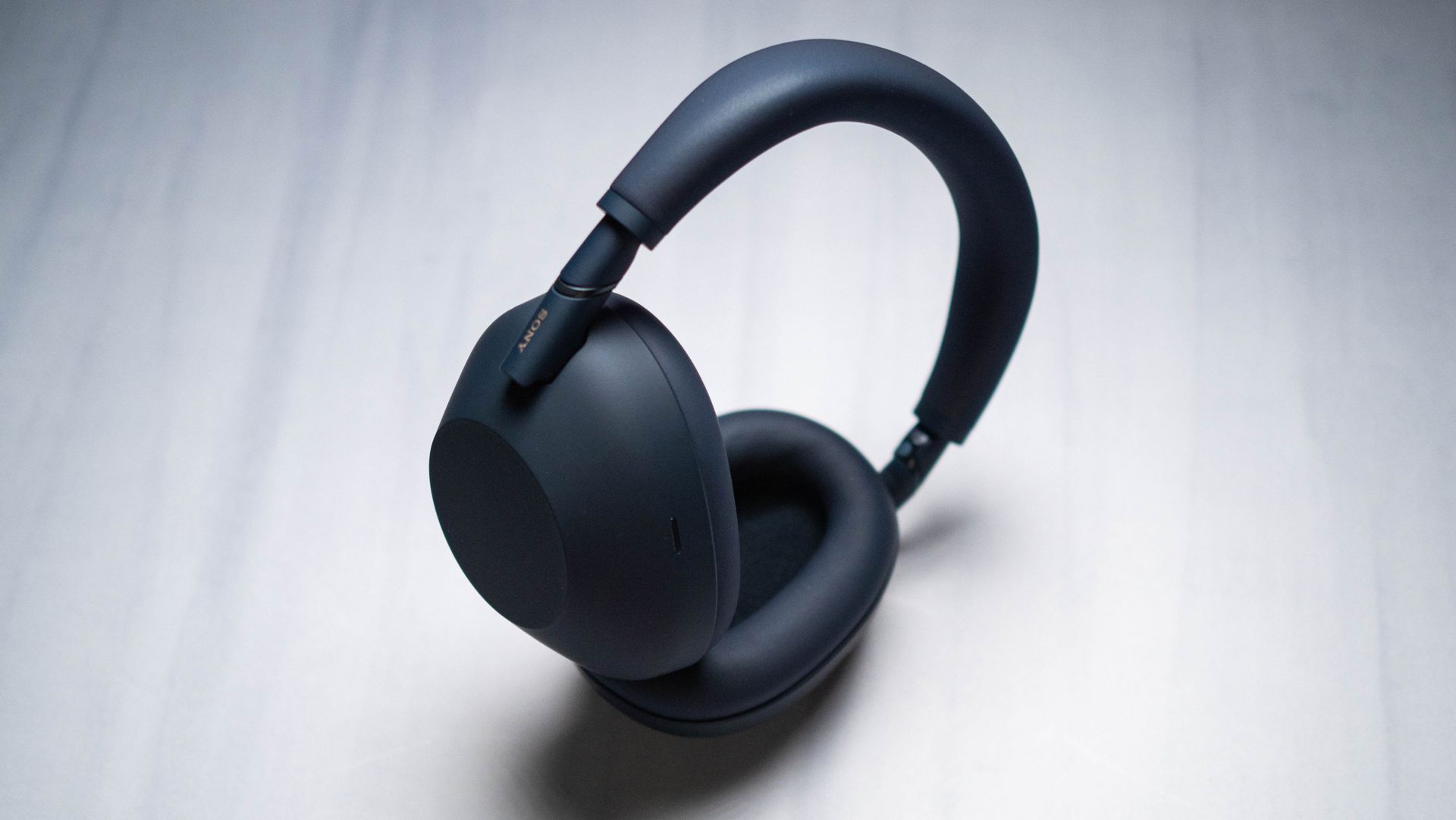
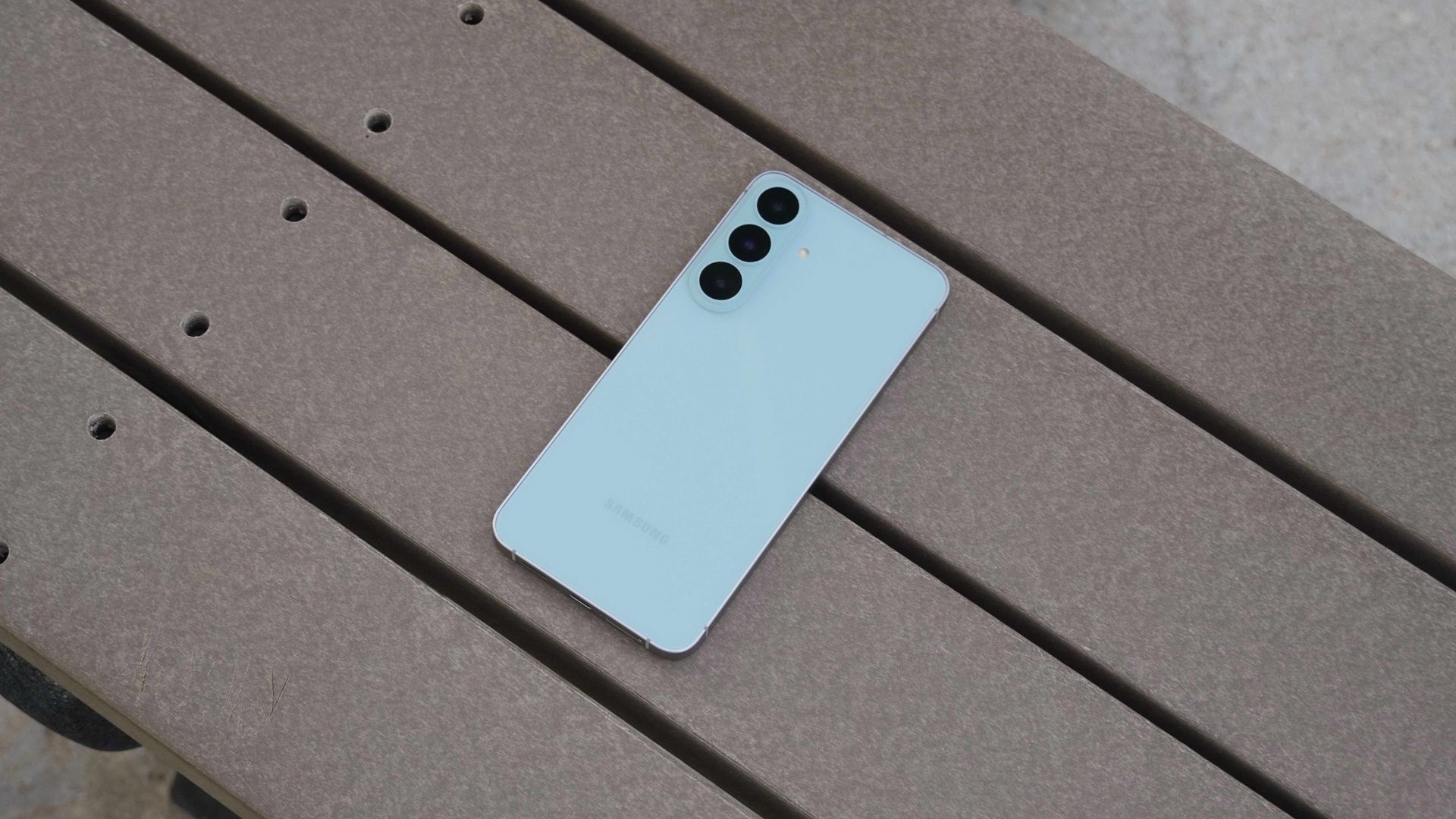
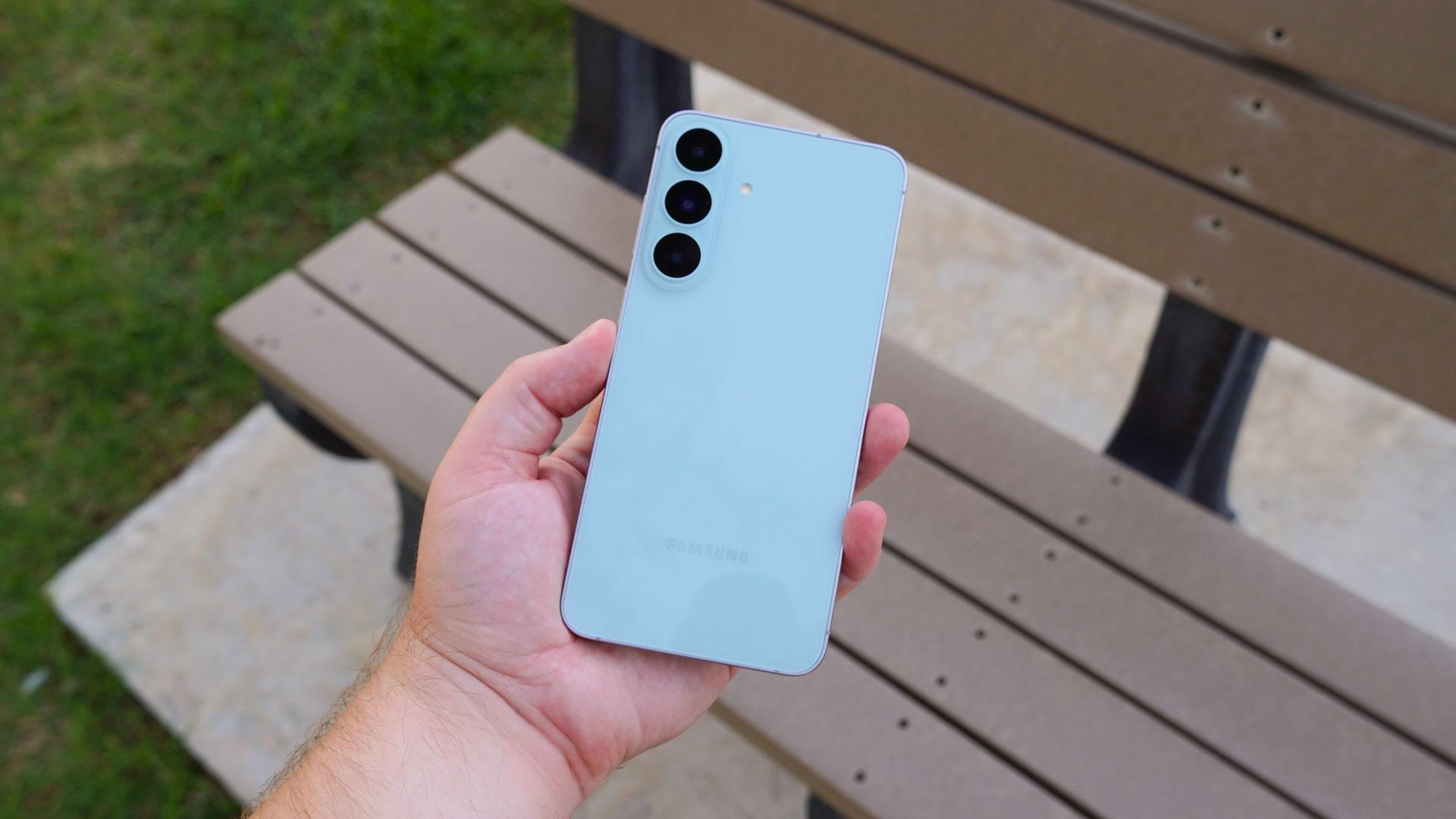
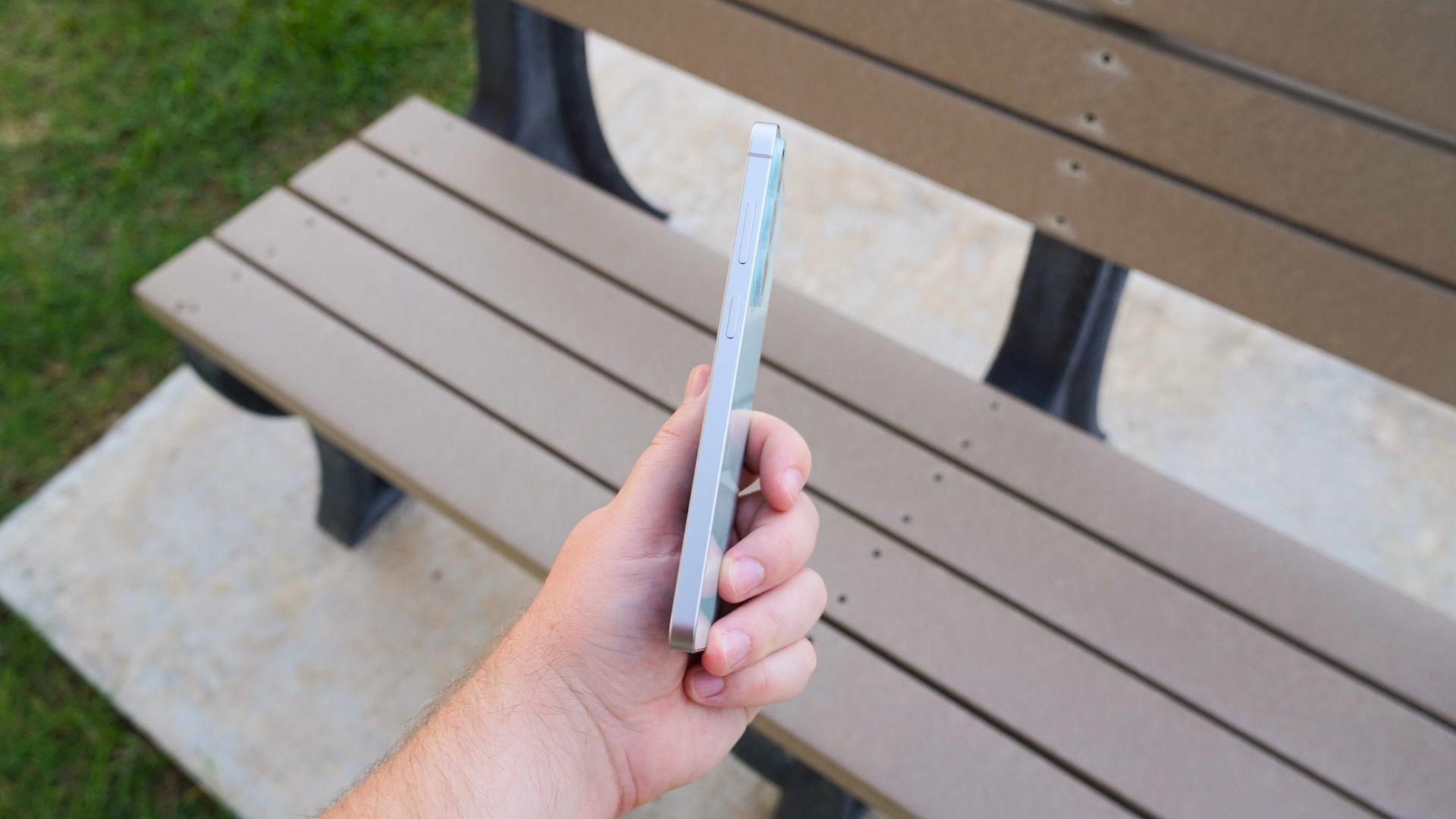
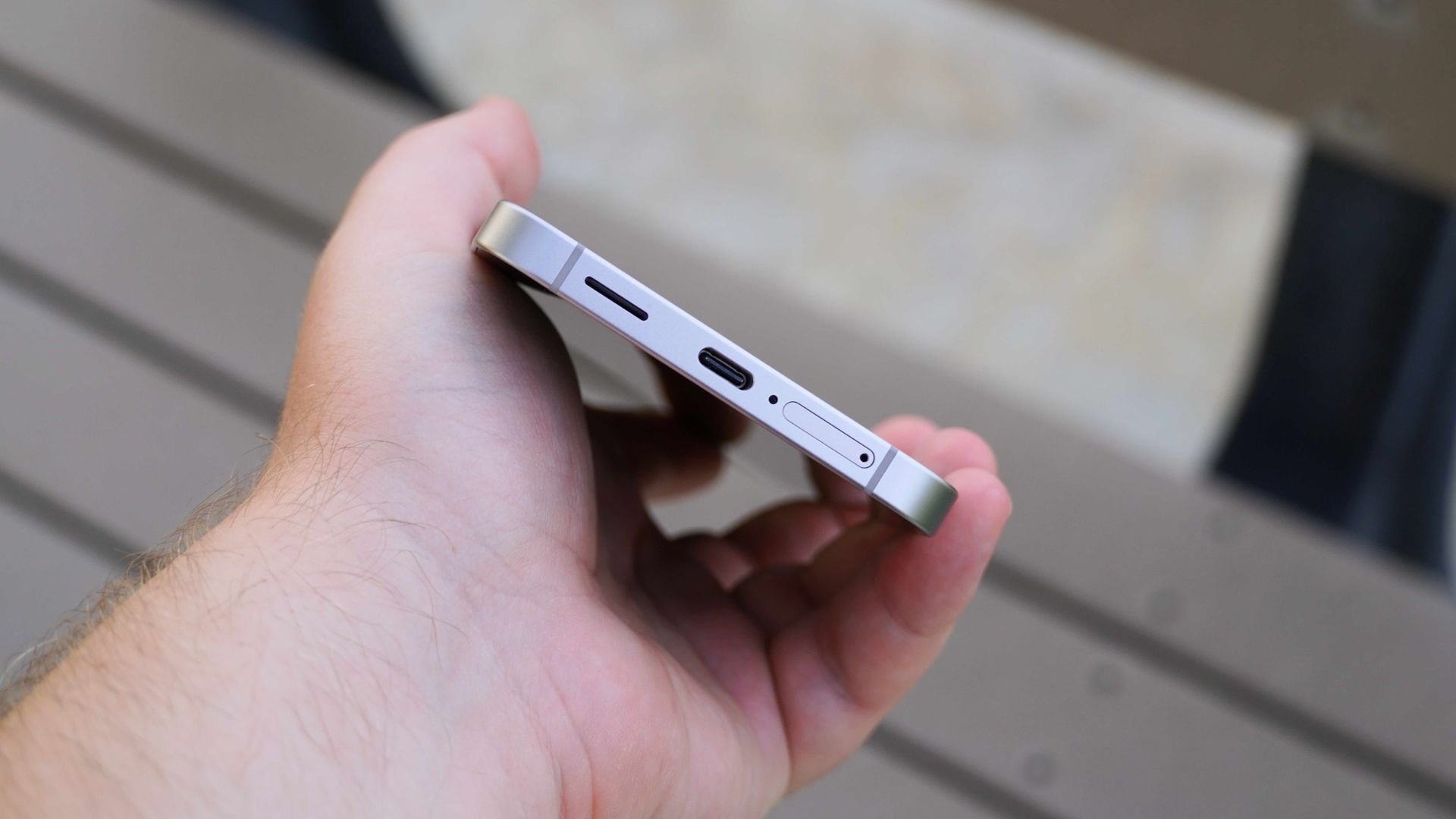
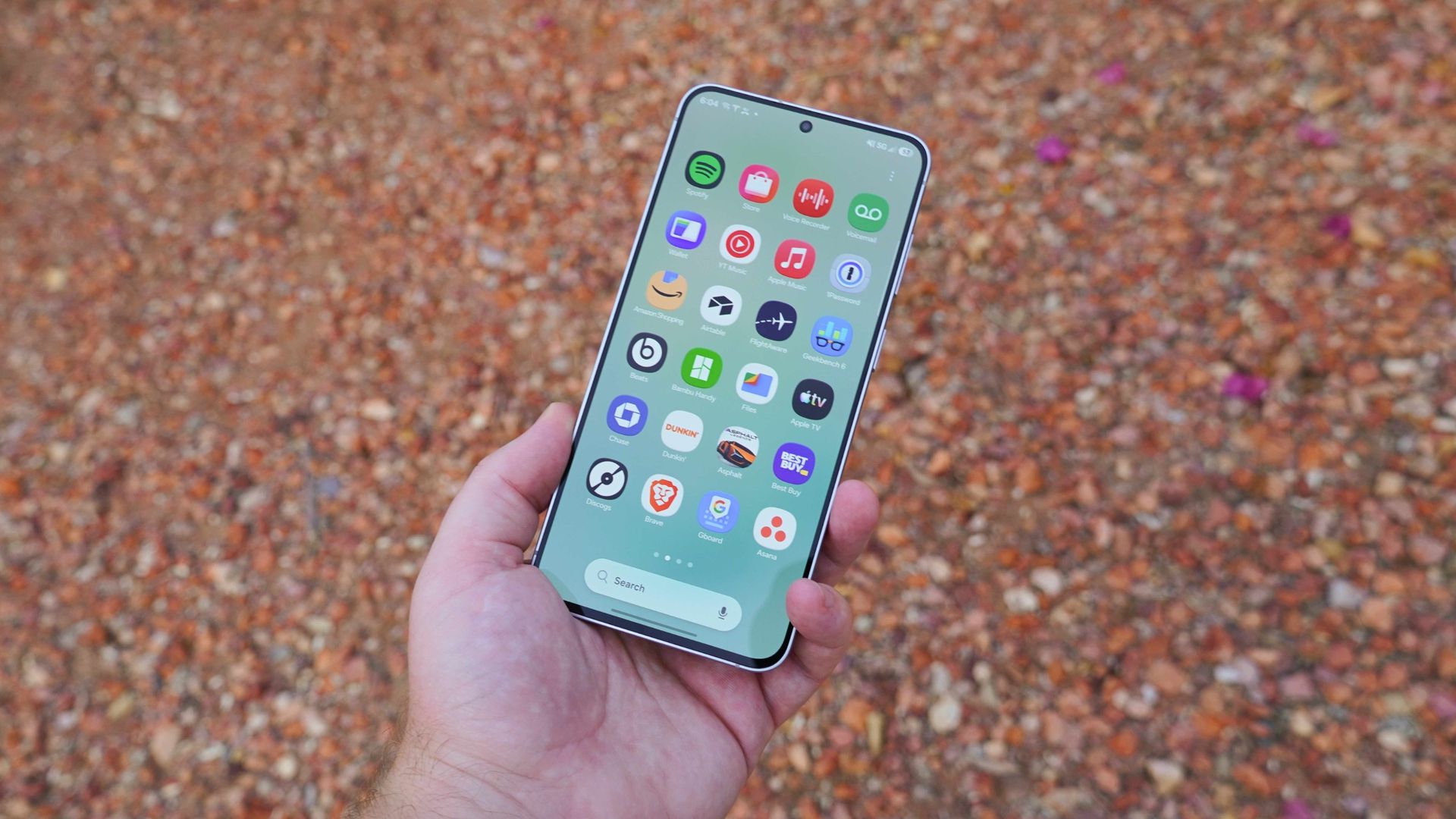
Samsung is reportedly developing its first Galaxy-branded over-ear headphones, which could launch as Galaxy Studio.
The leak comes from evowizz, who previously revealed Samsung's Galaxy Buds On before their official launch.
Samsung hasn't confirmed a launch date, although its rumored November Galaxy Glasses event could be a possibility.
Samsung could soon have a challenger to Apple's AirPods Max and Sony's flagship over-ear headphones, with the company reportedly working on a new pair called Galaxy Studio.
For years, brands like Sony, Apple, Bose, and Sennheiser have dominated the premium over-ear headphone market in the U.S. But it looks like another major brand could be joining the competition very soon. According to a new leak, Samsung is developing its own pair of over-ear headphones to complement the Galaxy Buds lineup, and they could be called Galaxy Studio.
As spotted by 9to5Google, leaker evowizz on X has shared that Samsung's upcoming over-ear headphones will carry the Galaxy Studio branding. Interestingly, this is the same leaker who first revealed details about Samsung's open-ear earbuds, which officially launched earlier this month as the Galaxy Buds On. And now, the leaker has shared the name of Samsung's next audio product as well.
There isn't much information about the Galaxy Studio headphones just yet. We don't know what they'll look like, what features they'll offer, or how Samsung plans to position them against premium headphones like the AirPods Max and Sony's WH-1000X series.
There's also no word on when Samsung plans to launch the Galaxy Studio. However, with the name now reportedly surfacing, there's a chance we could start hearing more about the headphones over the coming weeks.
Samsung still has a few major products left to unveil this year. The company is reportedly preparing to launch its first Galaxy Glasses powered by Android XR sometime in November, and it's possible Samsung could use the same event to introduce its new over-ear headphones as well.
Of course, that's just speculation for now, and Samsung hasn't officially confirmed the Galaxy Studio headphones. But it'll be interesting to see what the company comes up with, especially considering how competitive the premium headphone market already is. We'll update this article as more details about the Galaxy Studio emerge.
from Latest from Android Central https://ift.tt/lcitDqX
via IFTTT
Amazon announced its Alexa Tablet series, consisting of the Tablet 12 Pro, Tablet 11, and Tablet 8.
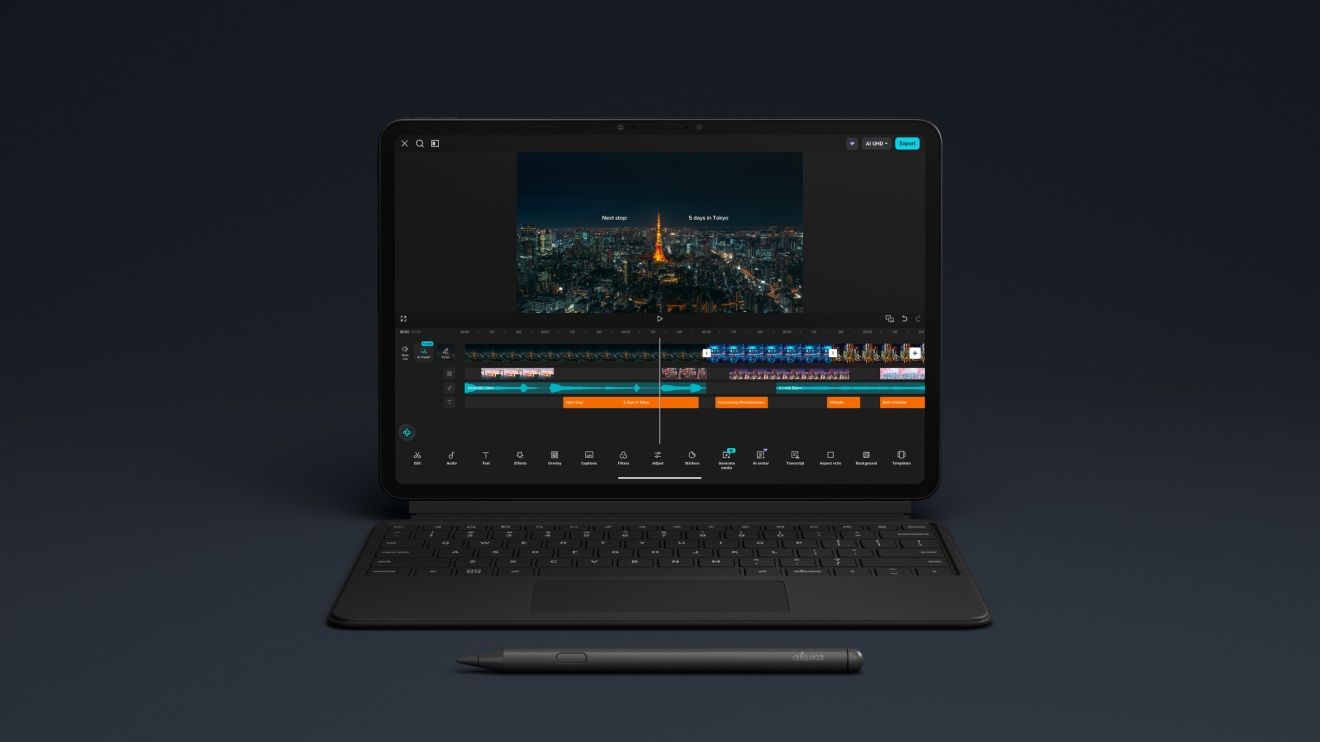
The Alexa Tablet 12 Pro sits at the top with a 12-inch display, quad Dolby Atmos speakers, multitasking capabilities (keyboard, stylus), and vibrant and Nanomatte display variants.
Amazon states the Tablet 11 and 8 focus on entertainment and reading comfort, respectively.
The Tablet 12 Pro starts at $499 for its vibrant display and $549 for its Nanomatte display variant—Tablet 11 begins at $329.99; Tablet 8 starts at $229.99.
Amazon announced a new direction for its tablets this morning (Oct. 8), introducing a trio of Android-based Alexa Tablets.
Amazon News revealed the Alexa Tablet line, which consists of the Alexa Tablet 12 Pro, Tablet 11, and Tablet 8. For context, the numbers refer to each tablet's display size (and its capabilities). Equipped with a 6.5mm aluminum body, the Alexa Tablet 12 Pro features a 12-inch display (120Hz refresh rate) and a 3:2 aspect ratio. However, Amazon states the 12 Pro offers two display variations: vibrant and Nanomatte.
To achieve this, the company states it partnered with Corning to create a Nanomatte display that retains the sharpness and clarity you'd find on a standard, vibrant screen. The Nanomatte display was "precision-etched" with anti-glare technology to make it easy to use outdoors.
Amazon also hyped up the Alexa Tablet 12 Pro's 4nm 8-core chip, which is reportedly "nearly three times faster processing and nine times faster graphics than any tablet we’ve ever shipped." The post highlights the tablet's following capabilities: graphics-intensive gaming, 4K streaming, quad Dolby Atmos speakers, and up to 16 hours of video playback. What's more, this wouldn't be an "Alexa Tablet" if Alexa were missing. Amazon states the 12 Pro features Alexa Plus in every facet.
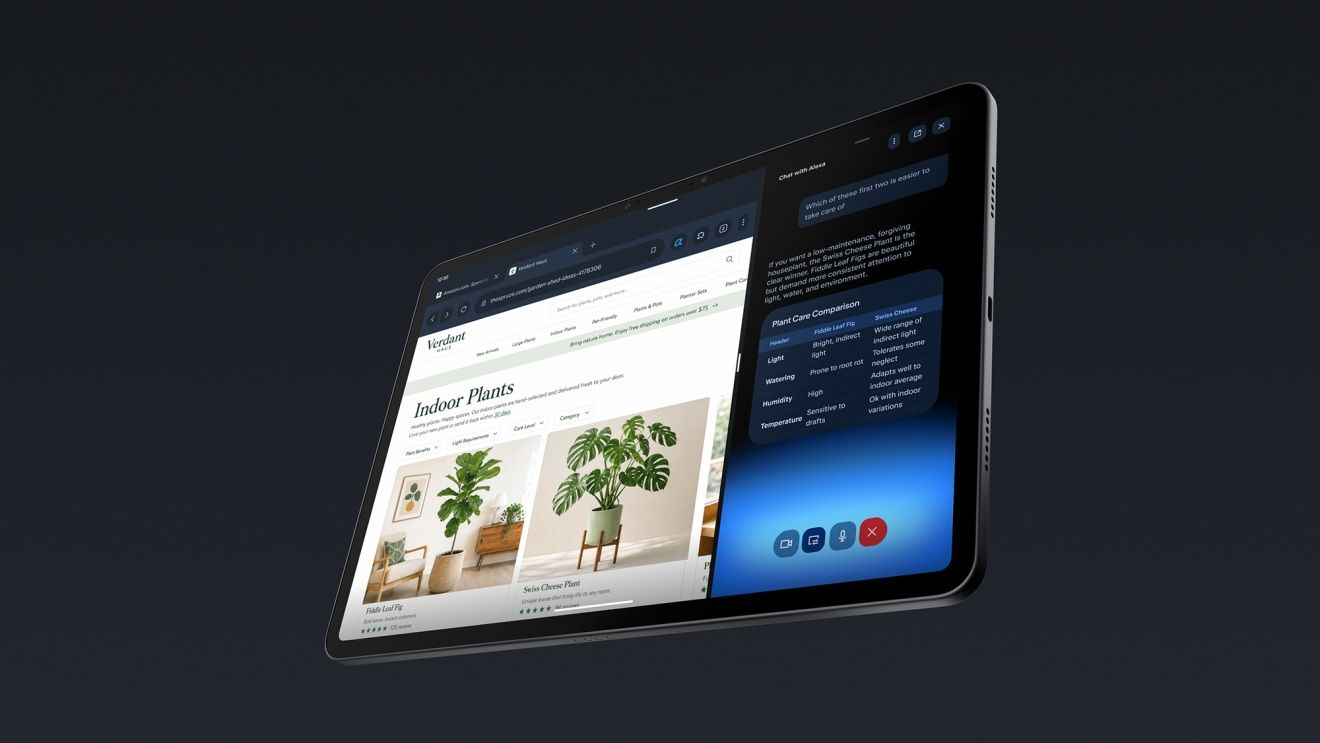
Users can call her forward with "Hey Alexa," or they can tap the "Ask Alexa" button. The AI will mimic the assistant you'd find in other products. The AI can help with smart home controls, answer questions, and more. Additionally, On-Screen Intelligence lets users bring Alexa Plus into their activities. You can share your screen with the AI for greater assistance and "more natural" conversations.
(Image credit: Amazon)
Kindle remains close to Amazon's latest tablet series. According to the company, users can "open a book in the Kindle app, and the device transforms into a distraction-free reading sanctuary." To that effect, the Tablet 12 Pro will silence your notifications and reduce its blue light, which will extend its battery life to ~20 hours.
For longer reading sessions, there's a soft paper tone option, as well as "pure grayscale" and "subtle warmth."
Elsewhere, the Amazon Tablet 12 Pro will launch with two accessories: the Tablet Pro Pen and the Tablet Pro Keyboard.
The Amazon Alexa Tablet 12 Pro is available in Graphite with 8/128GB (RAM/storage). Users can pick up the device starting at $499 or $549 for its Nanomatte display variant.
Tablet 11 & 8... and more for kids
(Image credit: Amazon)
The Alexa Tablet 11 and 8 feature the same thin aluminum body as the 12 Pro. However, the former delivers an 11-inch display, while the latter offers an 8-inch screen.
These tablets fulfill a specific purpose. Amazon states the Alexa Tablet 11 focuses more on the cinematic appeal of watching shows, movies, or playing games. This tablet is equipped with a 90Hz refresh rate and a 16:10 cinematic aspect ratio with dual Dolby Atmos speakers. Consumers will find 15 hours of video playback and the same Alexa Plus integration as the Pro model.
The Tablet 11 is available in Graphite, Amethyst, and Matcha with an 8/64GB configuration for $329.99.
The Amazon Alexa Tablet 8 settles for the eReader crowd. With its smaller build, Amazon is pushing its reading comfort and 14 hours of video playback. Consumers will find the Tablet 8 for $229.99 with a 4/64GB configuration. The device is offered in Graphite, Rosette, and Teal.
Amazon kept the announcement going with a round of Kids Tablets. Parents will find an 8.7-inch and an 11-inch tablet inside a kid-proof case. While these tablets are available today (Oct. 8), Amazon says these won't ship in the U.S., Mexico, and Canada until October 14.
from Latest from Android Central https://ift.tt/51PVNnh
via IFTTT
Samsung has reportedly asked suppliers to cut Q4 smartphone production by 20% to 30%.
The cuts could drop Samsung’s total 2026 production from an expected 270 million units down closer to the early 200-million range.
Skyrocketing smartphone DRAM prices are said to be squeezing margins, forcing Samsung to absorb higher manufacturing expenses or risk alienating buyers with steep price hikes.
Samsung looks set to do something counterintuitive in the smartphone market: make fewer phones rather than continue to make devices that barely make money.
Samsung was previously expected to produce around 270 million smartphones in 2026, but the latest cuts could push that total into the early 200-million range, the report said. Some seasonal slowdown is expected as buyers wait for the next Galaxy S series, but this year's drop is said to be significantly more than expected.
Based on the estimates from TrendForce that are cited in the report, Samsung produced around 240 million smartphones in 2025, which put it on par with Apple as the world’s biggest smartphone maker by volume. This demonstrates the scale that Samsung has been able to hold onto even as competition gets tougher.
The issue apparently has something to do with memory chips. Smartphone DRAM prices have skyrocketed, forcing manufacturers to either raise prices or take a hit on their margins.
That makes a dirty equation for Samsung. Raising phone prices too quickly risks cooling demand, while taking on the higher component costs leaves less cash on every device sold. Making millions more of them doesn’t resolve the problem of a phone making little or no profit.
For consumers it could mean fewer low-margin models, higher prices, and even more focus on Samsung’s premium Galaxy lineup.
Samsung has not officially confirmed the production cuts it is reportedly planning, so the next few months will show if the change is a temporary adjustment or a bigger shift in its smartphone strategy.
from Latest from Android Central https://ift.tt/u6TEHb9
via IFTTT
Ultrahuman announced that it's rolling out "Heart Scan" in its app for Ring PRO users.
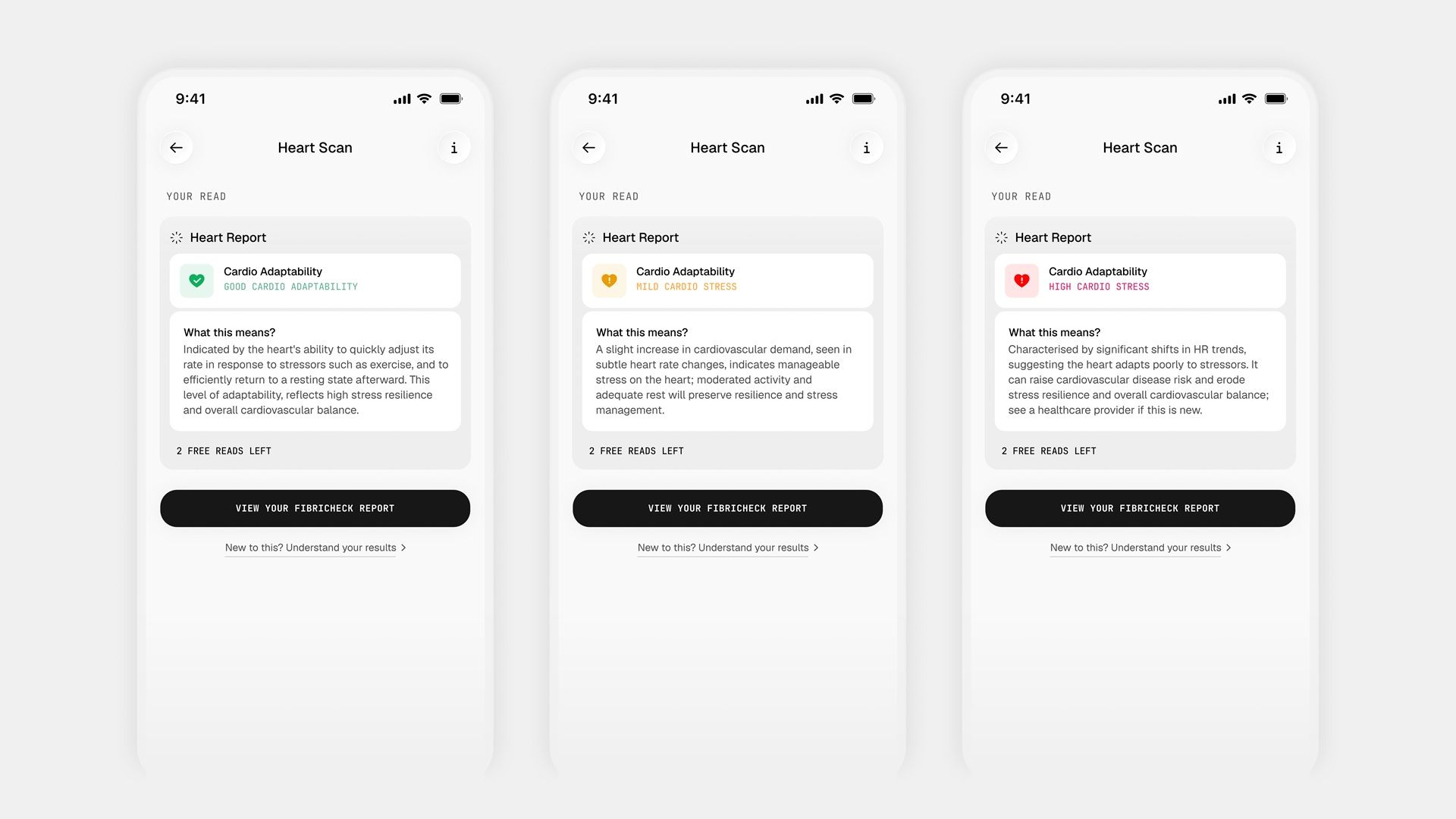
Heart Scan is a 60 second scan that takes a quick snapshot of how your heart is feeling in that moment.
Users will also find a downloadable report in the Ultrahuman Dashboard if they are a member.
Ultrahuman gets us through the midweek with an update that's all about your heart, its changes, and how you can stay informed.
A press release announced the arrival of Heart Scan in the app for Ultrahuman Ring PRO users. The company describes it as an "on-demand heart check-in." Ring PRO members can launch a 60-second Heart Scan in the app through the Ultrahuman app. The post states that the FibriCheck software helps make sense of the Heart Scan before the results appear in the Dashboard.
Ultrahuman states, "After each scan, members get a downloadable report with the pulse recording from the session, a tachogram, and a Lorenz plot of beat-to-beat timing. Members can keep the report for their own records."
The purpose of Heart Scan is to keep users informed about their health (the heart says a lot). It states that your heart can change depending on what's going on. Whether you've been working out, relaxing, or winding down from a stressful situation, Heart Scan will illuminate how your heart is feeling in that moment. Ultrahuman reminds us that the Ring PRO tracks your heart's trends: HRV (heart rate variability), resting heart rate, overnight recovery, and more.
Heart Scan is also said to work well with the Cardio Adaptability PowerPlug. This PowerPlug excels at showing how your heart's trends change over time. Heart Scan focuses on the individual moments you call it into. Each has its strengths, but the ultimate goal is to help users build better habits and understand their recovery.
Heart Scan is rolling out today (Oct. 7) in the U.S. for the Ultrahuman Ring PRO. The post states that eligible Ring PRO members can enable free scans from the Ultrahuman Dashboard.
Scan your heart
(Image credit: Ultrahuman)
Before this, Ultrahuman announced a PowerPlug with HealthEx. Available for $4.99/mo or $45.99/yr, the HealthEx PowerPlug brings your official medical records into the app. The service will leverage your medical records from every facility you've received care from in the U.S. After that, your information will be combined with Ultrahuman Ring data.
Think of your biomarkers as well for this. Whenever you schedule another doctor's visit, Ultrahuman says the PowerPlug can generate a "Visit Pack." This package is full of your medical record information and Ring data to make that visit more helpful. The direction Ultrahuman wants to go with its health technology was made evident in September. The company wants to achieve a future where human computing benefits our health.
Ultrahuman has raised $70 million toward this future from investors like Qualcomm Ventures, Labcorp, Alpha Wave, and more. The company wants to create platforms that understand the human body and deliver intel people can take action on.
from Latest from Android Central https://ift.tt/oRwGISK
via IFTTT
Xreal revealed its official pricing for the Aura smart glasses, stating the device will begin at $1,279 for its 12/256GB variant.
The model also features a 16/512GB version for $1,499, and Xreal adds that Founder Priority Pass holders are eligible for a "numbered" Founder's Edition if their purchase is completed before October 17.
Xreal plans for the Aura to begin shipping before the holidays.
The Xreal Aura smart glasses finally have an official price to go with all the hype and information we've been collecting for months.
This morning (Oct. 7), Xreal announced the official pricing for its (Project) Aura smart glasses. According to the company, the Aura will start at $1,279. This price will be paired with the device's 12/256GB (RAM/storage) configuration. The Xreal Aura is also offered in a 16/512GB variant, which starts at $1,499.
Xreal started a paid reservation program back in June. The company has shared an update for anyone who put in their early deposit. Xreal states consumers who've "made a paid reservation" can complete their purchase to "secure priority fulfillment." This concerns consumers from the U.S., Canada, Japan, and Korea. The paid reservation Xreal refers to concerns the $99 Launch Credit and the $199 Founder Priority Pass holders.
If you're the latter (Founder Priority Pass), you qualify for "an individually numbered Founder's Edition" if you complete your purchase by October 17. Xreal says the Aura is preparing to ship before the holidays. The company encourages interested parties who haven't reserved their Xreal Aura to do so now. It states that the $199 Priority Deposit program is still active.
Maximum Aura
(Image credit: Xreal Global / X)
As we mentioned before, the Xreal Aura reservation program started in June. The early deposit prices were important, but Xreal also revealed some other interesting bits about the device. The company stated the Aura will feature Google's Android XR and Qualcomm's Snapdragon Reality Elite. The glasses are light, weighing in at 95g. Regarding the FOV (field of view), Xreal said the Aura delivers a 70-degree FOV that's "virtually borderless."
Xreal said it focused on making the Aura smart glasses the ideal device for gaming and entertainment. The device will support the Fox Sports app, alongside Amazon MGM Studios' Project Hail Mary: Journey Among the Stars, Fallout: Factions, and other games.
With Android XR, consumers will find the full extent of the Play Store to download mobile and tablet apps. Early news about the device's reservations proved fruitful, as Xreal's CEO, Chi Xu, said reservations surpassed 10,000 units. Two of its reservation packages sold out in the process. What's more, Chi Xu said the device's final price will be "no more than $1,500 before tax."
from Latest from Android Central https://ift.tt/GbkCOuE
via IFTTT
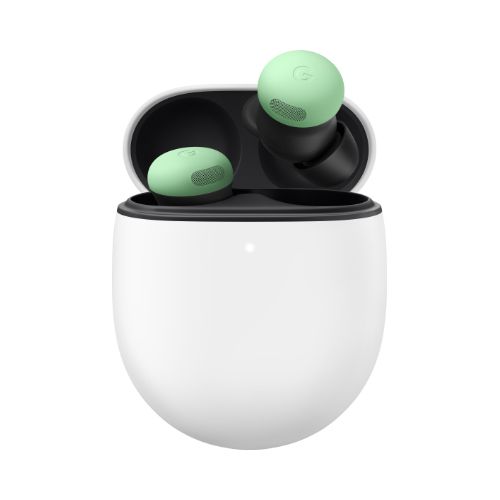
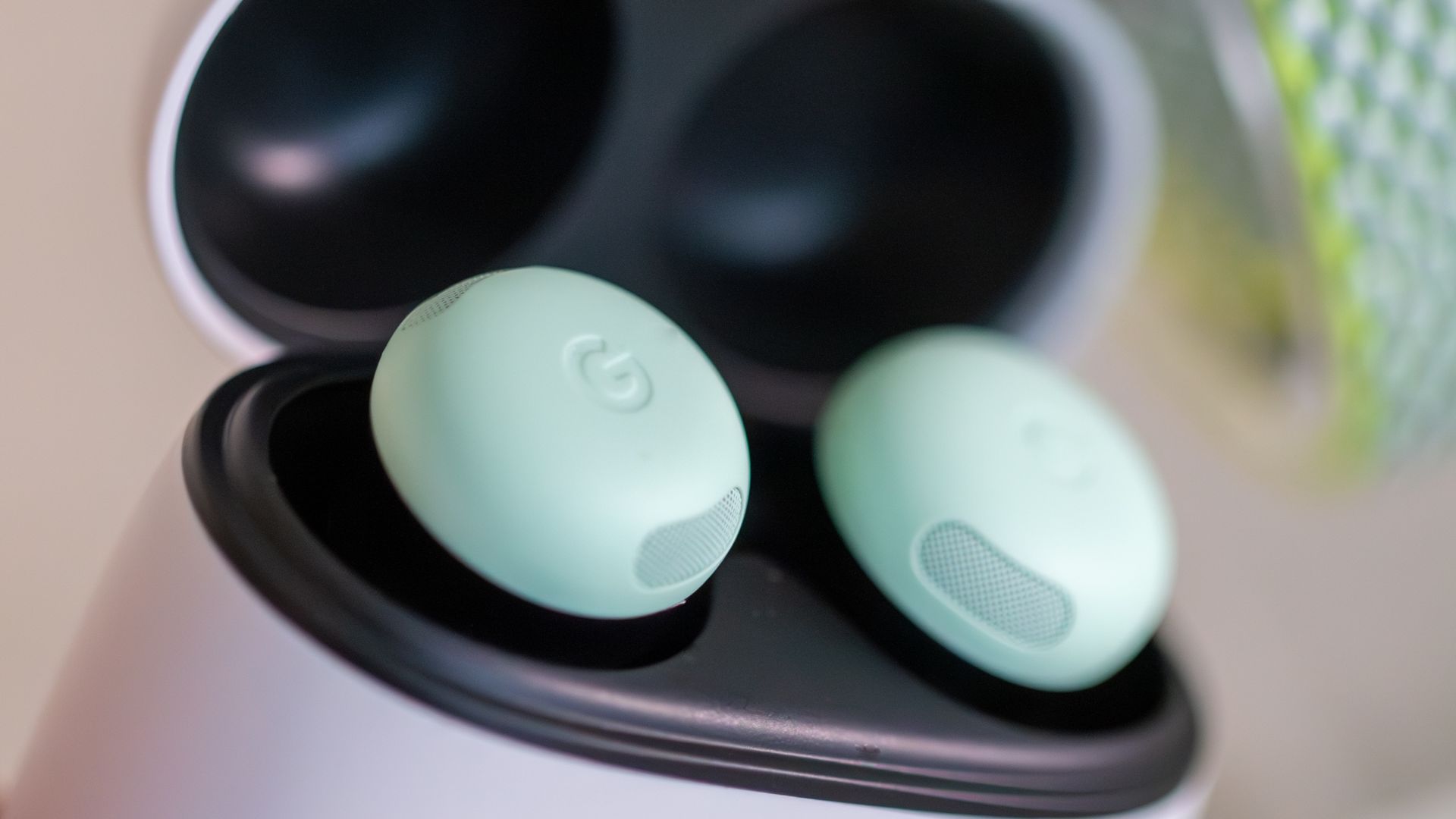
Google has started rolling out a new update for the Pixel Buds that brings several new features, and at the same time, the company has slashed $60 off the Pixel Buds Pro 2's price.
Last month, Google started rolling out a feature for Pixel Buds that lets users control their earbuds' settings just by asking Gemini. While you could already ask Gemini to do things like change the volume, the new integration goes much deeper, letting you adjust the EQ, enable or disable ANC, and change other Pixel Buds settings using your voice.
Alongside that, Google has now started rolling out another sizable update for the Pixel Buds Pro, Pixel Buds Pro 2, and Pixel Buds 2a. One of the biggest additions for the Pixel Buds Pro 2 is Dynamic Active Noise Cancellation.
Google previously explained that Dynamic ANC automatically adjusts the noise cancellation based on the seal of the earbuds in your ears. So, if the Pixel Buds move slightly and the seal changes, the earbuds can automatically compensate and adjust the ANC accordingly. That feature is now starting to become available on the Pixel Buds Pro 2.
The Google Pixel Buds Pro 2 are already priced at the lower end of the premium wireless earbuds market, and this Amazon deal shaves another 26% off the sticker price. That brings the Pixel Buds Pro 2 down under $170, which is a stunning price for earbuds that can hang with the best of the best.View Deal
✅ Recommended if: You use a Pixel phone, want strong ANC and Gemini integration, like Google's latest Pixel Buds features, or want premium wireless earbuds for under $200.
❌ Skip this deal if: You don't use Android, want the absolute best battery life, or don't care about Pixel-exclusive features and ecosystem integration.
Google has also added a new tap-to-mute and unmute gesture for calls. So, if you're in an online meeting or taking a phone call, you can simply tap the surface of your Pixel Buds to quickly mute or unmute your microphone.
The Pixel Buds can now automatically pause media playback when you fall asleep as well. This feature requires a paired Pixel Watch to detect when you've fallen asleep, after which your earbuds can pause playback, disable touch gestures, and silence notifications.
(Image credit: Andrew Myrick / Android Central)
Enhanced Live Translate is also starting to roll out. You can now leave your phone in your pocket and start translating using a gesture on the earbuds. Google says the Pixel Buds now work more seamlessly with the Google Translate app to make on-the-go translations easier.
To get these features, make sure you're running the latest version of the Pixel Buds app and look for firmware version release_6.144. You can also manually check for the update by heading to More Settings > Firmware > Check for updates.
And if you've been thinking about buying the Pixel Buds Pro 2, this might be a particularly good time. Thanks to the ongoing Amazon sale, the Pixel Buds Pro 2 are currently $60 off, dropping from their usual $230 price to just $170.
So, not only are you getting them for considerably less right now, but Google has also made the Pixel Buds Pro 2 noticeably more capable with the latest software update.
from Latest from Android Central https://ift.tt/Cyu0OI6
via IFTTT
Rumors on X and Weibo (Chinese) claim the Xiaomi 18 Ultra "has been cancelled" and it's likely its price that got it cut.
A tipster on Weibo suggests the phone would've received a triple 200MP LOFIC camera setup with a display with 1mm bezels.
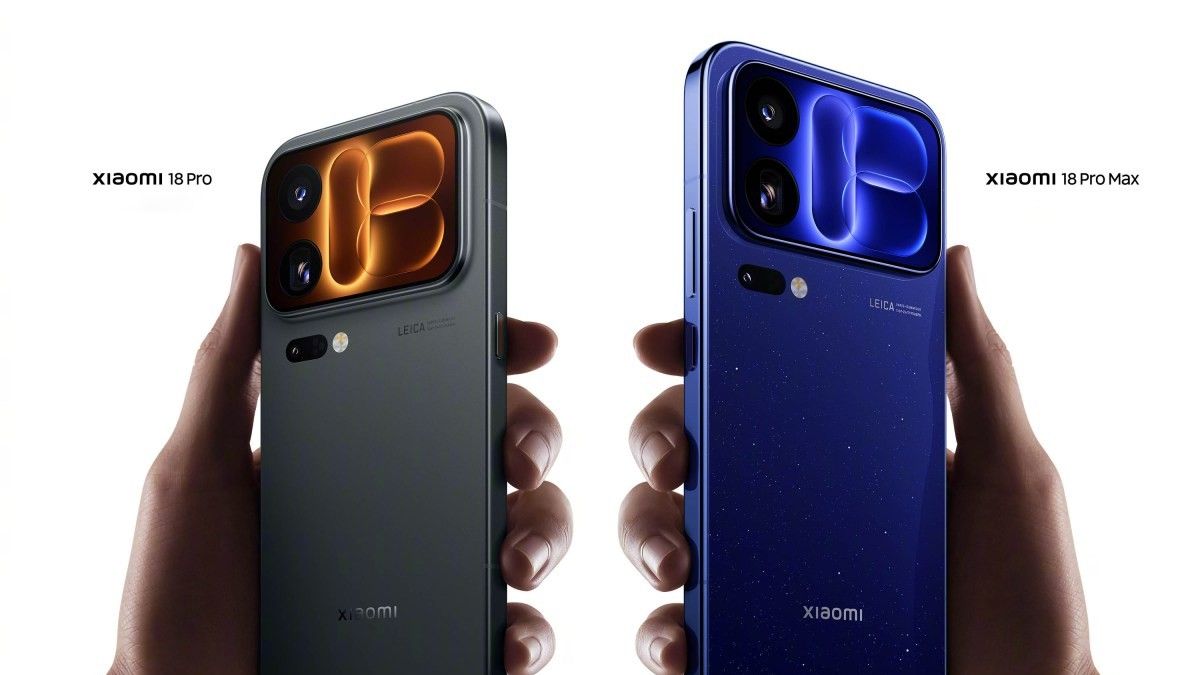
The Xiaomi 18 Pro and Pro Max debuted in mid-September with a triple camera array including a 200MP main and periscope sensor.
If you remember, Xiaomi's 17 series had a 17 Ultra; however, its current 18 series hasn't revealed one. Rumors state an "18 Ultra" might never happen, and that its specs would've been beastly.
Tipster Abhishek Yadav on X claims the Xiaomi 18 Ultra "has been cancelled," and it looks like its price was the issue. The social media post then highlights rumors about the phone's alleged specifications from Digital Chat Station on Weibo. DCS claims the phone would've featured a flat display with thin 1mm bezels. However, that's not the biggest thing; Xiaomi's camera technology was. The Xiaomi 18 Ultra might've launched with a triple 200MP setup.
According to the rumors, a 200MP main camera on a 1/1.12-inch LOFIC sensor would've led the way. The other two cameras include a 200MP (1/1.56-inch) ultra-wide and a 200MP (optical zoom) periscope lens.
We started this post by mentioning the phone's price, and DCS gives us insight. The tipster claims the phone might've been priced at 9,999 RMB (~$1,499) to start. Given how steep this is, it seems an executive decision had to be made. Nevertheless, Yadav on X states that an Ultra model phone could return to Xiaomi's lineup for its 19 series.
Strong cameras all around
(Image credit: Xiaomi)
Something is interesting about these 18 Ultra camera rumors. We almost got this exact setup on the Xiaomi 18 Pro and Pro Max. We've seen rumors about these phones for months after the 17 series debuted (and they've been very popular, too). Xiaomi continued to feature its rear displays on the 18 series with a few upgrades. The 18 Pro and 18 Pro Max feature twin 200MP cameras.
The 18 Pro Max contains a 200MP main lens and a 200MP periscope telephoto sensor. You'd find the same thing on the 18 Pro, with the addition of a 50MP ultra-wide camera. So while these two models lack the 200MP ultra-wide camera like the 18 Ultra (allegedly) would've delivered, these phones aren't bad. We spent some time with the Xiaomi 17 Ultra earlier this year, and its cameras were incredible.
Its telephoto camera in particular was a notable highlight, outshining the majority of the competition. If Xiaomi is going to return to the Ultra in 2027, maybe that's for the best.
from Latest from Android Central https://ift.tt/KtXzysu
via IFTTT
To get the cheapest Samsung or Google flagship in 2026, you'll need to choose a smaller phone. The Samsung Galaxy S26, for instance, is a 6.3-inch smartphone. If you want to splurge for a 6.7-inch display, you'll need to pay $1,200 for the Galaxy S26 Plus. That's $200 more than than the Galaxy S25 Plus went for, and $100 more than the Galaxy S26 Plus originally cost when it launched in March.
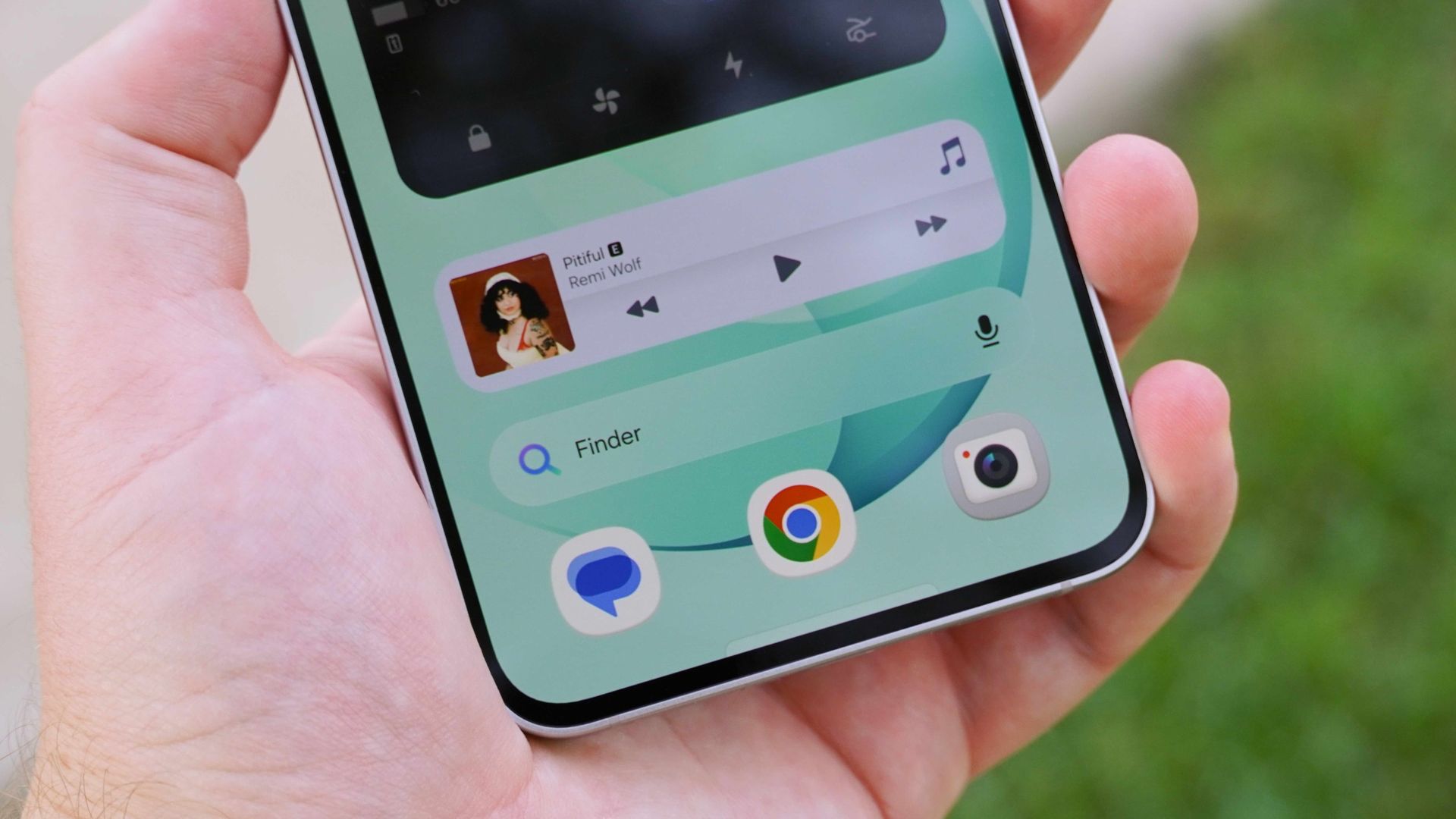
Phones with large screens are expensive, in other words — but the Samsung Galaxy S26 FE is an outlier. It offers the same 6.7-inch screen size as the Galaxy S26 Plus for $500 less, and it's worth your attention for that reason alone. I've used the Galaxy S26 FE for weeks, and it's closer to flagship territory than you may think.
But it also makes a handful of cost-cutting measures to hit that attractive $700 price point, and other phones provide a better value.
The price hike is hard to ignore
(Image credit: Brady Snyder / Android Central)
Samsung's "Fan Edition" phones have always been in a tough spot in terms your wallet will understand. They're typically priced well above Google's midrange A-series models, as well as Samsung's own A-series phones. They're cheaper than Galaxy S series phones, but not by a whole lot. Further complicating matters is that the Galaxy FE phones have a screen size matching the Plus model of the Galaxy S lineup, making them attractive to people who want a larger display.
This year, the Galaxy S26 FE ships with a $50 price hike. That might not raise alarm bells considering the rising prices around the industry, but it should. The Google Pixel 11 and Samsung Galaxy S26 each saw a $100 price increase this year, and buyers get double the base storage in exchange. The Galaxy S26 FE, by comparison, still comes with the same 128GB of storage as standard.
If you want to match the 256GB storage of the rest of the Galaxy S26 series, get ready to pay $100 more for a Galaxy S26 FE. The 128GB model costs $699.99 and the 256GB version costs $799.99. This creates a puzzling lineup where the midrange Galaxy S26 FE and the flagship Galaxy S26 both launched at the exact same price, provided you got 256GB of storage for both.
Samsung retroactively raised Galaxy S26 and Galaxy S26 Plus prices, and the base model now costs $999.99. That does give the Galaxy S26 FE a better value proposition, but only slightly.
I'm starting off with pricing because it's the most important thing about the Galaxy S26 FE. As you'll learn throughout this review, Samsung's new midranger is as solid as ever, and it beats the Galaxy S25 FE in performance. However, it has the base Galaxy S26 and cheaper Android midrangers like the Google Pixel 10a and the OnePlus 13R breathing down its neck.
From a design perspective, the Galaxy S26 FE shares a few similarities with the Galaxy S26 Plus; it's only a millimeter thicker and three grams heavier. Due to the larger bezels, the Galaxy S26 FE has a bigger overall footprint. Reachability is a bit of an issue due to the form factor, as it's both wider and taller than the Galaxy S26 Plus.
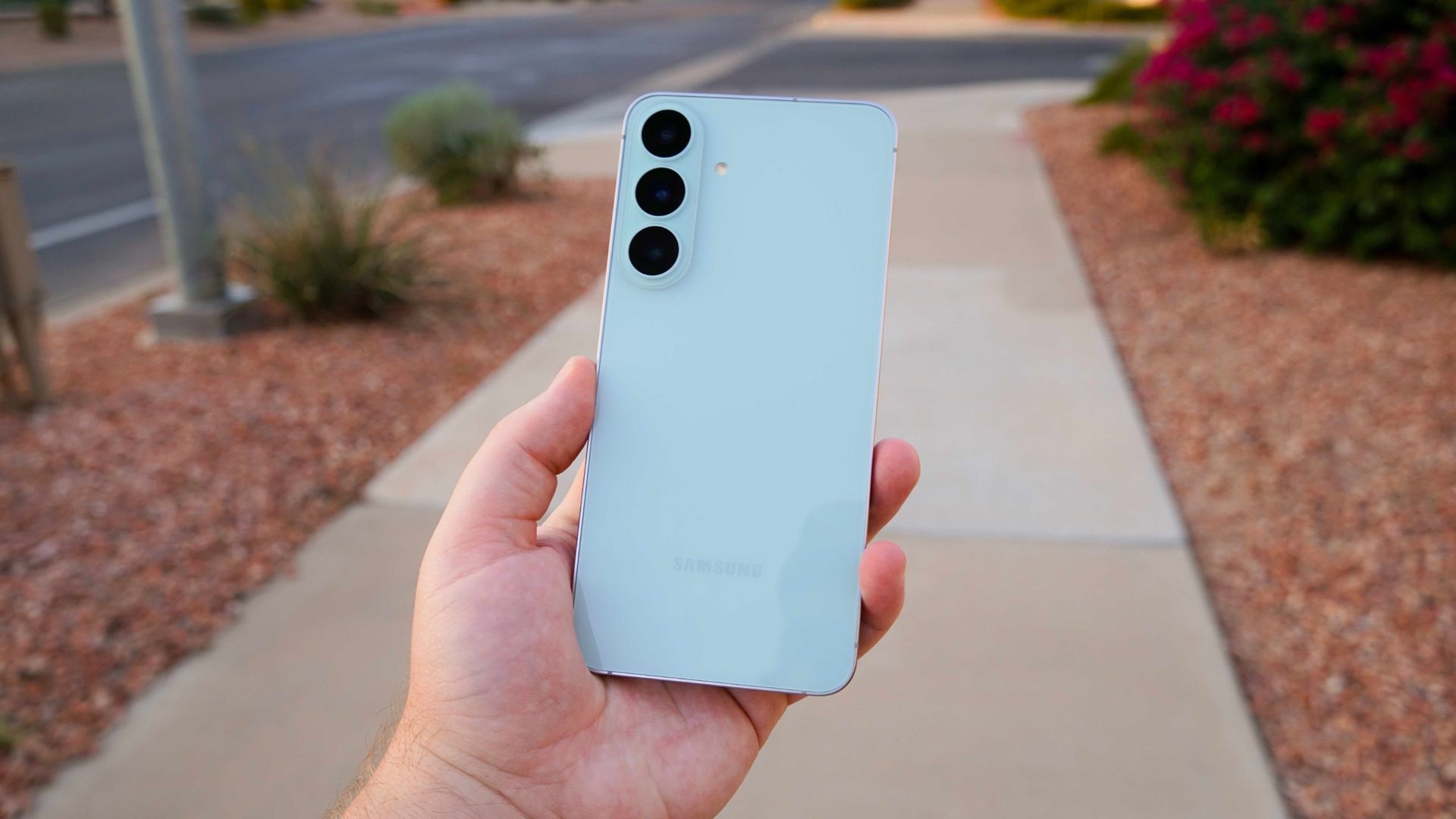
On the back, the key difference is the glossy Gorilla Glass Victus Plus. I prefer the matte look and feel of the Galaxy S26 Plus back, and that phone has newer Gorilla Glass Victus 2. But the colors for the Galaxy S26 FE are gorgeous. I reviewed the subtle Pistachio model, but you can also get the phone in Blueberry or Graphite colorways.
The Galaxy S26 FE uses a mix of glass and aluminum for materials, and it's IP68 certified against dust and water ingress. I had no problems with durability, and you shouldn't either. The device feels more premium compared to midrange phones with plastic backs, like the Pixel 10a.
(Image credit: Brady Snyder / Android Central)
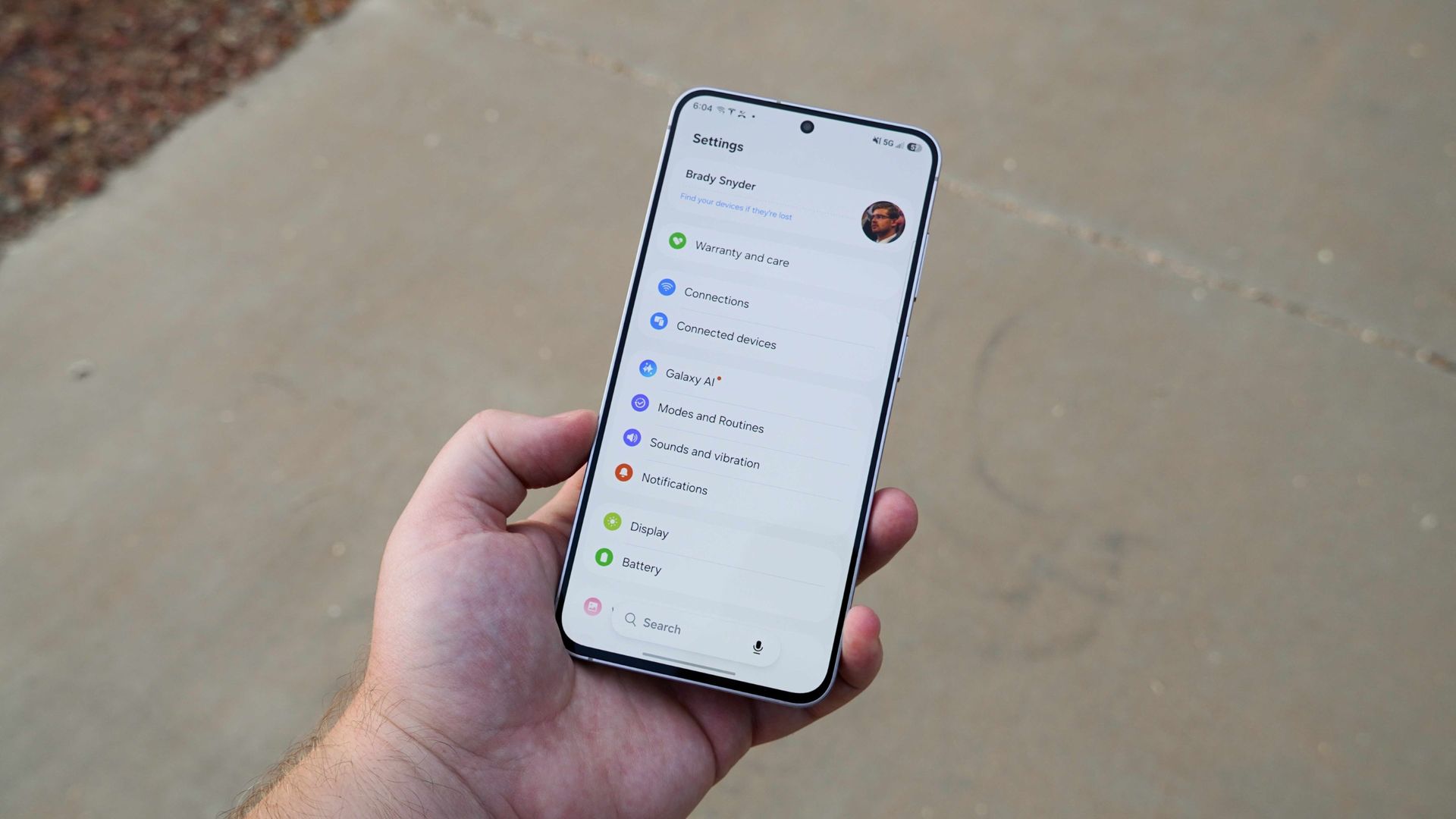
The Galaxy S26 FE finds a niche thanks to its 6.7-inch display. It's the same size as the one on the Galaxy S26 Plus, albeit with a lower 1080p resolution. The screen isn't perfect — it has larger bezels, and more importantly, they aren't uniform. The Galaxy S26 FE has a "chin," and the lack of a consistent bezel size is unsightly to my eyes.
The chin has long been a sign you're looking at a Samsung budget or midrange phone compared to a flagship, and I think Samsung could've changed this by now. Google's midrange phone, the Pixel 10a, is cheaper and has uniform bezels.
(Image credit: Brady Snyder / Android Central)
Bezel talk aside, the Galaxy S26 FE isn't nearly as bright as its flagship counterparts. The phone has a peak brightness of 1,900 nits, whereas the Galaxy S26 and Galaxy S26 Plus top out at 2,600 nits. In practice, this means the Galaxy S26 FE won't be as easy to see outdoors. Without an anti-reflective coating, something becoming more popular on flagships, this phone is tricky to view in direct sunlight.
Otherwise, the display feels responsive with a 120Hz refresh rate. It's a fine panel for the price, even if there is clear room for improvement here. This is the exact same display we saw on the Galaxy S25 FE, and the Galaxy S24 FE for that matter. If you have one of these older phones, the Galaxy S26 FE's screen isn't a reason to upgrade.
A fresh chip, but the same slow charging
(Image credit: Brady Snyder / Android Central)
Samsung's midrange phones have come a long way in a few short years in terms of performance. As a refresher, the Galaxy S24 FE had an Exynos 2400e chip and the Galaxy S25 FE got the boost to the regular Exynos 2400 chip. This year, the Galaxy S26 FE runs on the Exynos 2500. It's a mobile processor built on a 3nm process (a major improvement over the 4nm Exynos 2400) that recently powered flagships like the Galaxy Z Flip 7 worldwide.
I tested the Galaxy Z Flip 7 firsthand, so I expected the Galaxy S26 FE to be a strong performer. I didn't expect for Samsung to pull so much extra power out of the Exynos 2500 for the Galaxy S26 FE. In the benchmark results below, you'll see the Galaxy S26 FE not only handily beat the Galaxy Z Flip 7, but also crush Google's Tensor G4-powered Pixel 10a.
Samsung Galaxy S26 FE benchmark results
Geekbench 6 (single-core / multi-core)
Geekbench AI (quantized score)
3DMark Wild Life Extreme (score / fps)
Samsung Galaxy S26 FE (Exynos 2500)
2,362 / 7,848
4,643
5,253 / 31.46
Samsung Galaxy Z Flip 7 (Exynos 2500)
1,849 / 6,822
3,581
4,400 / 26.35
Google Pixel 10a (Tensor G4)
1,707 / 4,512
3,109
2,667 / 15.97
I'm surprised that Samsung is doing that with only 8GB memory onboard the Galaxy S26 FE. The Galaxy S26 FE ships with Android 17 and will get seven years of full Android OS support. Despite the RAM limitations, this phone will be a strong performer for a very long time.
The battery life is rock solid, too. It has the same 4,900mAh capacity as the Galaxy S26 Plus, but the Galaxy S26 FE's lower-resolution display and weaker chip combine to hep you squeeze a longer runtime out of it. The charging, unfortunately, is still too slow. The 45W wired speeds are fine, but 15W wireless charging is disappointing when the Qi2.2 25W standard exists.
(Image credit: Brady Snyder / Android Central)
It's worth revisiting the storage options. The Galaxy S26 FE ships with 128GB of storage by default, and you can upgrade it to 256GB or 512GB at the time of purchase. I think 128GB of storage is starting to stretch users thin because of growing app and operating system sizes. But if you upgrade the Galaxy S26 FE to 256GB or 512GB storage, you end up paying flagship prices for a midrange phone.
It's quite the dilemma, and one Samsung could've avoided by making 256GB standard, like the Galaxy S26 series. If you're fine with a 128GB phone, the Galaxy A57 is lurking in the corner at $599.99, but it does come with additional compromises.
The cameras are underwhelming for the price
(Image credit: Brady Snyder / Android Central)
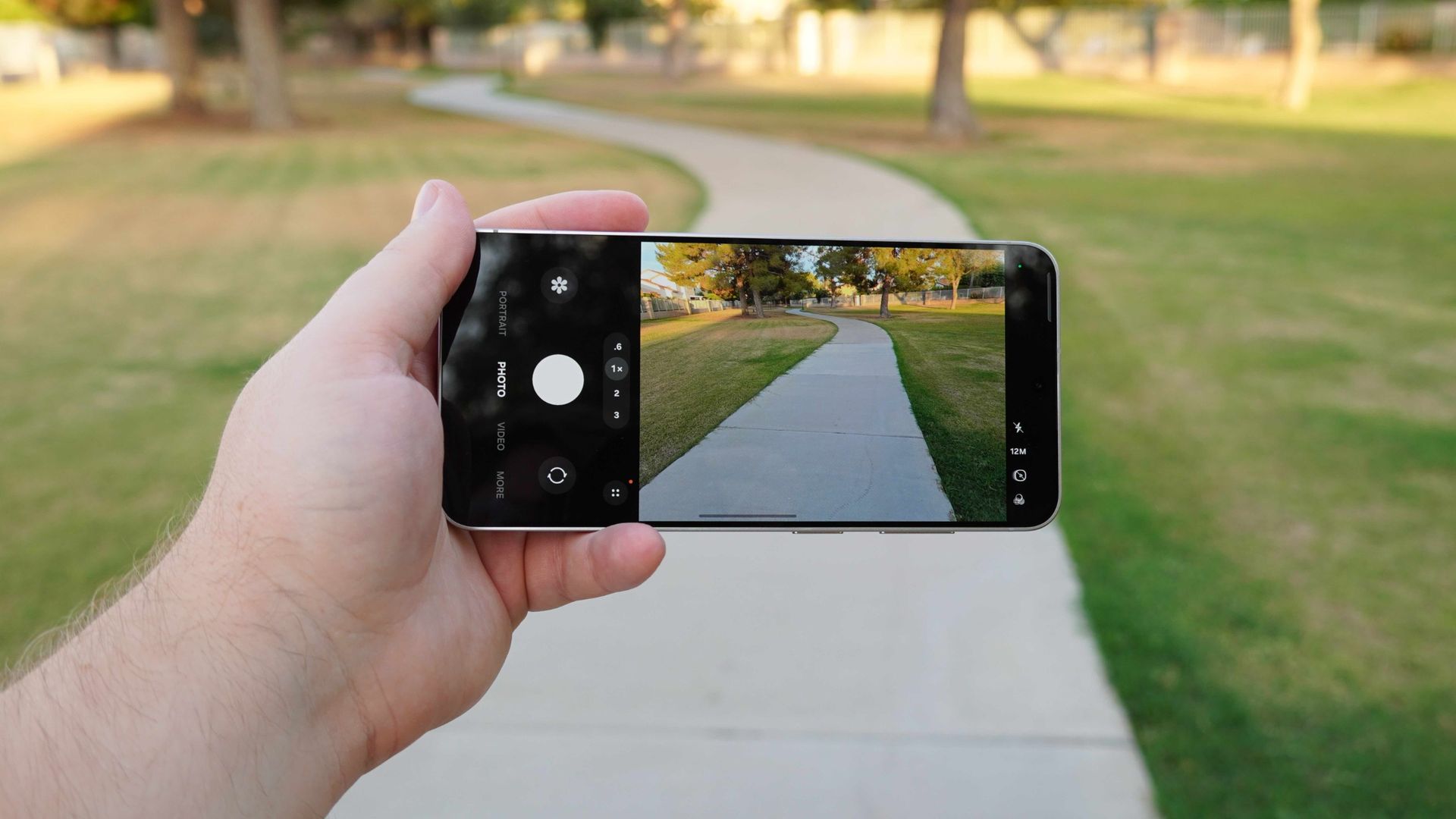
Samsung isn't one to upgrade its phone cameras often, and the Galaxy S26 FE is no exception. It's using the same 50MP primary shooter, 8MP telephoto, and 12MP ultrawide lens we've seen on prior generations of Galaxy FE phones. The selfie camera is a 12MP, f/2.2 lens.
The telephoto only goes up to 3x optical zoom, but you may find digital zoom to produce passable results beyond that. Here's how the Galaxy S26 FE telephoto camera looks at 2x, 3x, and 10x zoom:
As for the main camera and ultrawide, it's a mixed bag. The 50MP sensor at the heart of the Galaxy S26 FE's rear camera system packs enough detail, and low-light performance is impressive. The photo of the "Aloha" sign in the gallery of camera samples below is as good of a night shot as I've taken recently. And for context, I've been using phones like the iPhone 18 Pro, Google Pixel 11, and Samsung Galaxy Z Fold 8 Ultra.
However, the phone's color science in daylight shots leaves a lot to be desired. Often, there's one part of the image that's brighter and color-saturated, by the overall scene is dark. The beach shots in particular stand out as looking darker as captured by the Galaxy S26 FE than the setting looked in real life.
I don't think the Galaxy S26 FE camera system is terrible, but I do think budget phones like the Pixel 10a and iPhone 17e will produce more desirable photos.
Should you buy the Samsung Galaxy S26 FE?
(Image credit: Brady Snyder / Android Central)
The Galaxy S26 FE only looks competitive on the surface of a smartphone market riddled with price hikes over the past year. Samsung's new $1,000 and $1,200 prices for the Galaxy S26 and Galaxy S26 Plus, respectively, make the Galaxy S26 FE at $700 seem like a discount. I want to emphasize that the Galaxy S26 FE is a great phone that I could absolutely use as my daily driver, despite its compromises.
That said, I still think you can do better. For example, last year's Galaxy S25 is available at the same $700 price as the Galaxy S26 FE at Target and Amazon. It has a smaller screen and battery, but it's a bona-fide flagship with a better camera and chip. If you're willing to compromise on screen size but want a cheaper phone, Google's Pixel 10a stands out. But it justgot a price hike as well, and it's only $100 cheaper than the Galaxy S26 FE.
Looking at the Galaxy S26 FE in isolation, it's a solid phone. With OnePlus on its way out in the U.S., the Galaxy S26 FE represents one of your only options to get a plus-sized Android midranger. If it's important that you get a 6.7-inch Android phone for under a grand, I can recommend the Galaxy S26 FE — just be aware of the drawbacks, and consider your other options.
Samsung
Galaxy S26 FE
A pricey midranger
The Samsung Galaxy S26 FE delivers a 6.7-inch display at a $700 price point, which is worthy of your attention. However, the hardware compromises make cheaper phones like the Google Pixel 10a or last-gen flagships like the Galaxy S25 a more compelling option.
from Latest from Android Central https://ift.tt/tYBEghS
via IFTTT
Qualcomm and Arm are engaged in a five-day jury trial in a Delaware federal court.
The conflict stems from Qualcomm’s 2021 acquisition of the chip startup Nuvia. Qualcomm alleges Arm subsequently violated its contract by withholding mandatory chip-testing tools.
Qualcomm is seeking to halt its royalty payments to Arm for up to five years.
A secondary bench trial is investigating whether Arm negotiated its next-generation architecture in good faith. The two companies are currently locked into a contract through 2033.
The stakes in the smartphone sphere have just gotten a billion dollars higher. Qualcomm and Arm are back in a Delaware federal court this week for a five-day jury trial that threatens to upend how the chips that power your phone are licensed and built.
Reuters reports that Qualcomm is battling to halt its royalty payments to Arm for as long as five years, a huge financial blow for the chipmaker, which makes up about 9% of Arm’s fiscal 2026 revenue based on market research firm Intellectia's figures.
The heart of the disagreement is Qualcomm's 2021 acquisition of chip startup Nuvia, which had its Arm license. Qualcomm said Arm declined to provide the tools necessary to test chips, as required in its contract. Qualcomm also said Arm leaked its threat to end a key license in 2024, which hurt talks on a potential chip deal with Meta.
The dispute with Meta could serve as one of the trial’s most concrete measures of damages. Qualcomm says the leak helped knock $170 million off the eventual value of its Meta deal. Arm denies that link, saying the economics of the deal changed because Meta shifted away from virtual reality headsets to AI glasses.
The fight over royalty is even bigger. Qualcomm wants to avoid paying Arm for as long as five years, risking billions of dollars of royalties. Judge Maryellen Noreika is considering whether that five-year provision should stand, which could dramatically affect how much Qualcomm can collect.
Qualcomm says Arm undercut its business after the Nuvia deal, and Arm says the suit is just leverage in a business dispute and Qualcomm can’t prove it was damaged.
Another bench trial is investigating whether Arm negotiated in good faith over its next-generation architecture. They are currently under contract through 2033.
The five-day trial may end up deciding a lot more than one royalty bill. It could also change the way Arm and the biggest chipmakers negotiate the price and control of future CPU technology.
from Latest from Android Central https://ift.tt/9srmyPj
via IFTTT
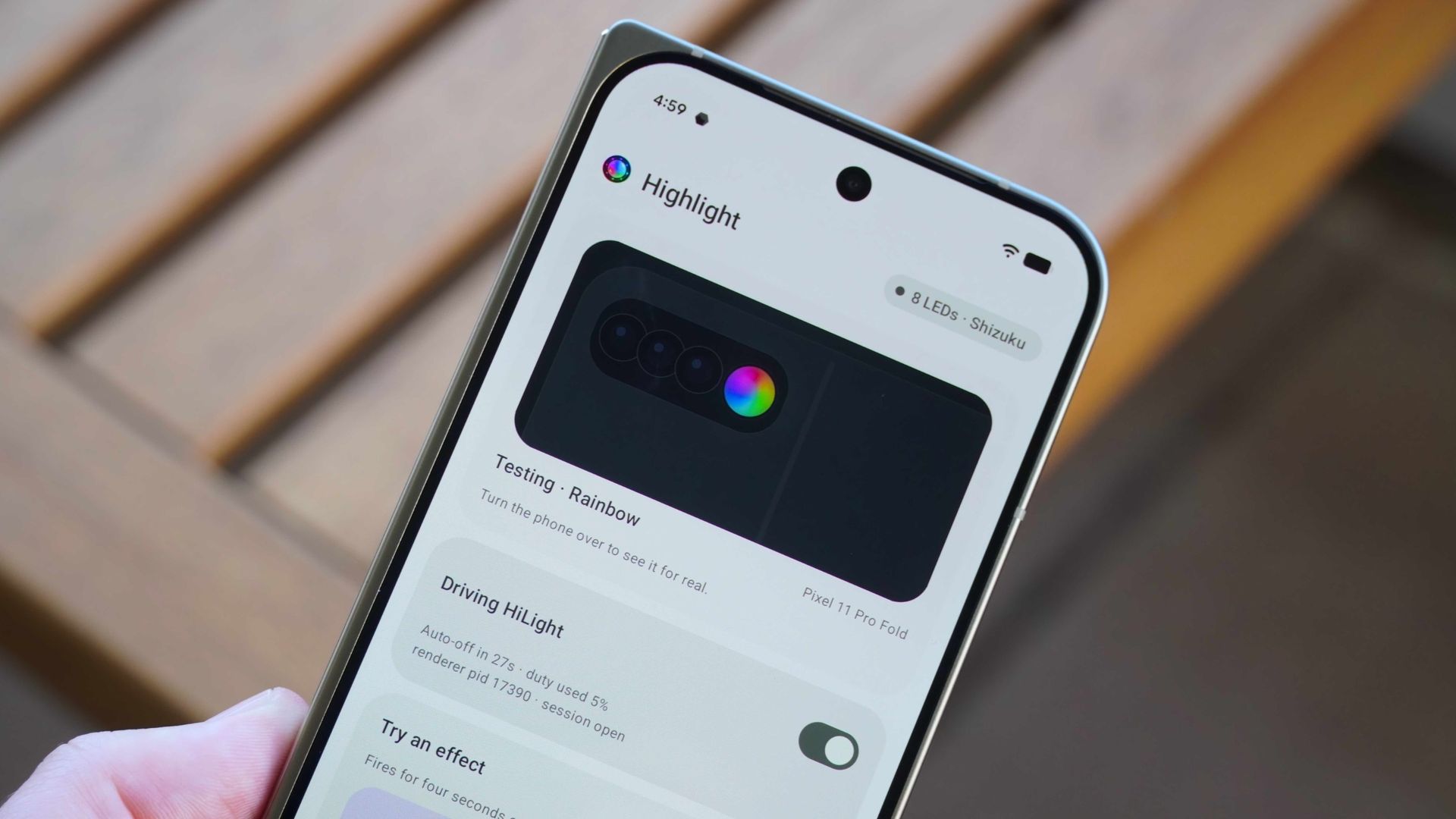
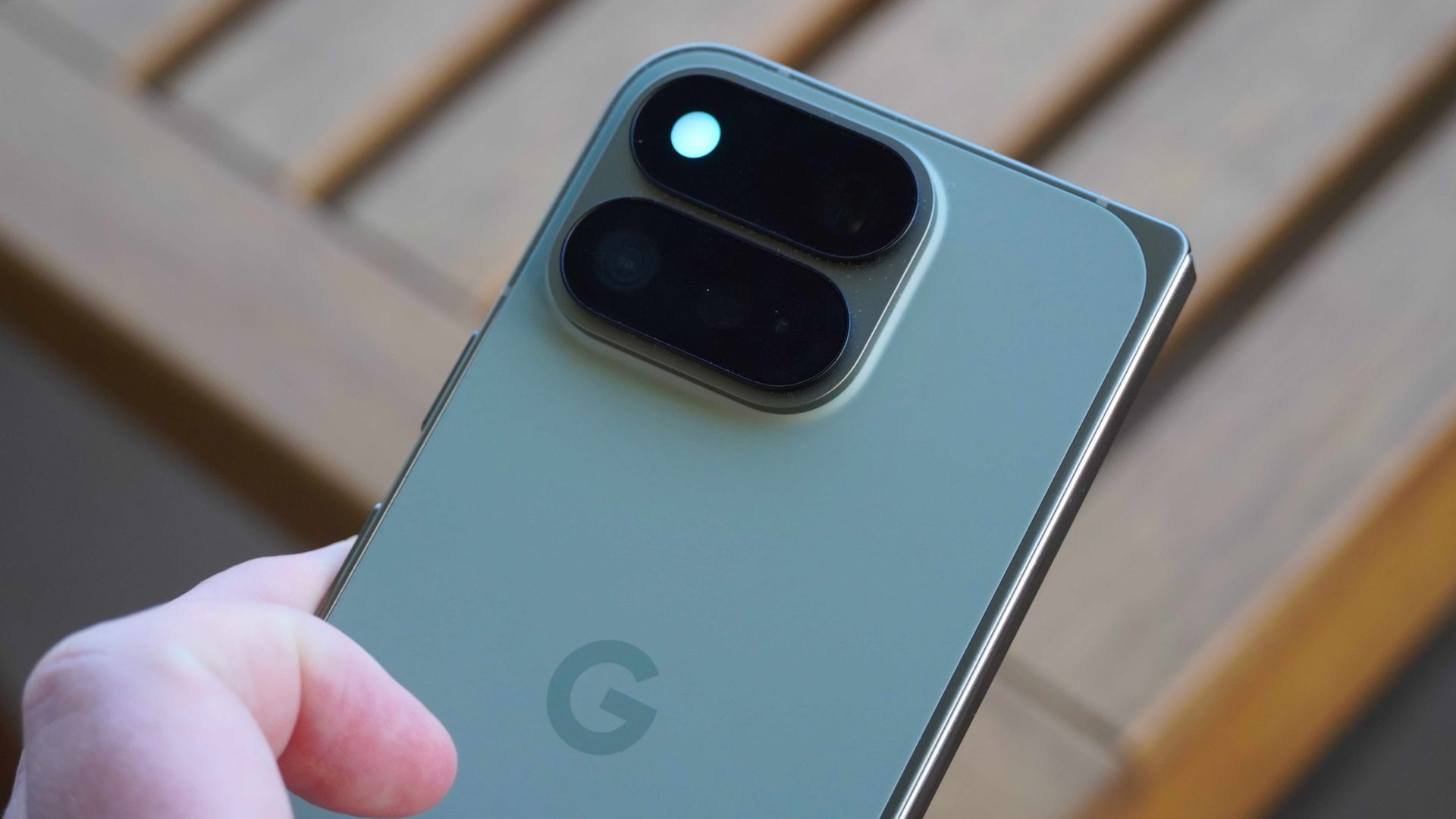
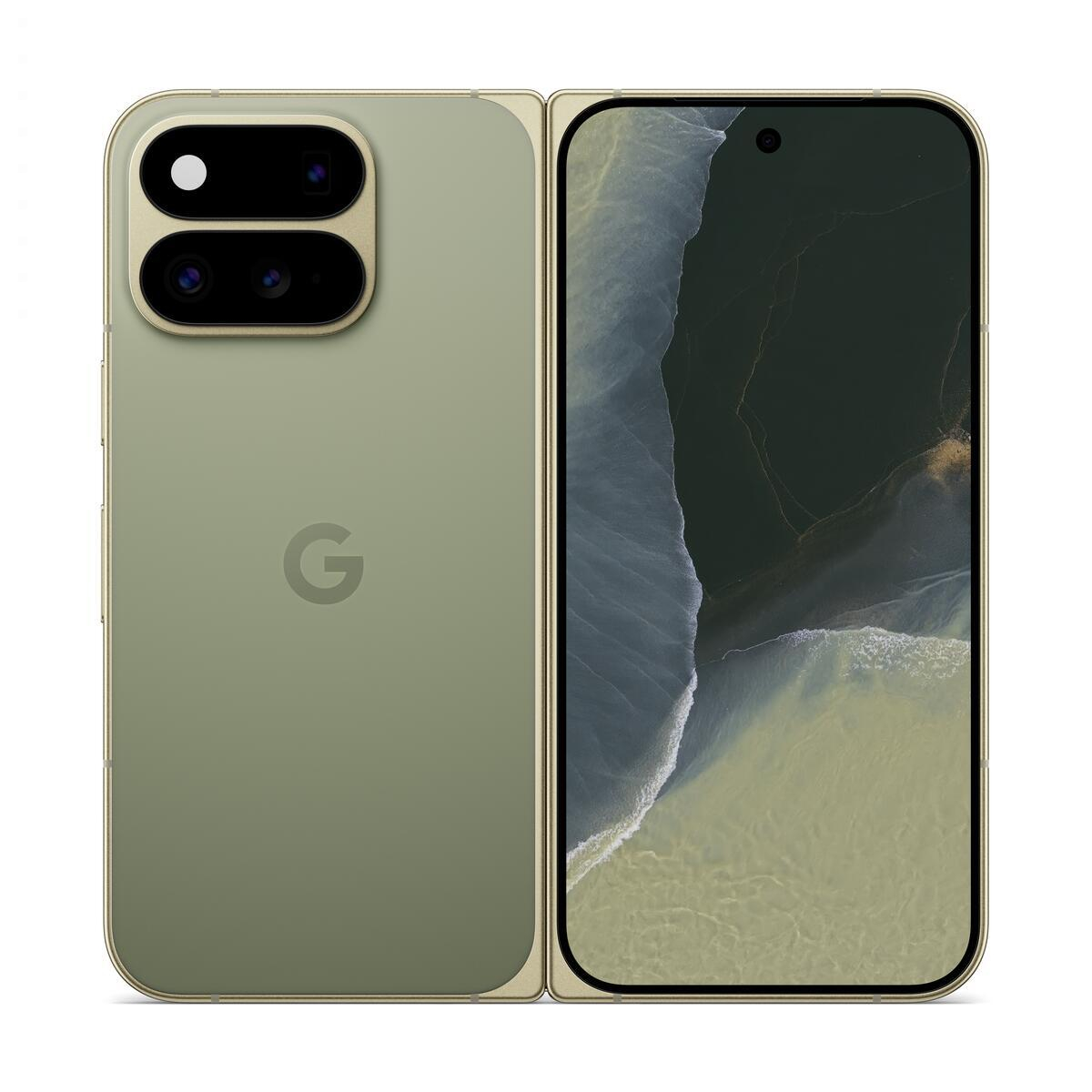
One of the truly new features onboard the Google Pixel 11 series is HiLight — a collection of eight multicolor LEDs on the back of the Pixel 11 Pro, Pixel 11 Pro XL, and Pixel 11 Pro Fold. It's quite limited at launch, however. HiLight serves two main purposes out of the box: It glows one of five colors when a favorite contact calls, and it glows when the Gemini voice assistant is active.
In other words, HiLight doesn't do a lot. Even if you like the idea of using HiLight to know when your contacts are calling, you can set it up for just five people before the colors get confusing. Luckily, there's a free and open-source app called HiLight Studio that aims to give you more control over the lights.
It takes a bit of work to set up, but after that's done, HiLight Studio delivers what your Pixel 11 Pro, Pixel 11 Pro XL, or Pixel 11 Pro Fold should've been able to do out of the box. Here's the step-by-step guide to getting started with HiLight Studio.
What HiLight Studio does, and how to download it
(Image credit: Brady Snyder / Android Central)
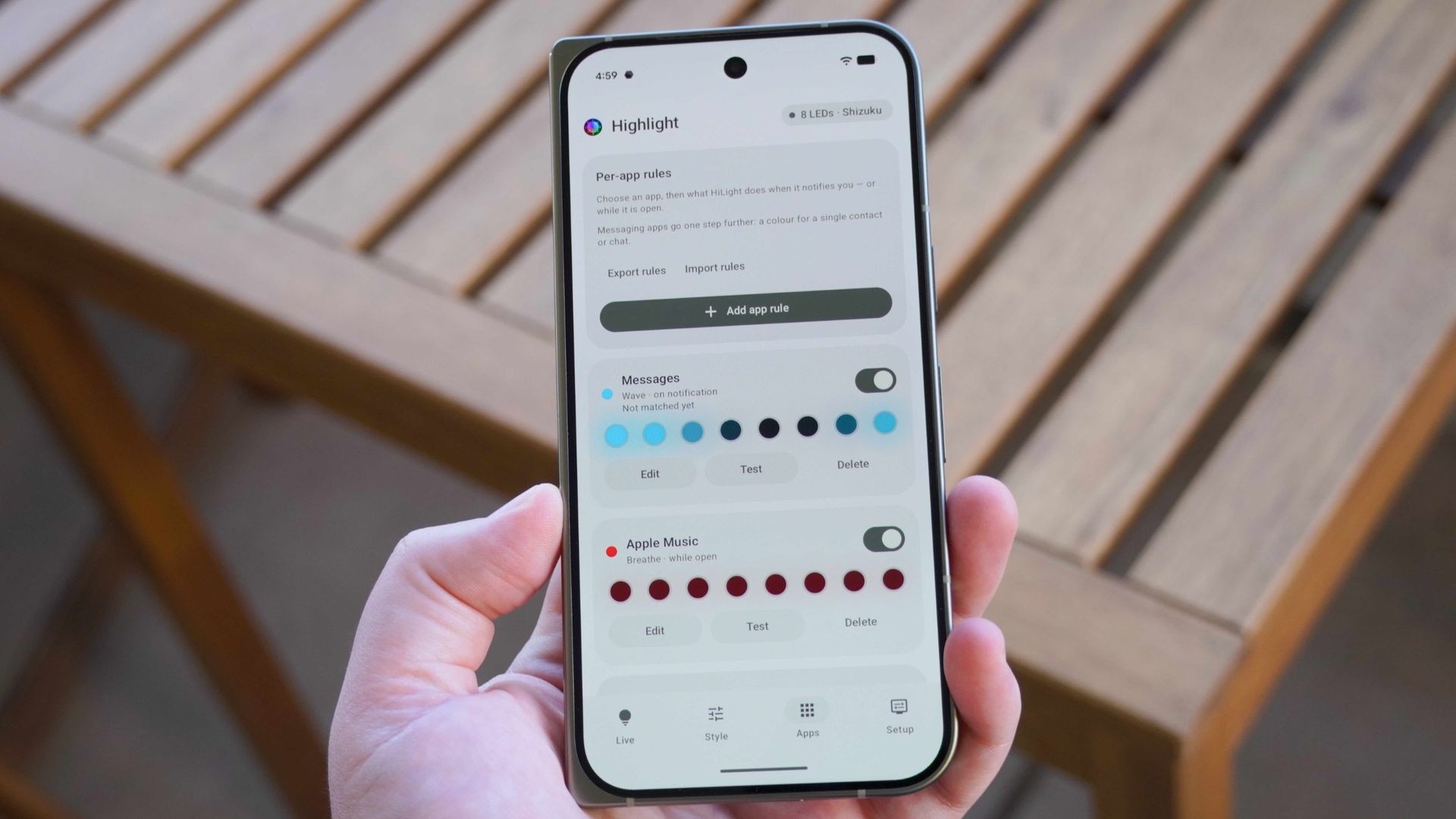
Put simply, HiLight Studio gives you full control over the eight individual LEDs that make up the HiLight module on the back of your phone. It can do solid colors and animated patterns, and it's customizable. You can control it from the app or a Quick Settings tile.
HiLight Studio is the brainchild of Dhananjay Bhosale on GitHub, and you can sideload it from there. Crucially, the app is now on the Google Play Store for open testing. So you can download it for free from a trusted source with no sign-up required.
I thought HiLight Studio setup would be tricky — it wasn't
(Image credit: Brady Snyder / Android Central)
HiLight Studio isn't an app you can simply download and start using, because it requires privileged access to the Android lights service, according to the app's developer. You can achieve this by rooting your phone, using Android Debug Bridge (ADB), or Shizuku — an app that allows other apps to access privileged APIs without the risks of rooting your Android device. Even as an Android expert, the process sounded intimidating, but it wasn't.
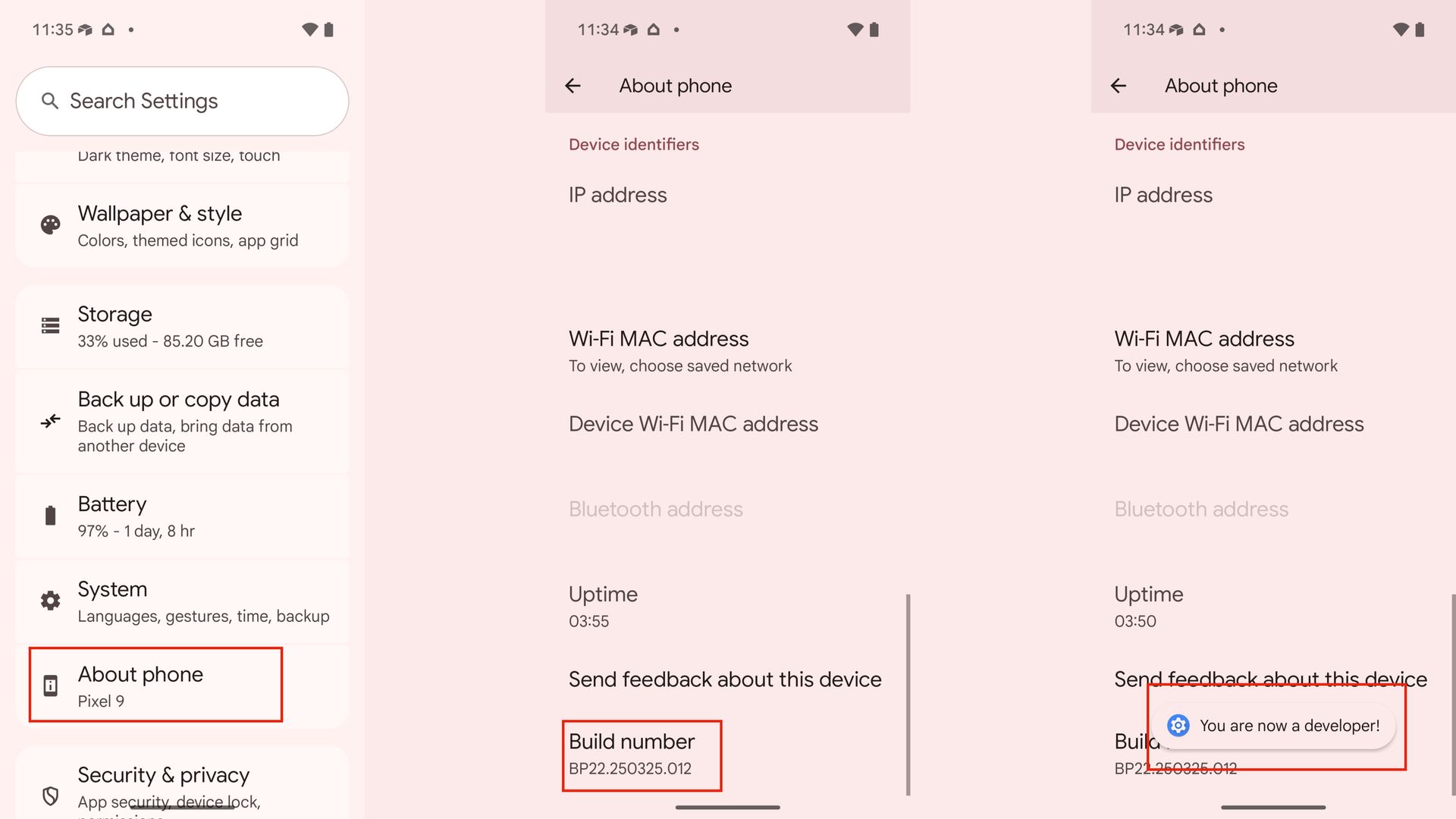
1. Open the Settings app on your Pixel 11 Pro, Pixel 11 Pro XL, or Pixel 11 Pro Fold.
2. Scroll down to the About phone section, and tap it.
3. Find the Build number and tap it seven times to enable developer options. You will need to enter your device passcode to confirm the change.
(Image credit: Future)
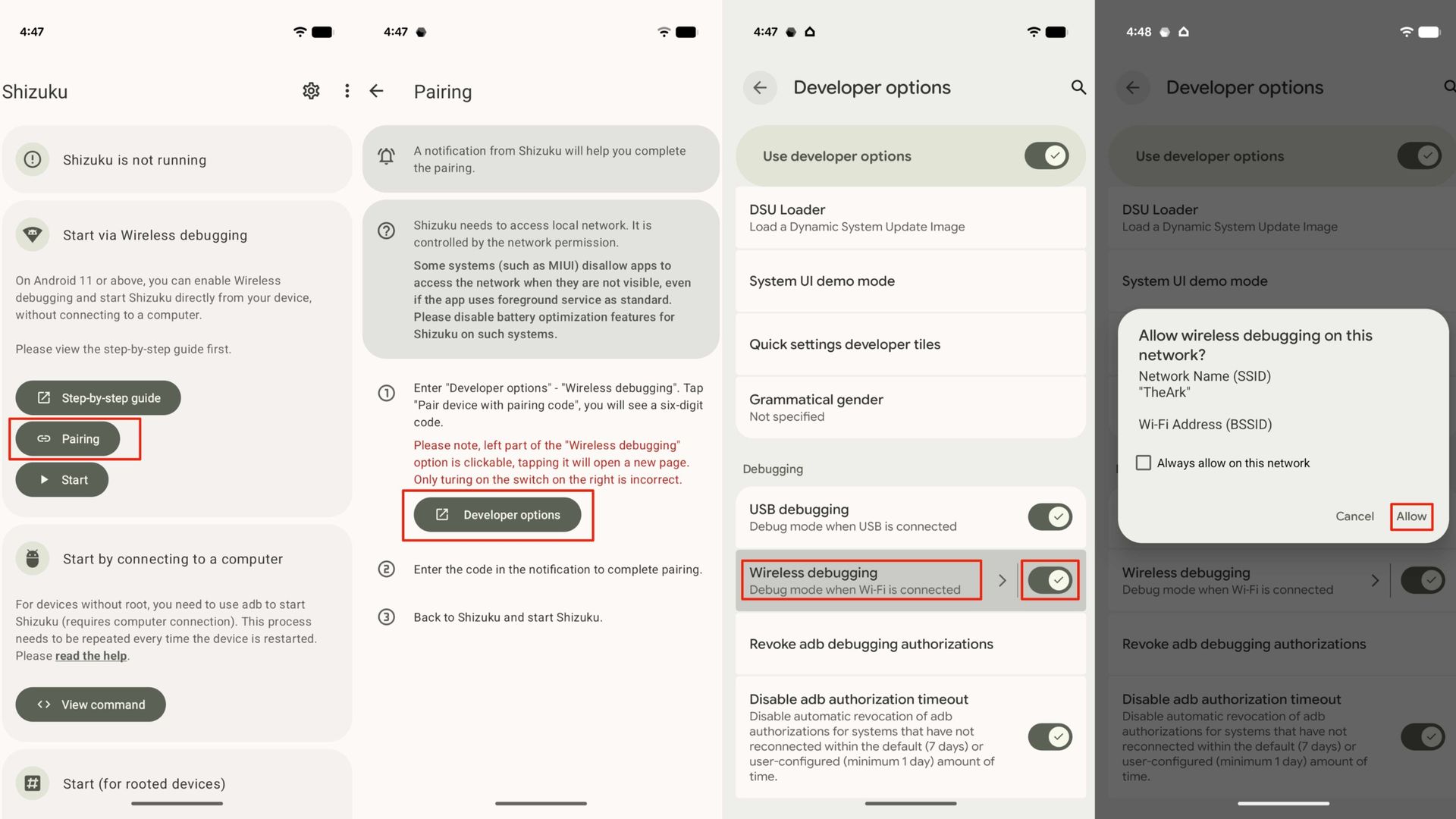
After you've enabled developer options, you can use wireless debugging to start Shizuku. Here's how to do it:
1. Open Shizuku and tap the Pairing button.
2. Open the Settings app and navigate to System -> Developer options. Alternatively, you can tap the Developer options shortcut in Shizuku.
3. Flip on the Wireless debugging toggle in Shizuku, and tap the Wireless debugging menu.
(Image credit: Future)
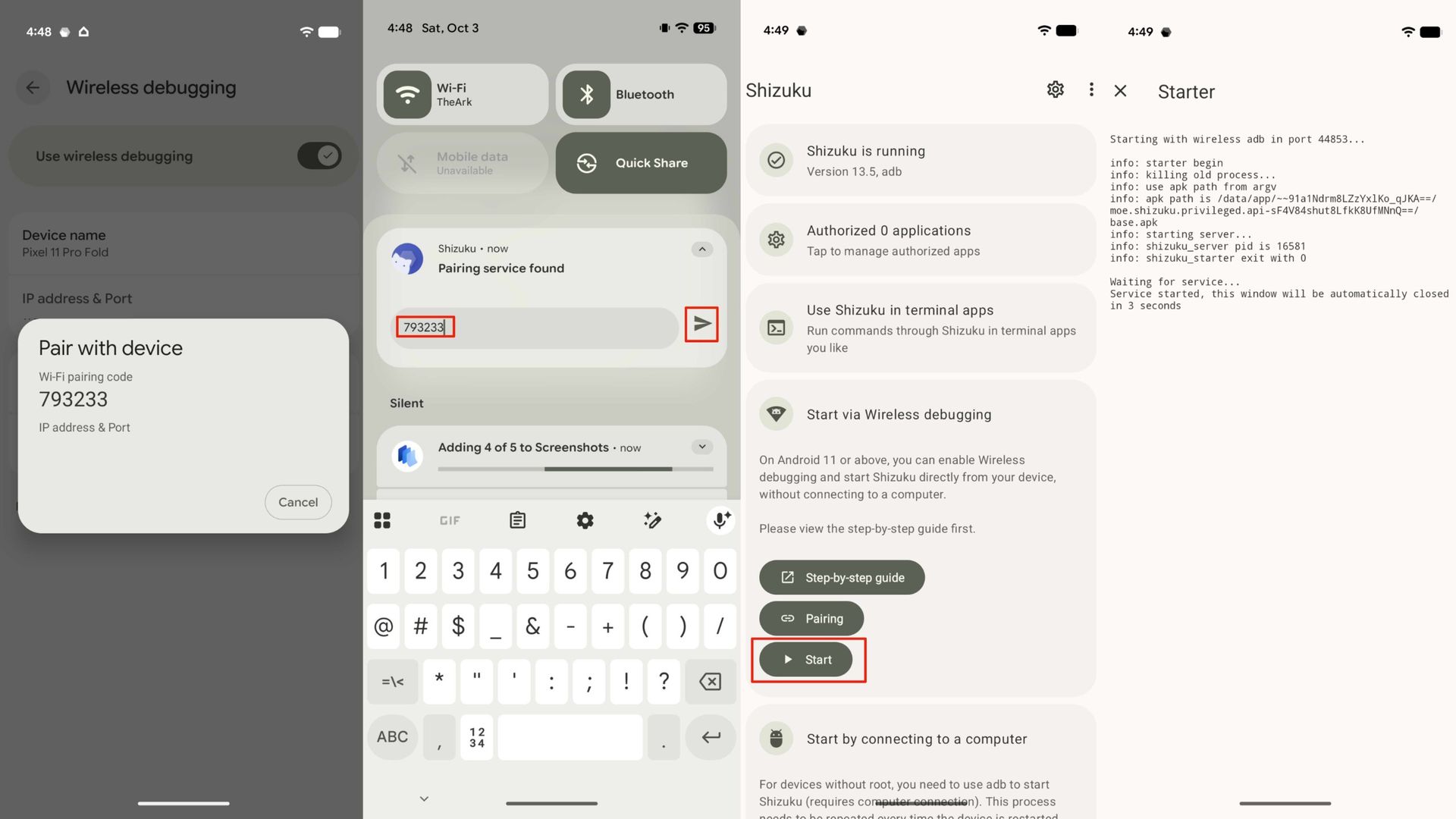
4. Press Pair device with pairing code. Hit Allow to confirm your choice to allow wireless debugging on your network.
5. A pairing code will appear. When the notification from Shizuku appears, enter the pairing code in the notification and press Send.
6. Now, Shizuku is paired. Press Start in the Shizuku app to finish setup.
(Image credit: Future)
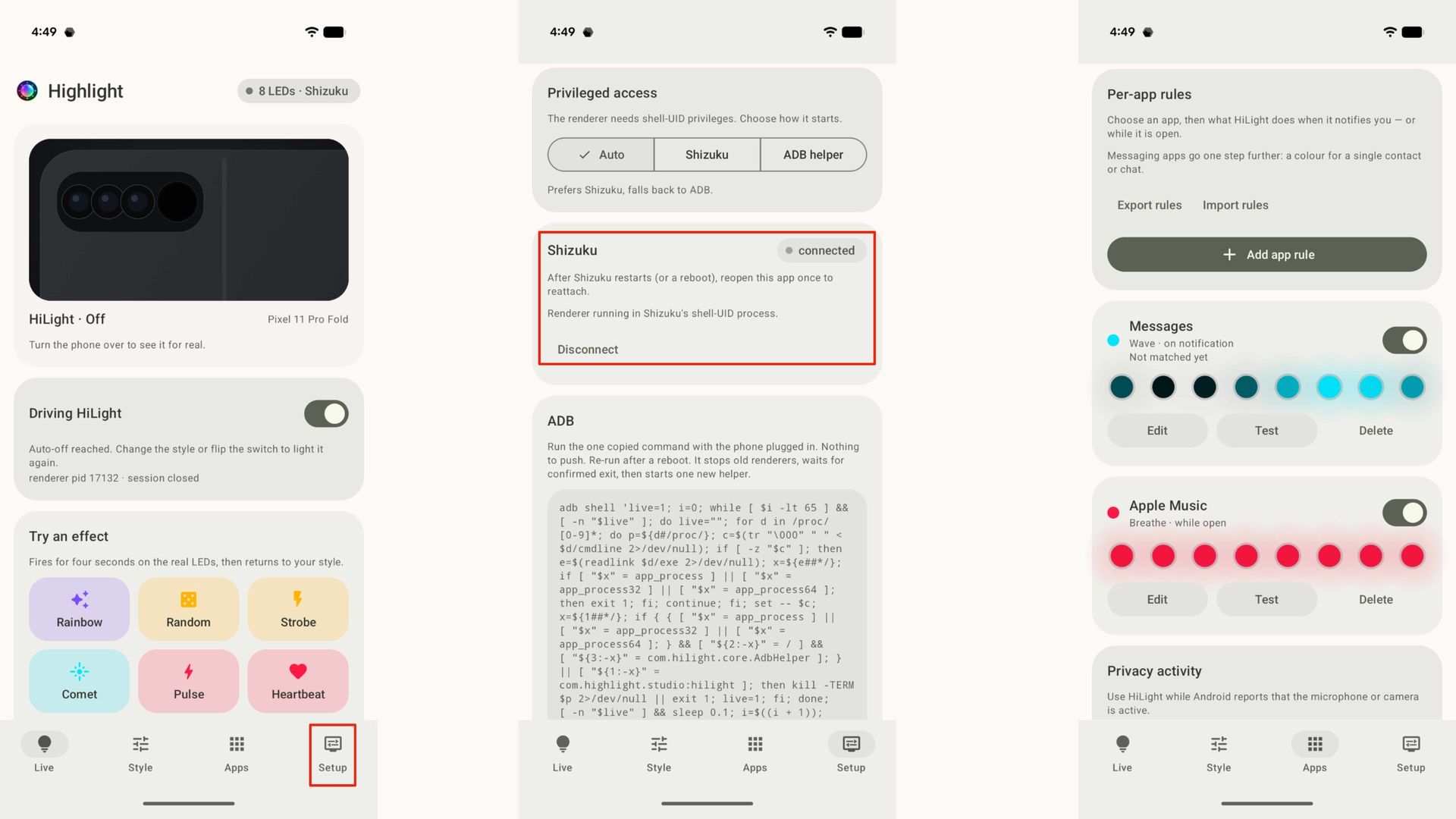
To put the finishing touches on setup, you need to link HiLight Studio to Shizuku. Don't worry, this one is quick and easy:
1. Open the HiLight Studio app.
2. Switch to the Setup page.
3. Look for Shizuku and tap Request access. Finally, approve the request.
(Image credit: Future)
That's it — you've now granted HiLight Studio access to the Android lights service. Now, you can enjoy the fun part, which is customizing the lights on the back of your phone. While there are a lot of steps in this process, they're pretty painless, and I didn't run into a single issue during setup.
You'll need to restart the HiLight Studio render and Shizuku every time your device reboots. Unless you reboot your Pixel often, this shouldn't be too much of an inconvenience.
HiLight is finally as customizable as it was meant to be
(Image credit: Brady Snyder / Android Central)
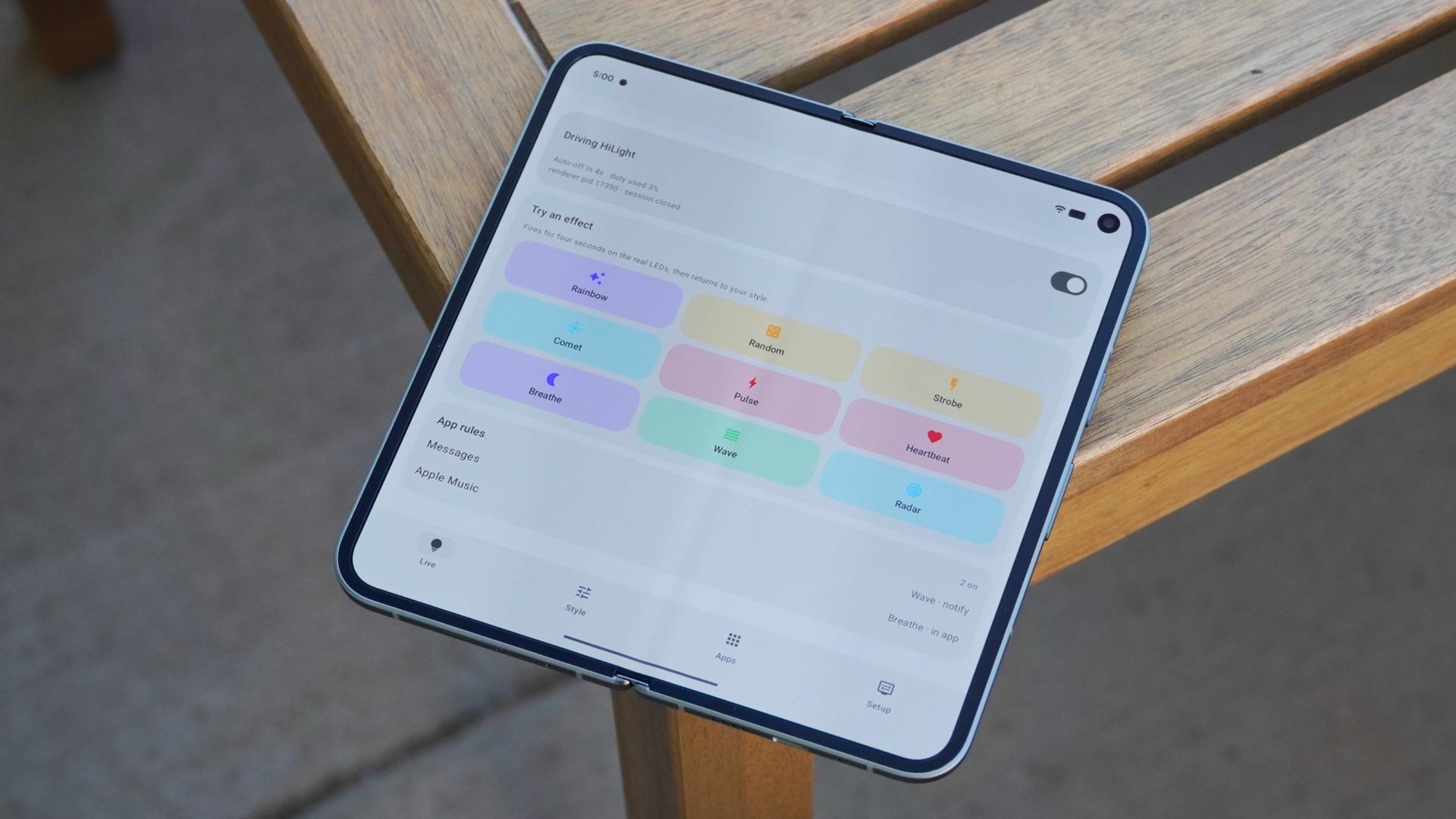
After setup, opening HiLight presents you with a Live screen that shows you what the HiLight Studio renderer is doing right now. You can test out a lighting effect on this screen. This allows you to get a feel for the nine LED effects supported by the app: Rainbow, Random, Strobe, Comet, Pulse, Heartbeat, Breathe, Wave, and Radar. As you demo each effect, it'll run for four seconds before returning to your default.
Near the bottom of this page, you'll see the App rules you have enabled. If this is your first time trying out HiLight Studio, you won't see anything here. Instead, you'll need to tap the Apps tab. This is where the real magic begins — you can set up exactly what HiLight does for a particular app. Here are a few examples of what HiLight Studio can do:
Show a color or animation when an app receives a notification.
Show a color or animation when an app receives a notification from a specific contact.
Show a color or animation while an app is opened.
Show a color or animation while Android reports the microphone or camera is active.
There's a ton of room for customization here, and these app rules only scratch the surface of what HiLight Studio can do. In the Setup page, you can specify how long HiLight Studio can keep the LEDs active before they automatically shut off. These lights aren't designed to be active for long periods of time, which is why these limits are in place.
You can override the auto-off defaults and allow up to five minutes of continued use. However, hardware protection is a built-in feature that lowers the brightness after 10 seconds of continuous use. Additionally, the eight-LED array will turn off if it has been lit for more than half of the last 10 minutes.
Why you should try HiLight Studio on your Pixel 11
(Image credit: Brady Snyder / Android Central)
When you unbox your Pixel 11 Pro, Pixel 11 Pro XL, or Pixel 11 Pro Fold and try HiLight for the first time, you'll immediately realize it has tons of potential. Unfortunately, Google hasn't realized that potential in HiLight's current implementation. The two use cases officially supported by the Pixel 11 series won't meaningfully change how you use your phone.
HiLight Studio will, which is why it's worth giving the app a shot on your new Pixel phone. Hopefully, Google adds similar functionality to HiLight natively in the future.
Google
Pixel 11 Pro Fold
Glowing Google foldable
The Google Pixel 11 Pro Fold is a standout foldable in its own right, with rare IP68 durability and magnetic Qi2 support. But it also gets the HiLight feature, and you can fully harness it with the free HiLight Studio app.
from Latest from Android Central https://ift.tt/jstqCOe
via IFTTT
The Galaxy S27 Ultra will reportedly launch in Black, White, Blue, and Light Pink.
These initial options are designated as "base" colors, meaning they should be available through general carrier and retail channels rather than locked to Samsung’s website.
Following Samsung's typical playbook, additional store-exclusive finishes will likely follow at launch beyond the core four.
The rumor mill is already buzzing with Samsung's next high-end flagship, and the latest details are about the color options. According to a new leak, the upcoming Galaxy S27 Ultra will be available in four standard colors: black, white, blue, and light pink.
These colors, as per leaker Ice Universe, are said to be the four “base” colors of the phone. That language may suggest that they're meant for broader retail distribution rather than being exclusive to Samsung's online store.
Exclusive: Samsung Galaxy S27 Ultra base color options:Black, Blue, Light Pink, White.October 5, 2026
The exact shades, however, are still unknown, so there’s still no confirmation whether the blue will be like the Galaxy S26 Ultra’s Sky Blue or if the pink will be anything like its Pink Gold finish.
Samsung could have even more colors in store. The Galaxy S26 Ultra came in four standard colors: Black, Cobalt Violet, Sky Blue, and White, plus Pink Gold and Silver Shadow, which are only available on Samsung's online store. That said, more S27 Ultra color options are a real possibility.
What’s particularly interesting here is the rumor that Pink Gold might be moving from an online-exclusive finish to Light Pink possibly being one of the S27 Ultra’s main colors. If Samsung does release it widely, pink could be a much more prominent color in its Ultra lineup than in recent years.
The color leak also arrives as Samsung is reportedly gearing up for a bigger visual overhaul for the S27 Ultra, including a horizontal camera bar instead of the current camera setup.
Samsung hasn’t officially confirmed the colors or the phone yet. More leaks are expected before the Galaxy S27 Ultra arrives in early 2027.
from Latest from Android Central https://ift.tt/abQ7YNS
via IFTTT
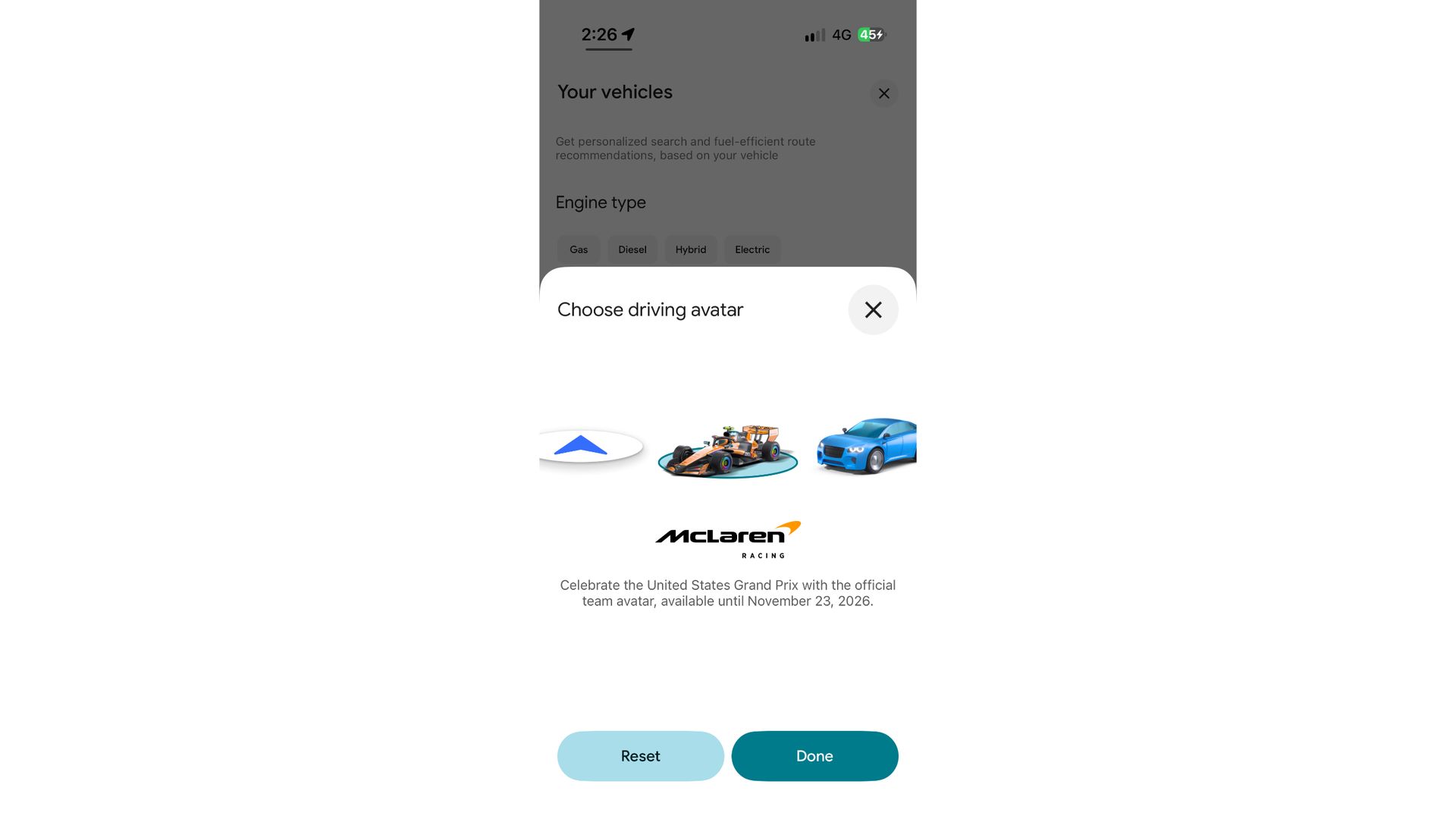
Google Maps has added a new McLaren F1 car that you can select as your driving avatar during navigation.
The new avatar celebrates the United States Grand Prix and will only be available to select until November 23.
You can find the McLaren F1 car under Settings > Your vehicles > Driving avatar in the Google Maps app.
Google Maps has added a new McLaren F1 car vehicle icon for users.
Google has allowed users to customize the vehicle icon in Maps for quite a while. The icon that appears during navigation used to be the standard blue arrow, but you can now customize its color or replace it with different vehicle types, including trucks and sports cars. And now, Google has added another option in collaboration with McLaren.
In the Google Maps app, if you head to your profile icon > Settings > Your vehicles > Driving avatar, you'll now see a new McLaren F1 car among the available options.
(Image credit: Future)
The icon looks quite close to the actual McLaren F1 car, and once selected, you can use it as your driving avatar in Google Maps. So, the next time you start turn-by-turn navigation, the usual vehicle icon will be replaced by the F1 car as you move around the map.
Google says the new avatar has been added to celebrate the United States Grand Prix and is only available for a limited time. You'll be able to select the McLaren F1 avatar until November 23, 2026, after which the option will presumably disappear.
I'm currently seeing the feature live in Google Maps on my iPhone Air, but it hasn't appeared on my Pixel 11 Pro just yet. Both devices are running the latest version of Google Maps, so this appears to be a server-side rollout rather than something tied to a particular app update.
If you don't see the McLaren F1 car on your Android phone yet, it may simply be worth checking again later as Google expands the rollout.
from Latest from Android Central https://ift.tt/PYrD5Iy
via IFTTT
Google is reportedly preparing a new Fitbit Edge that could sit between the $99 Fitbit Air and the Pixel Watch.
Unlike the screenless Fitbit Air, the Fitbit Edge could feature a small display for health stats and basic controls.
The Fitbit Edge will reportedly offer 7-day battery life and support both Android phones and iPhones.
Google could launch the Fitbit Edge later this month, with pricing estimated to fall between $149 and $199.
Google might be preparing to launch a new wearable under the Fitbit branding called the Fitbit Edge.
Google has enjoyed quite a bit of success recently with the launch of the Fitbit Air. The $99 price tag, combined with a screenless design and daily health insights without necessarily requiring a subscription, has made it one of the more interesting wearables in its category. And now, it looks like Google is preparing to fill the gap between the Fitbit Air and Pixel Watch.
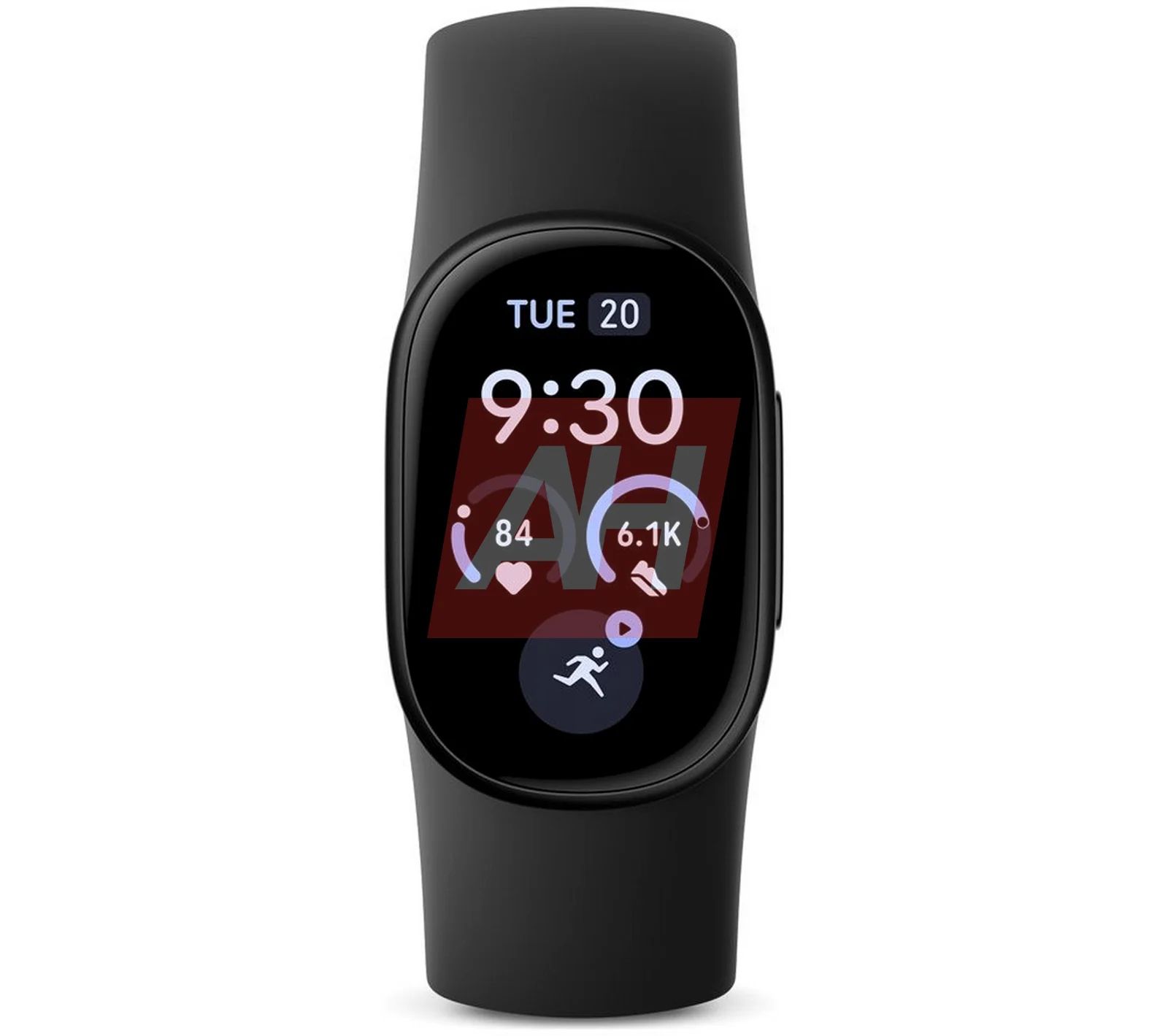
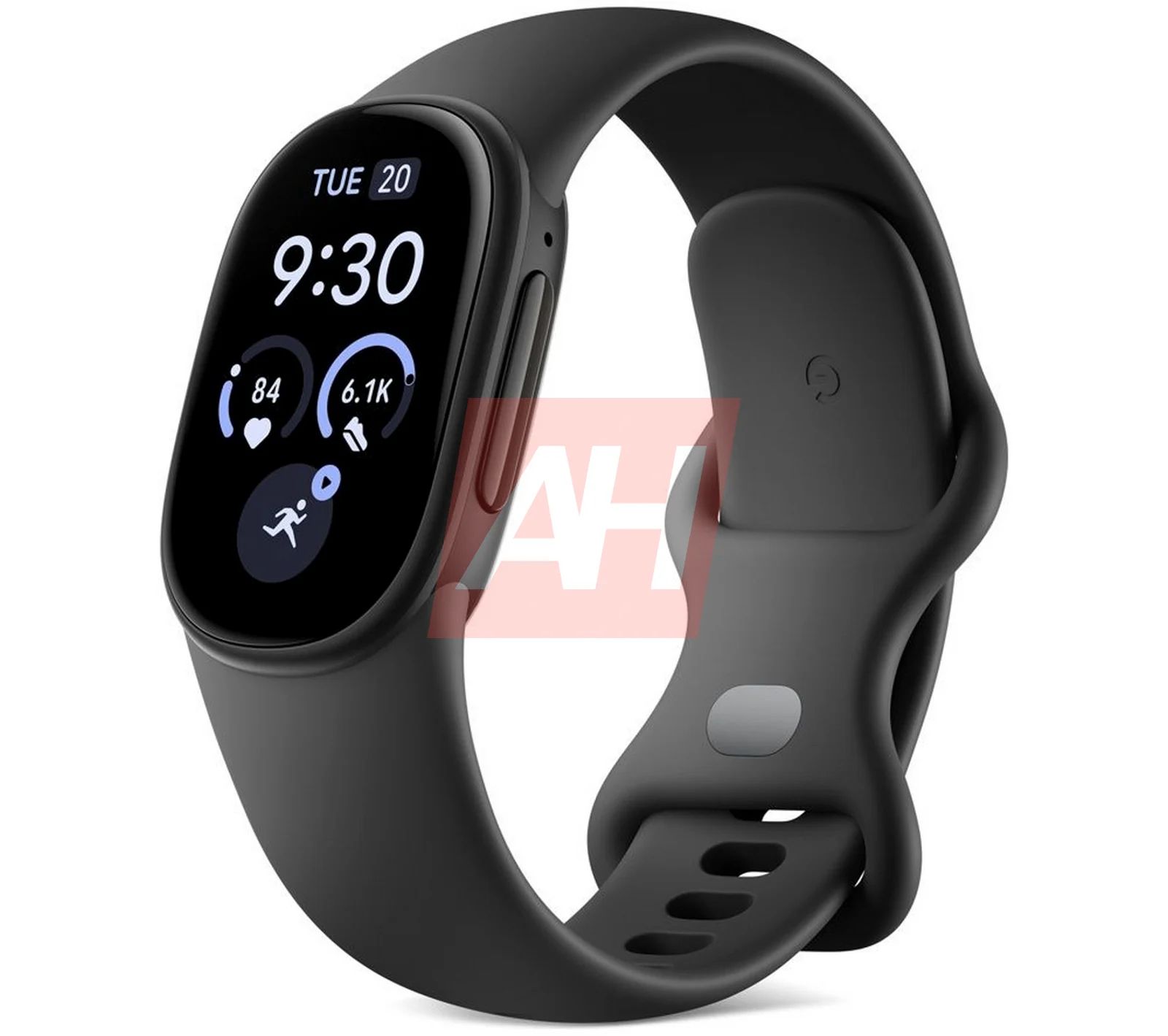
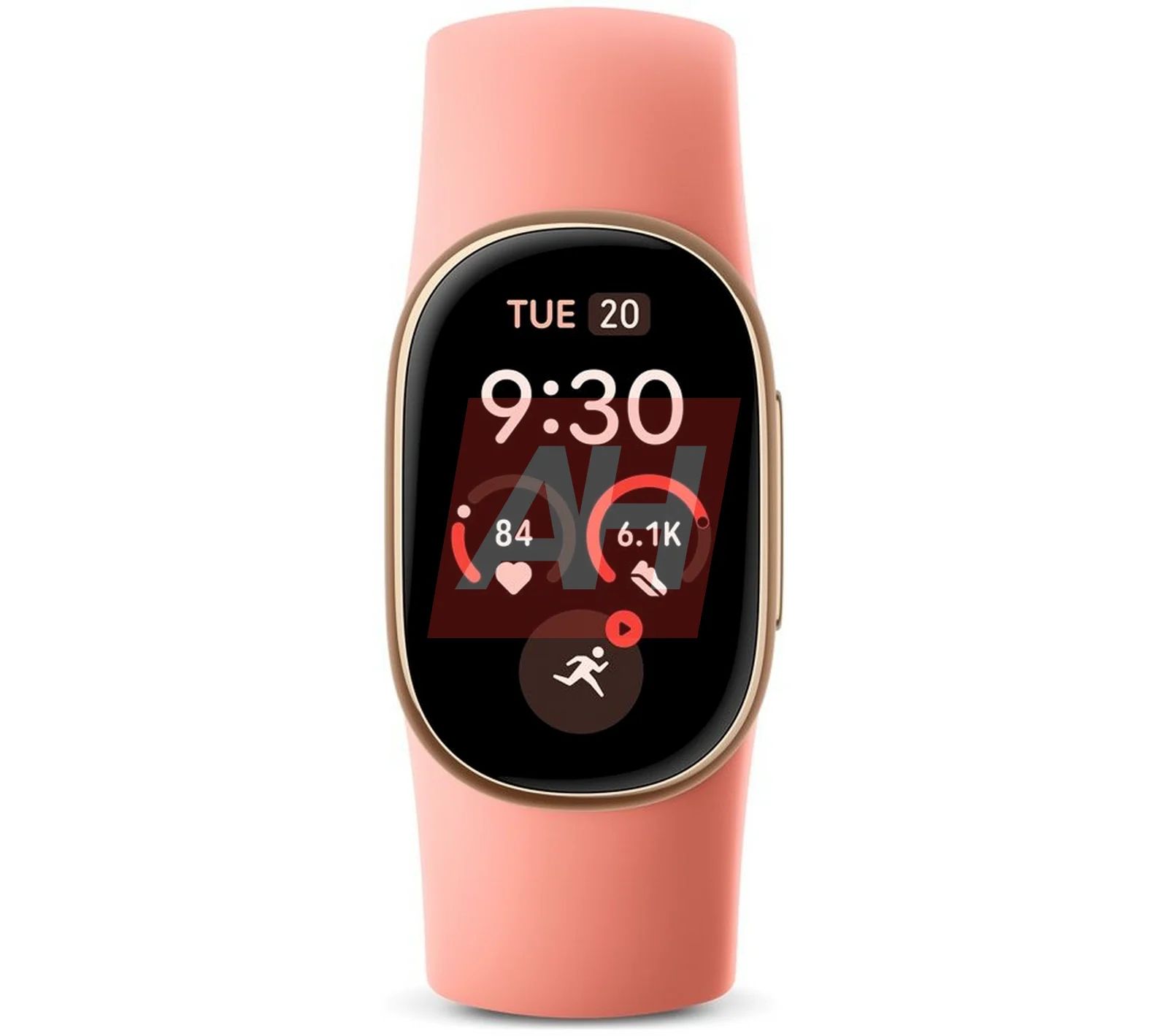
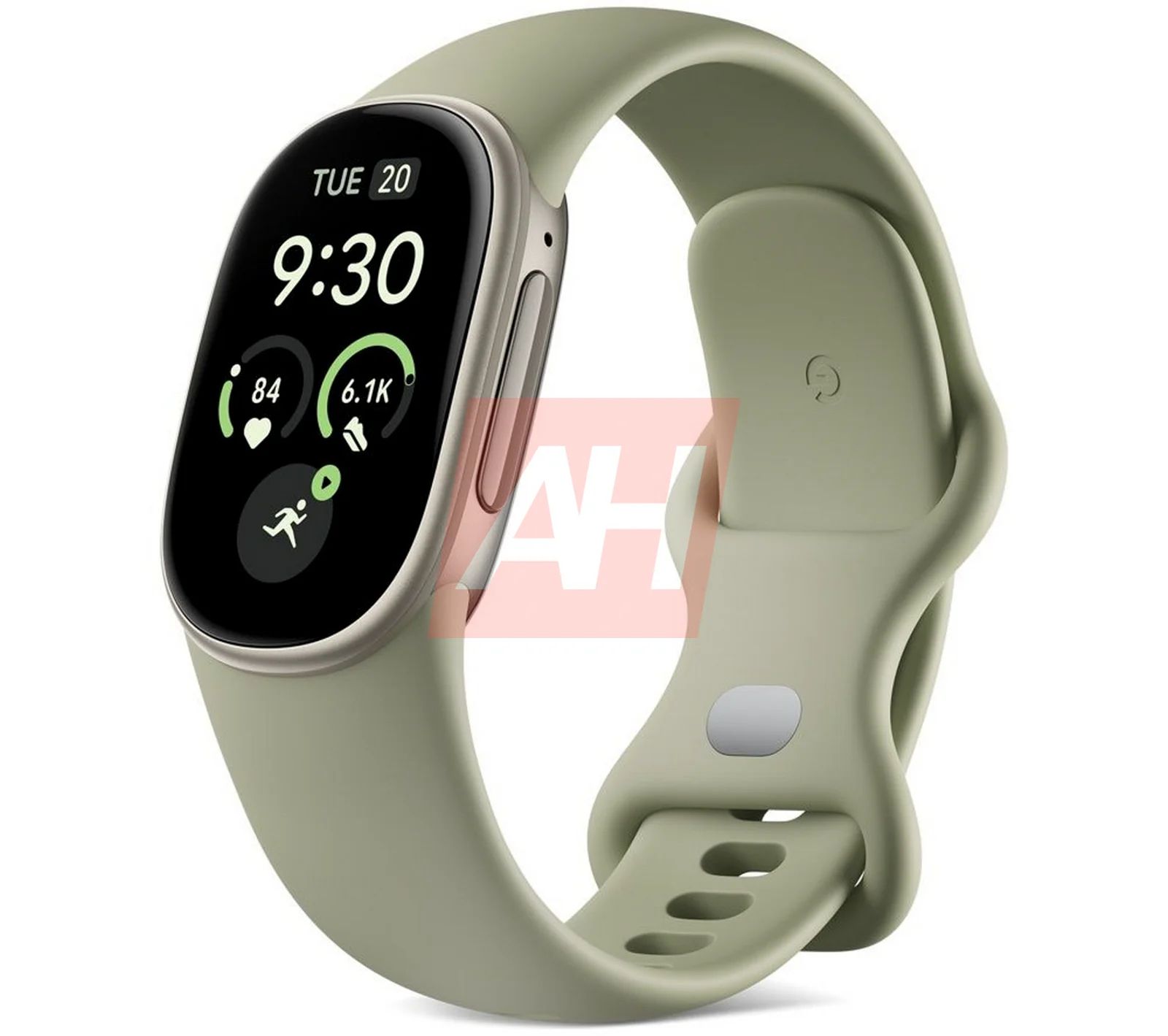
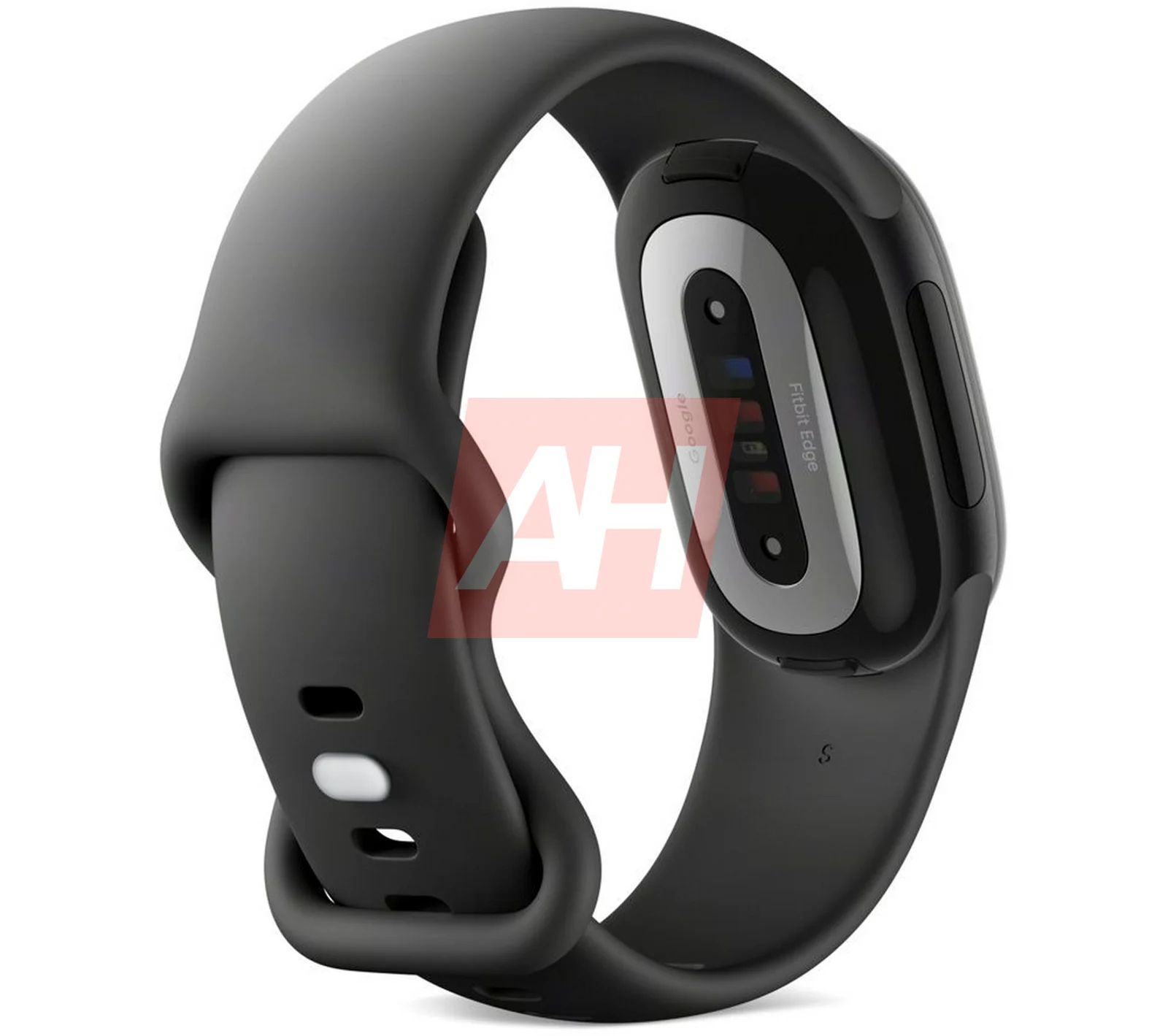
According to a leak from Android Headlines, Google is preparing a new wearable called the Fitbit Edge. The publication has shared what appear to be marketing renders of the device, giving us our first look at what Google's next Fitbit tracker could look like.
Unlike the Fitbit Air, the Fitbit Edge will reportedly feature a small oval-shaped display. It won't offer the full smartwatch experience you get from something like the Pixel Watch, but instead use the smaller screen to display essential information.
The leaked watch face shows things like the time and date, heart rate, step count, and a quick button to start a workout. Think of it more as a successor to the Fitbit Charge 6, which launched back in 2023, rather than a cheaper Pixel Watch.
The renders also show a button on either side of the tracker alongside a sensor array on the back. The sensor setup looks quite similar to what we have on the Fitbit Air, although there could be additional sensors for tracking more health metrics.
The Fitbit Edge is shown in three colors called Obsidian, Olive, and Canyon, which are similar to the finishes we've seen on the Pixel 11 Pro series.
(Image credit: Android Headlines)
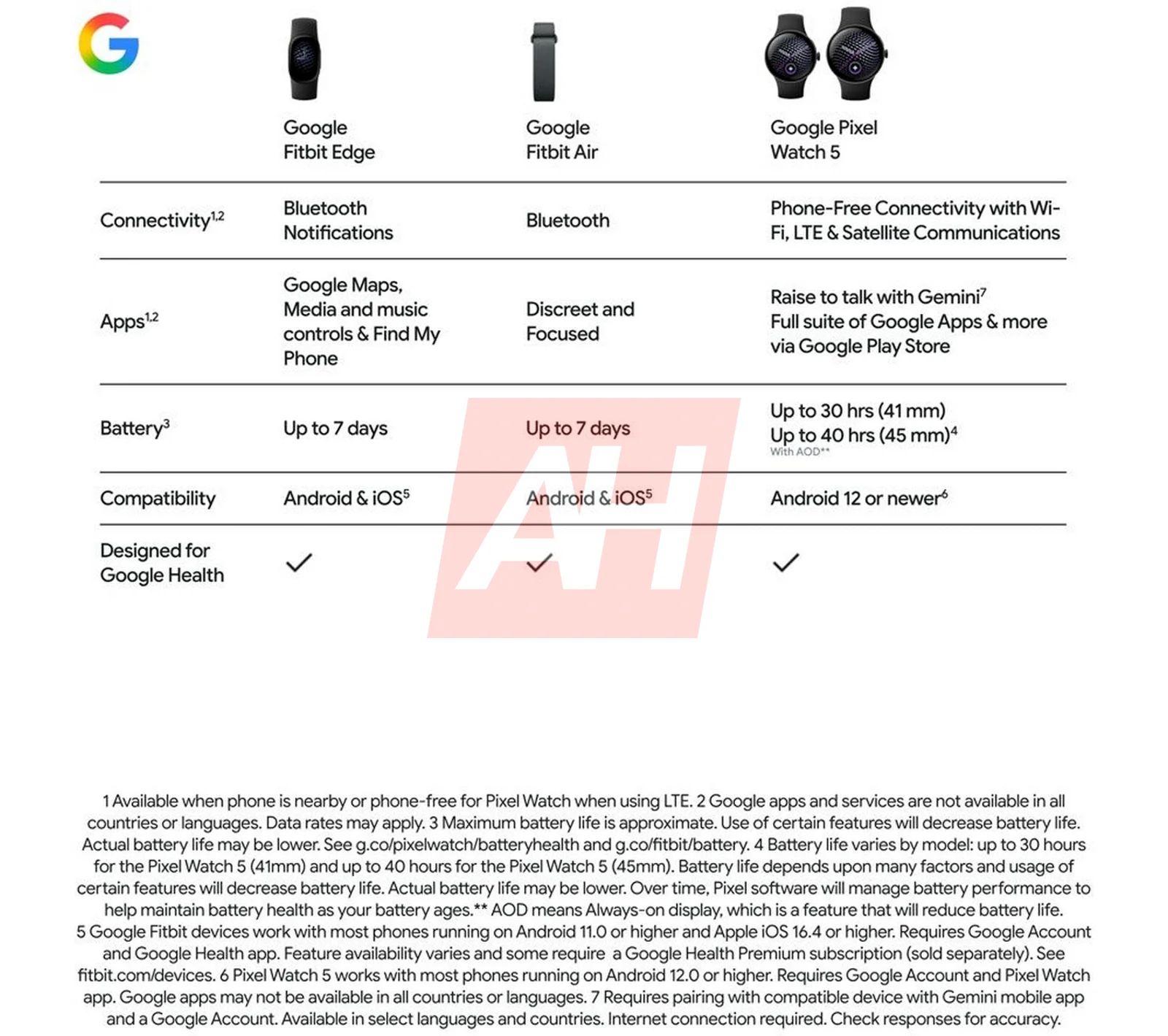
As for the specs, the Fitbit Edge will reportedly offer up to seven days of battery life, matching the Fitbit Air. Unlike the Pixel Watch, which only works with Android phones, the Fitbit Edge will reportedly support both Android and iPhone, similar to other Fitbit trackers.
The display will also allow the Fitbit Edge to offer some smartwatch-like functionality. The tracker will reportedly support notifications and features from apps including Google Maps and YouTube Music, alongside Find My Phone. It's unclear whether you'll also be able to see notifications from third-party apps like WhatsApp or regular messages.
Google is expected to position the Fitbit Edge as the middle option between the $99 Fitbit Air and the more expensive Pixel Watch 5. Pricing hasn't leaked just yet, but the publication estimates that the Fitbit Edge could cost somewhere between $149 and $199.
The Fitbit Edge is reportedly set to launch later this month, so we shouldn't have to wait too long to learn more about Google's next wearable.
from Latest from Android Central https://ift.tt/nKkh27U
via IFTTT
Android 17 QPR3 Beta 1 is rolling out to Pixel phones ahead of its expected stable release next year.
Google is fixing a long list of issues, including crashes, fingerprint freezes, eSIM problems, Wi-Fi failures, battery drain, and Bluetooth audio glitches.
A stable release is targeted for March 2027.
Google just released Android 17 QPR3 Beta 1, and if you have a Pixel, you will want to check this out. The update was rolled out to Pixel testers today with builds for everything from the Pixel 6a to the Pixel 11 family. Most devices are getting DP11.260918.006, while Pixel 11 owners are getting DP11.260918.005.
For the uninitiated, these QPR updates ride on top of Android 17's initial launch and deliver fixes and performance tweaks every three months. They avoid breaking changes to the API, so developers are able to test with confidence.
So what's been fixed? Quite a bit. Google killed 20 bugs this round, including a nasty fingerprint unlock freeze, an eSIM profile that quietly flipped back to off, and a camera bug that spun your video feed 90 degrees during desktop-mode calls. Here is the complete list of fixes Google is pushing out.
Audio output device cannot be switched while playing audio from apps without active media controls. (Issue #259180936)
Apps crash when attempting to start a foreground service from a Quick Settings tile. (Issue #299506164)
Camera feed is rotated 90 degrees when using video calling apps on an external display in desktop mode. (Issue #432390710)
User interface issues when navigating back to the home screen from an app. (Issue #566639975)
Unexpected dot displayed on the Mobile Data icon in Quick Settings. (Issue #551150806)
Front camera fails to function while screen recording is active. (Issue #523313834)
Calling apps crash with ForegroundServiceStartNotAllowedException when handling calls immediately after device reboot. (Issue #409069722)
eSIM profile cannot be enabled and silently reverts to off in Settings. (Issue #541436675)
Excessive battery drain during idle when Flip to Shh is enabled. (Issue #560036427)
Settings app crashes when opening battery settings. (Issue #554603197)
Audio playback stops on active LHDC v5 Bluetooth devices when a second connected device disconnects. (Issue #554992287)
com.android.phone crash loop and complete loss of cellular service when the modem reports unexpected SIM slot indices. (Issue #554049220)
Wi-Fi fails to automatically reconnect during background wakes when hardware PNO scans fail or are unsupported. (Issue #551970385)
QPR3 should see the final, stable release by early next year. Want to jump back to the stable channel without completely wiping your phone? Don't install this update yet and wait for the public QPR2 launch by unenrolling from the Android Beta Program.
from Latest from Android Central https://ift.tt/mhUbHYP
via IFTTT
Overseas rumors suggest Samsung's Exynos 2700 has entered the mass production stage.
The chip is reportedly going to be applied to the Galaxy S27, S27 Plus, and "S27 Pro;" however, decisions need to be made about the S27 Ultra.
Recent rumors about the chip suggest Samsung is working on improving its heat generation/dissipation, as well as allegations about its increased performance.
Samsung is reportedly moving ahead with its next-gen in-house chip, the Exynos 2700. As it enters mass production, there are a few lingering questions still left unsolved concerning its application.
A report by The Elec (Korean) suggests Samsung is moving forward with the Exynos 2700, entering its mass production stage (Via SamMobile). According to the publication's insiders, there are two decisions the company had to make. The first reportedly concerns its "increase in volume." Supposedly, Samsung has started crafting ~10% more Exynos 2700 chips.
Rumors claim this is done to accomodate the alleged "Galaxy S27 Pro" we've seen in rumors throughout 2026. However, there's uncertainty behind its Galaxy S27 Ultra application. Usually, Samsung integrates its Exynos chip in its flagship series in various overseas markets. Korean and (at times) Europe have received this version over Qualcomm.
However, the publication claims it "has not yet been decided" how widespread Exynos 2700 will be for the S27 Ultra. It's under current speculation that the S27 series would recieve the latest Snapdragon chips in the U.S., but beyond that, the report is uncertain.
Rumors so far
(Image credit: Nicholas Sutrich / Android Central)
Samsung was reportedly fast-tracking its Exynos 2700 development. Supposedly, the company's major focus involved the chip's HPB (Heat Path Block) technology. This enables the chip to throw off heat, reducing its temperature and remaining cooler overall. No one wants a hot phone all the time, and that was precisely an issue Samsung's Exynos often suffered from.
There were also rumors that Samsung's application of the Exynos 2700 in the Galaxy S27 series could help "reduce costs" for consumers. Elsewhere, we have some performance rumors. Rumors from the spring suggest the chip could feature a 10-core structure, and its fastest core could clock in at ~2.88GHz. What's more, the Xclipse 970 GPU was spotted for the chip, with reports purporting a ~12% performance boost.
Similar rumors continued, with some boldly claiming the Exynos 2700 could top Qualcomm's flagship chips.
Android Central's Take
I don't think Samsung is too far out of its depth with the Exynos. I think it needs to buckle down, lock in, and make a good chip. Its 2600 wasn't terrible. It was a decent step in the right direction. But we all know what I'm going to talk about, right? How is it graphically? Can it hold up well for games? Think about: if a chip can do that, you'd figure it can handle everything else without fail. It should be smooth, cool. We expect Samsung's next phones next year, and that's likely when we'll know everything for sure.
from Latest from Android Central https://ift.tt/CKUWy80
via IFTTT