It is also now easier than ever to access the "Favorites" tool.
What you need to know
Facebook has rolled out new features to give users more control over their News Feed.
The new Feed Filter Bar makes it much easier to access the "Favorites" and "Recent" filters.
Android users can now access the Feed Filter Bar when they scroll up on News Feed.
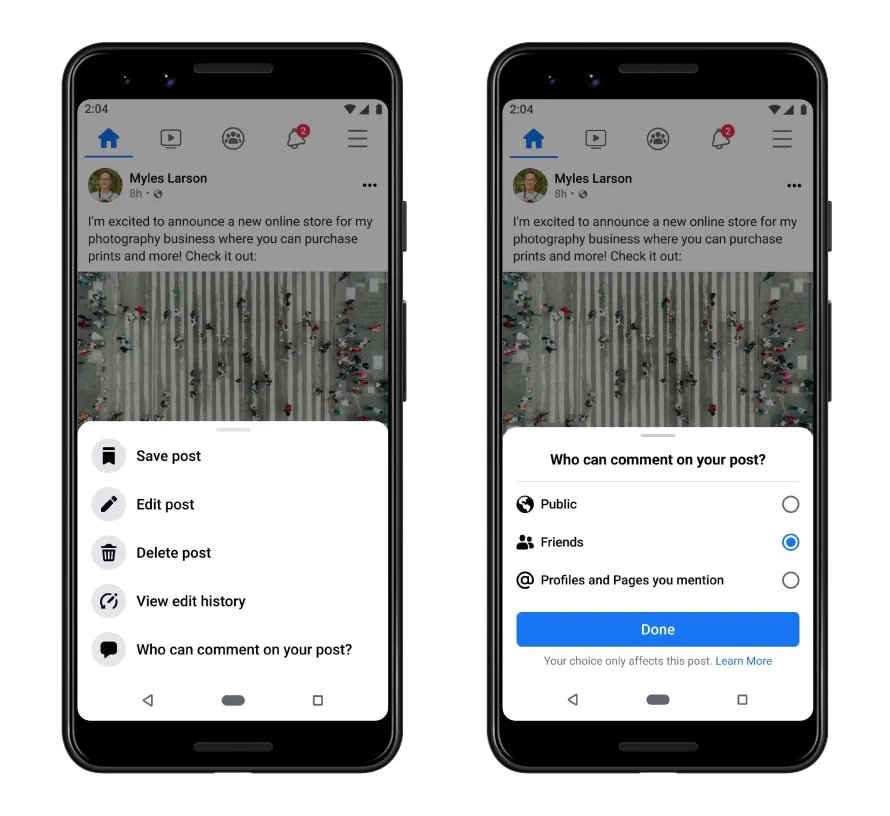
Facebook has introduced a new tool that will give its users greater control over what they share to News Feed. Users can now adjust who can comment on their public posts on Facebook.
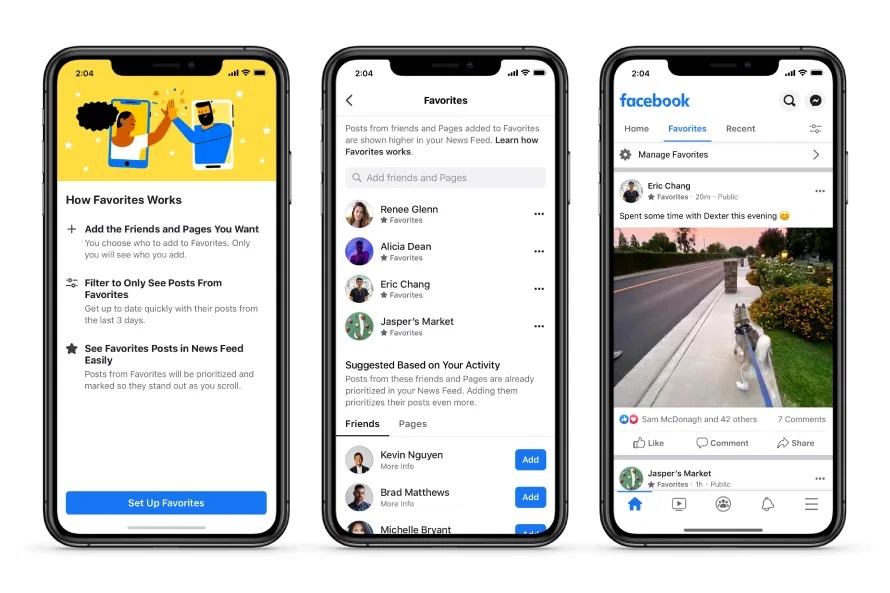
The social networking giant, which owns two of the best Android messaging apps, says the new tool will enable users to "further control how they want to invite conversations onto their public posts and limit potentially unwanted interactions." It is also now easier to sort and browse News Feed, thanks to the new Feed Filter Bar, which can be accessed by scrolling up on News Feed in the Facebook Android app. The new Feed Filter Bar gives you easier access to the Favorites and Most Recent filters. The functionality will be available on iOS in the coming weeks, but there's no word on when it will be made available on the web version.
Launched in October last year, the Favorites filter lets you prioritize content from up to thirty friends and pages. Posts from "Favorites" are shown higher in your News Feed. On the other hand, the "Most Recent" filter allows you to sort content chronologically, with the newest posts appearing at the top.
However, it is worth noting that the Feed Filter Bar will disappear if you don't use the Favorites tool for seven days. Once the filter bar disappears, you'll have to access the Favorites tool through the preferences menu to make it reappear. You'll also lose quick access to the "most recent" filter if you don't use it regularly.
from Android Central - Android Forums, News, Reviews, Help and Android Wallpapers https://ift.tt/39vnOX9
via IFTTT
No Man's Sky just keeps getting better and better with each new update.
What you need to know
Hello Games released a new update for No Man's Sky called Expeditions.
Expeditions has players completing community tasks together, and these will change seasonally.
The update is live today and is free for all existing players.
Just over a month after the Companions update turned No Man's Sky into Jurassic Park, Hello Games has released a new major update for No Man's Sky called Expeditions, free to all existing players on PS4 and PS5. As of today, Expeditions introduces an all-new game mode that will change with the seasons.
According to the announcement, players will now start off on the same planet and embark on community expeditions. Travelers will be able to keep track of these milestones and challenges through the Expedition planner, and rewards vary from a new jetpack, an exclusive ship, a new weapon, and much more in the coming weeks.
Expedition mode is separate from the existing Normal, Creative, Survival, and Permadeath modes, so you won't need to worry about messing with your save file in any of those. At the end of each season the Expedition will be converted to a normal mode save, meaning you won't lose any of your progress or items.
This is a huge step for a game that launched without proper multiplayer — which was eventually added through a series of updates over the years. No Man's Sky is more social than ever, and it's all the better for it.
No Man's Sky on PS5 supports adaptive triggers and haptic feedback through the DualSense controller, so that's the best way to play on Sony's consoles. If you haven't been able to find a PS5 yet, keep checking our PS5 restock tracker.
No Man's Sky keeps giving a reason for players to come back in the form of new updates and content. With Expeditions you can embark on a journey with friends and complete tasks together for exclusive rewards.
from Android Central - Android Forums, News, Reviews, Help and Android Wallpapers https://ift.tt/3u9GwLL
via IFTTT
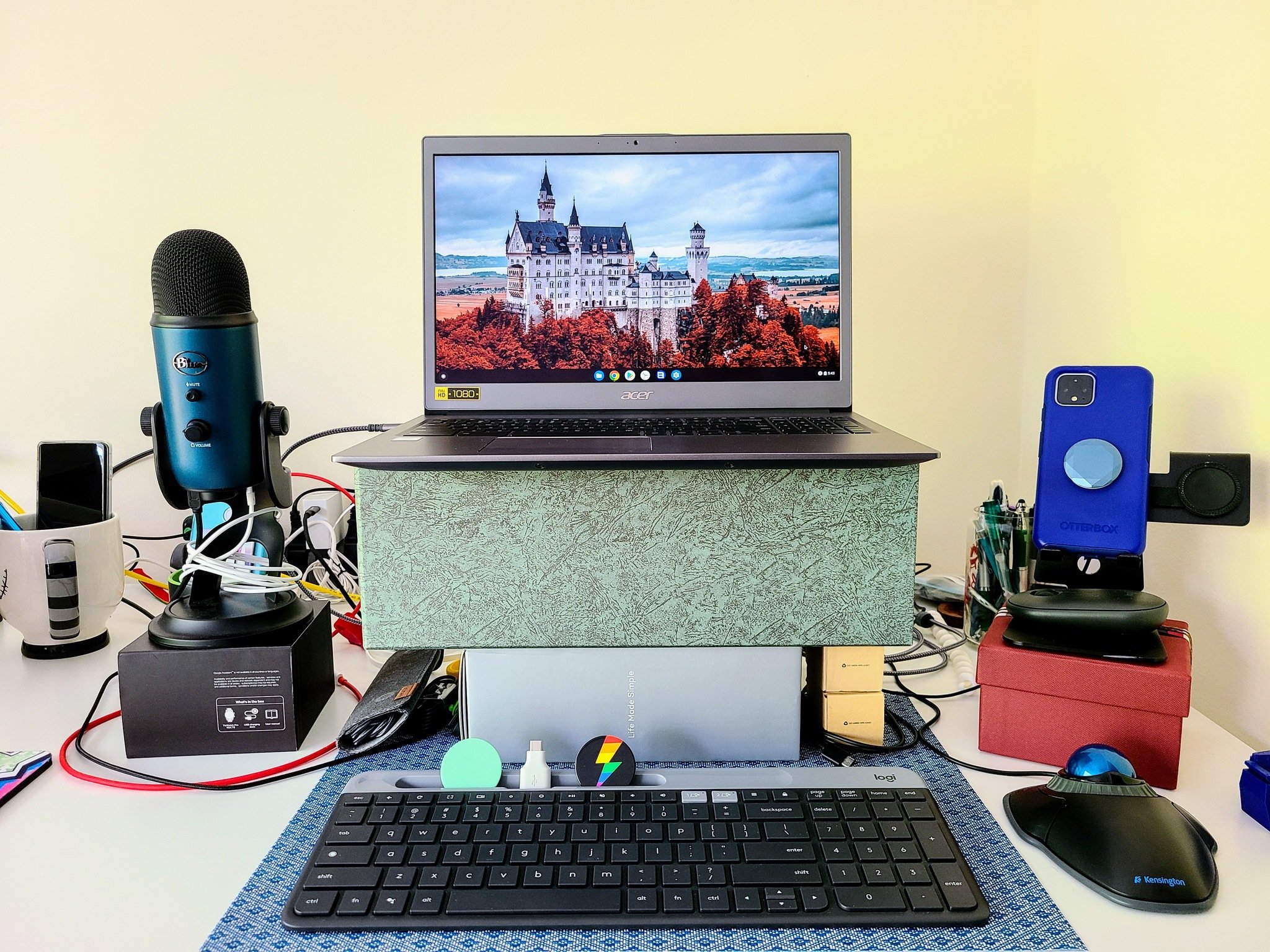
One of the most wonderful things about Chromebooks is how simple they are — you don't have to buy additional accessories to make them work. They just do most of what people want out of the box. But perhaps you have additional needs like using a larger external screen, necessitating having an external keyboard and mouse in the process. Now that so many of us are working from home, it's worth investing in a proper workstation setup to help your productivity and give you more screen space to spread out your work. Here's how to use a Chromebook with a monitor, keyboard, and mouse to get the best experience on Chrome OS.
Hubs and Docking Stations: Are you going wired or wireless?
While most of the best Chromebooks have ample USB ports for plugging in all your peripherals, HDMI is becoming harder and harder to find on Chromebooks. However, that's okay because all USB-C Chromebooks can add on a secondary screen via a USB-C hub, docking station, or a USB-C to HDMI adapter. Which one do you need? Well, that depends on you and how much you're connecting:
Are multiple computers going to be using this workstation? Are you making a workstation that you and your kids can all use in turn for homework, paying bills, and maybe some light gaming? Then you'll want either a dock or USB-C hub, and you'll want to opt for wired peripherals so that you don't have to re-pair a Bluetooth mouse and keyboard with each person's computer.
Are you connecting more than two things to your computer? Most Chromebooks have only one or two USB-A ports, so if you need to connect a mouse, keyboard, and a USB microphone for those Zoom meetings and online classes, you'll want a docking station to be sure you have enough USB-A ports for all your normal peripherals, plus at least one spare USB-A port for an external drive or thumb drive should you need to access an old
Do you just need to connect a monitor? If you already have a wireless mouse/keyboard you're using and need to add on a monitor, you can save yourself some money by just getting a USB-C to HMDI adapter if you're not purchasing a USB-C-enabled monitor.
While there are tons of excellent USB-C hubs out there, finding good docking stations for Chromebooks is a little more tricky, as the video output situation on docks is usually geared toward Windows and Mac. See, there are several USB-C "alt modes" that can be selected depending on the hardware the dock wants to support: there's HDMI alt mode, DisplayPort alt mode, and Thunderbolt 3 alt mode. The type of alt mode supported by the dock — and more importantly, supported by your Chromebook — determines whether your Chromebook will work with a certain dock or not.
Given many docking stations support both HDMI and DisplayPort, compatibility can get tricker than it does on USB-C hubs, which usually only have HDMI video ports. Of course, USB-C hubs also don't come with their own power supplies as docking stations do, so if you buy a USB-C hub, make sure you buy one with pass-through charging high enough to power both the hub and your Chromebook.
Connect everything
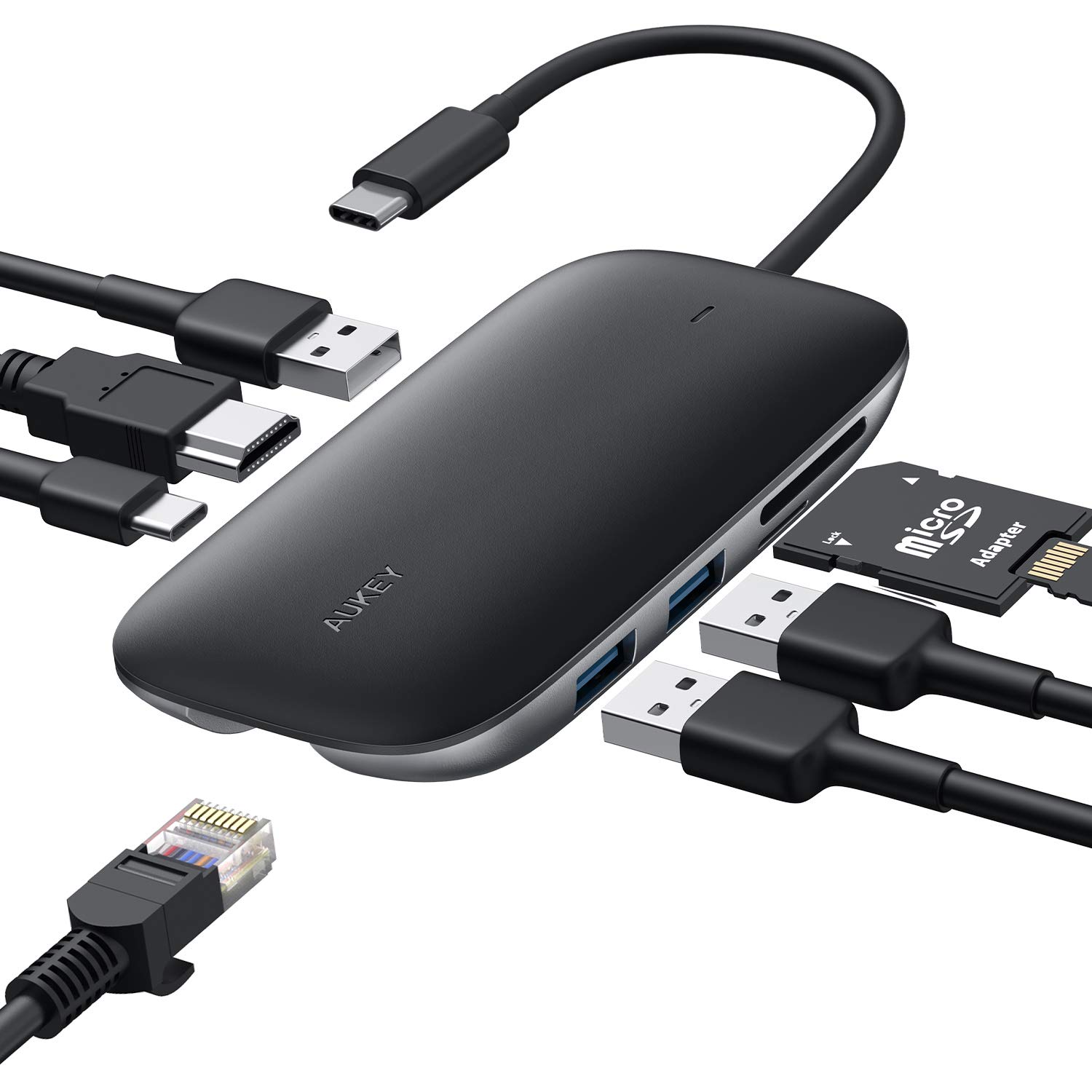
AUKEY USB C Hub 8-in-1 Type C Adapter with Ethernet Port
AUKEY's USB-C hub has delivered generation after generation, and this is the model I've used with a dozen Chromebooks as well as a Chromecast with Google TV. It comes with 3 USB-A ports, 100W USB-C pass-through charging, 4K HDMI, SD, and microSD card slots.
Once upon a time, just about every Chromebook came with an HDMI port. Still, these days with USB-C supporting video out, most manufacturers have removed the seemingly superfluous HDMI port. If your Chromebook still has HDMI, then all you need is a good monitor and then plug in the HDMI cable that comes with it. If you don't have HDMI, you can also buy a USB-C monitor if you don't want to use one of the USB-C hubs or docking stations mentioned above.
Once you have your monitor plugged in, you'll still want to get things properly arranged and tuned in the Chrome OS settings.
How to adjust your monitor settings in Chrome OS
Once you plug your monitor into your Chromebook, it will start displaying an extension of your desktop immediately. But of course, you'll probably want to tweak the settings a bit, so it does exactly what you want it to for the best experience.
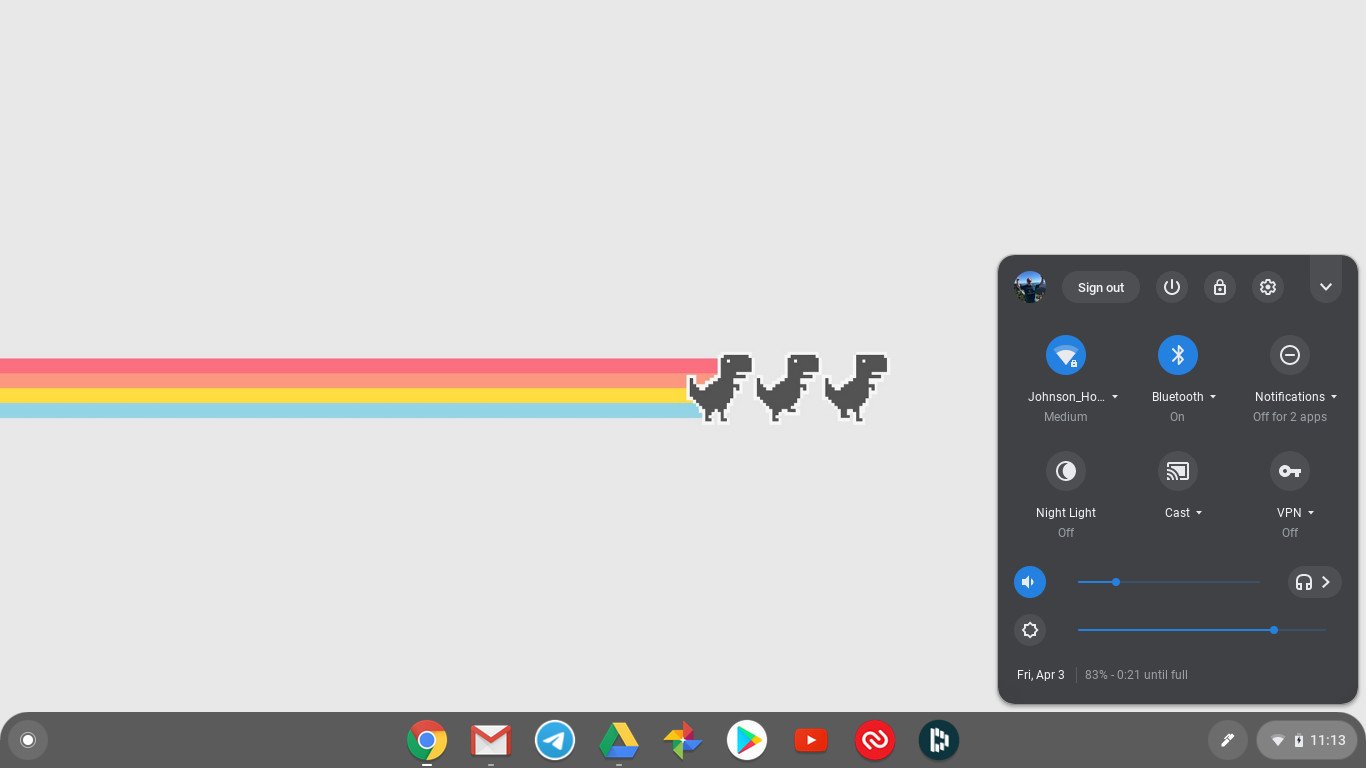
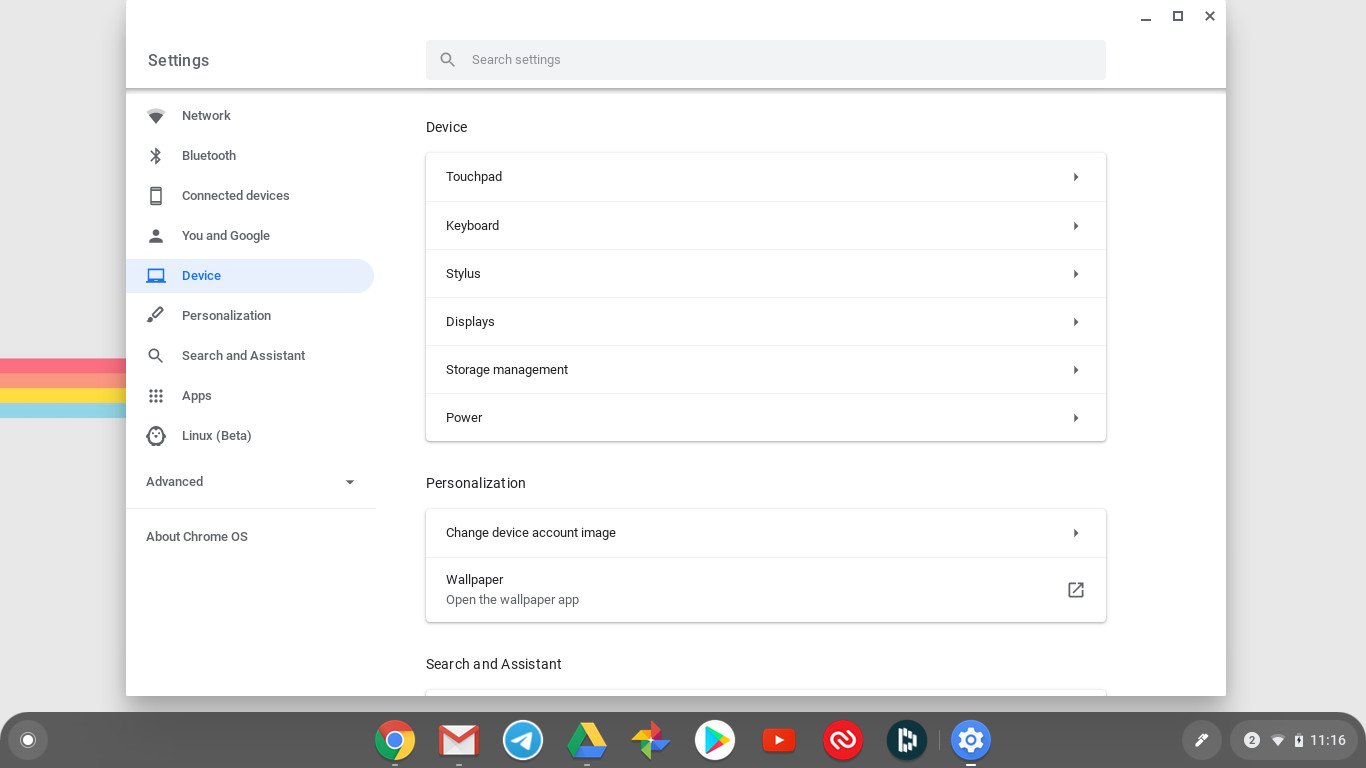
Click the status area (that's where your Wi-Fi and battery icons are).
Click on the settings icon (the little symbol that looks like a gear).
Click on Device.
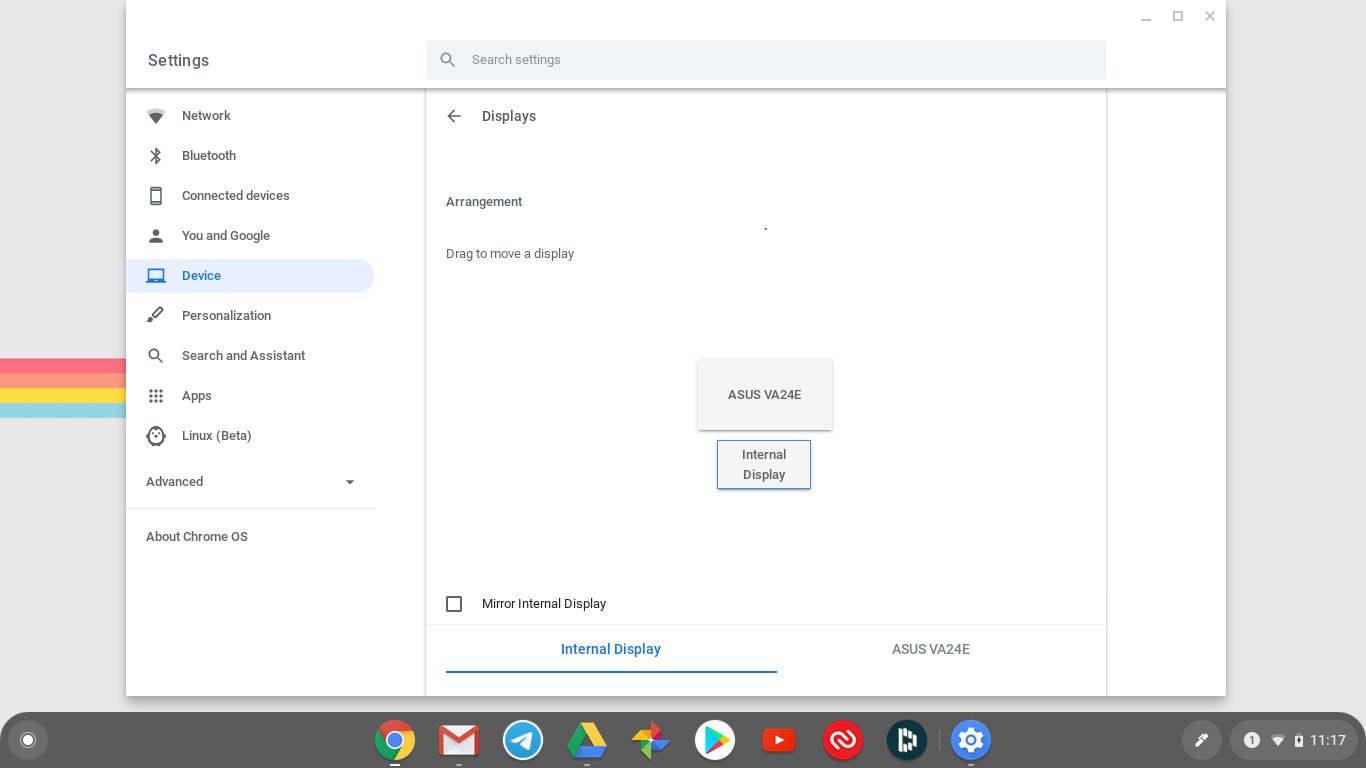
Click on Displays.
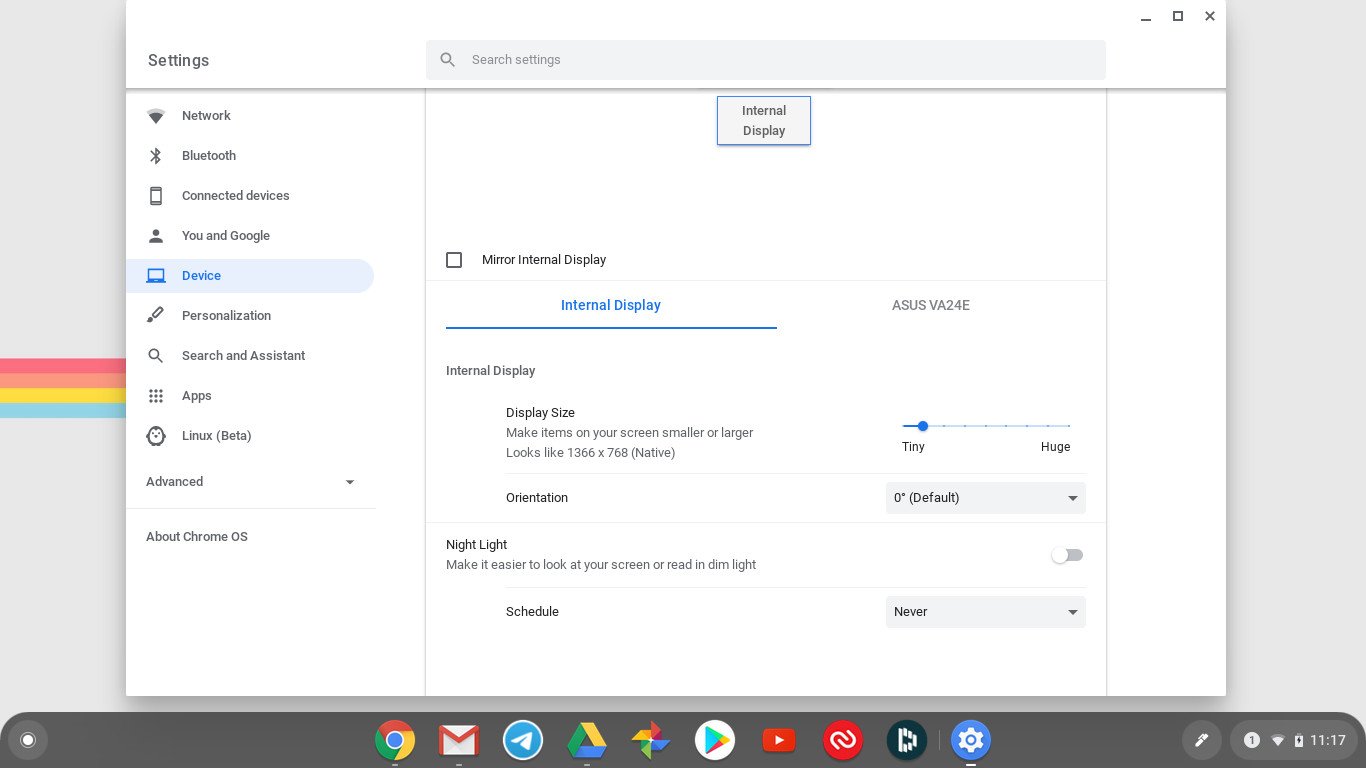
Arrange the displays according to your preference (I like the big monitor on top). You can also decide if you want to mirror the internal display, or tweak the dispaly settings further (such as resolution and orientation).
While you can leave your external monitor's resolution on the default, I advise adjusting the Display size up and down and see if you prefer having things enlarged or normal-sized. If your monitor is some 40-inch TV, you'll probably want to adjust Display size up a little, so the text isn't quite as small.
Chances are, you'll want the second display to be the "primary" display in this situation. If you're using it as an extended desktop, you may want to keep the Chromebook as the primary display without a keyboard and mouse. The same goes for mirroring versus extended — you'll know right away whether you want the external monitor to duplicate what's on the Chromebook or be its own, separate display.
If you need to quickly switch between mirroring and extending your desktop, you can hold ctrl and press the full-screen button (F4 on a traditional keyboard) to toggle between mirroring and dual-display mode.
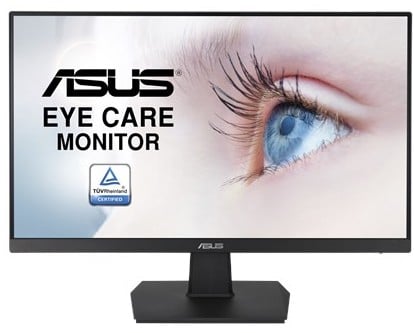
This monitor from ASUS is the one I chose to complement my Chromebook setup. The size lets me have two full-size windows side-by-side, and its Eye Care technology makes it easier to use for longer.
Mouse
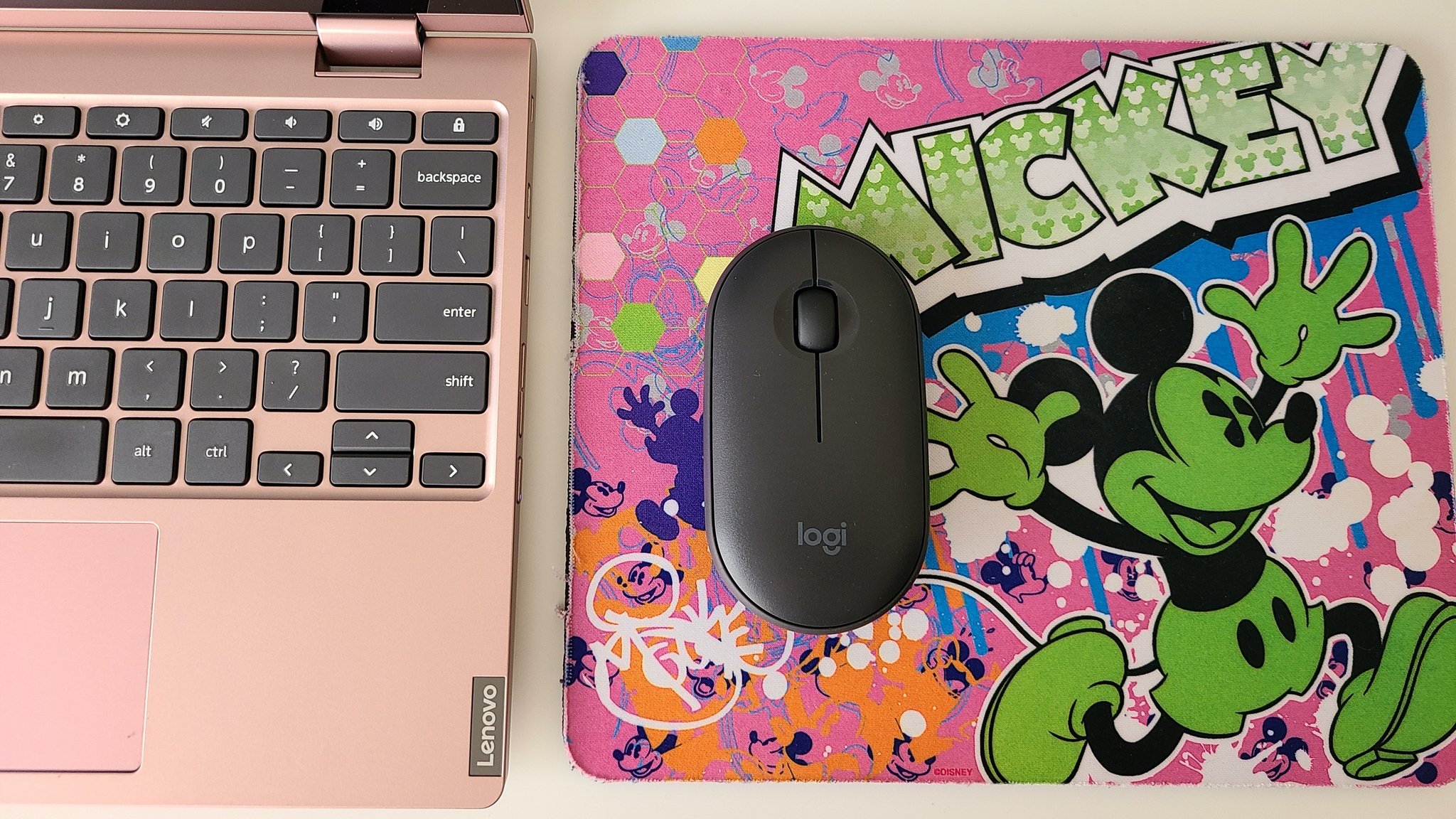
Just like monitors, Chrome OS is perfectly ready to handle connecting a mouse to save you from using the trackpad 100% of the time. Whether you like wired or wireless mice, you can plug in or pair your mouse and be up and running in a matter of seconds.
The one thing to keep in mind here is if you happen to prefer those fancy mice that have optional software for controlling special buttons, wheels, or interactions with the mouse (Logitech comes to mind). Those software suites are designed for Windows and Mac computers and won't install on Chrome OS. That doesn't mean that the mouse won't work; it just means that you won't have fine control over extra non-standard buttons and wheels. Mouse speed can still be adjusted in Chrome OS Settings in the Device section.
USB mice
When it comes to USB mice, there's really nothing to do but plug in the connector — whether that's a cable or a wireless receiver — and go. Just make sure before you buy to check which ports you have on your Chromebook. Many Chromebooks still offer USB-A ports, but some may only have USB-C.
Bluetooth mice
To connect a Bluetooth mouse, make sure that your mouse is turned on and pairing mode is enabled (the process will differ between mouse models).
On your Chromebook, click the status area (that's where your Wi-Fi and battery icons are).
Click on Bluetooth.
Look for the model name of your mouse, and the devices will pair in short order.
Just like the trackpad or a USB mouse, you'll able to adjust the pointer speed in the standard Chrome OS settings.
Ultra-lightweight and perfect for righties or lefties, this quiet mouse should last you over a year and a half on just one AA battery!
Keyboard
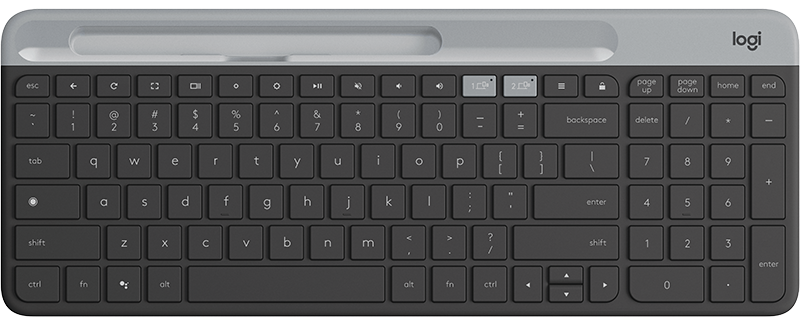
Getting an external keyboard for your Chromebook is the one part of this equation that can take a little extra thought. Like adding a mouse, you can plug in or connect any USB or Bluetooth keyboard to your Chromebook. Still, you have to remember that Chrome OS uses a non-standard layout for the function bar, with special keys in replacing the F1-12 keys and having the search key instead of a caps lock. While you can use any keyboard you have lying around, if you're buying new, consider a Chrome OS-specific keyboard, so you don't have to remember that F3 is Refresh instead of F5, which is the Overview key.
USB keyboards
Just like a USB mouse, Chrome OS can handle USB keyboards the instant you plug them in. You will need to remember what the F keys do because it's slightly different than the Chrome OS layout:
F1: Previous page (Back)
F2: Next page (Forward)
F3: Refresh
F4: Fullscreen
F5: Overview
F6: Lower brightness
F7: Raise brightness
F8: Mute
F9: Volume down
F10: Volume up
F11: Fullscreen (yeah, it's really on here twice)
F12: Inspect webpage (works the same as Ctrl + Shift + I)
Bluetooth keyboards
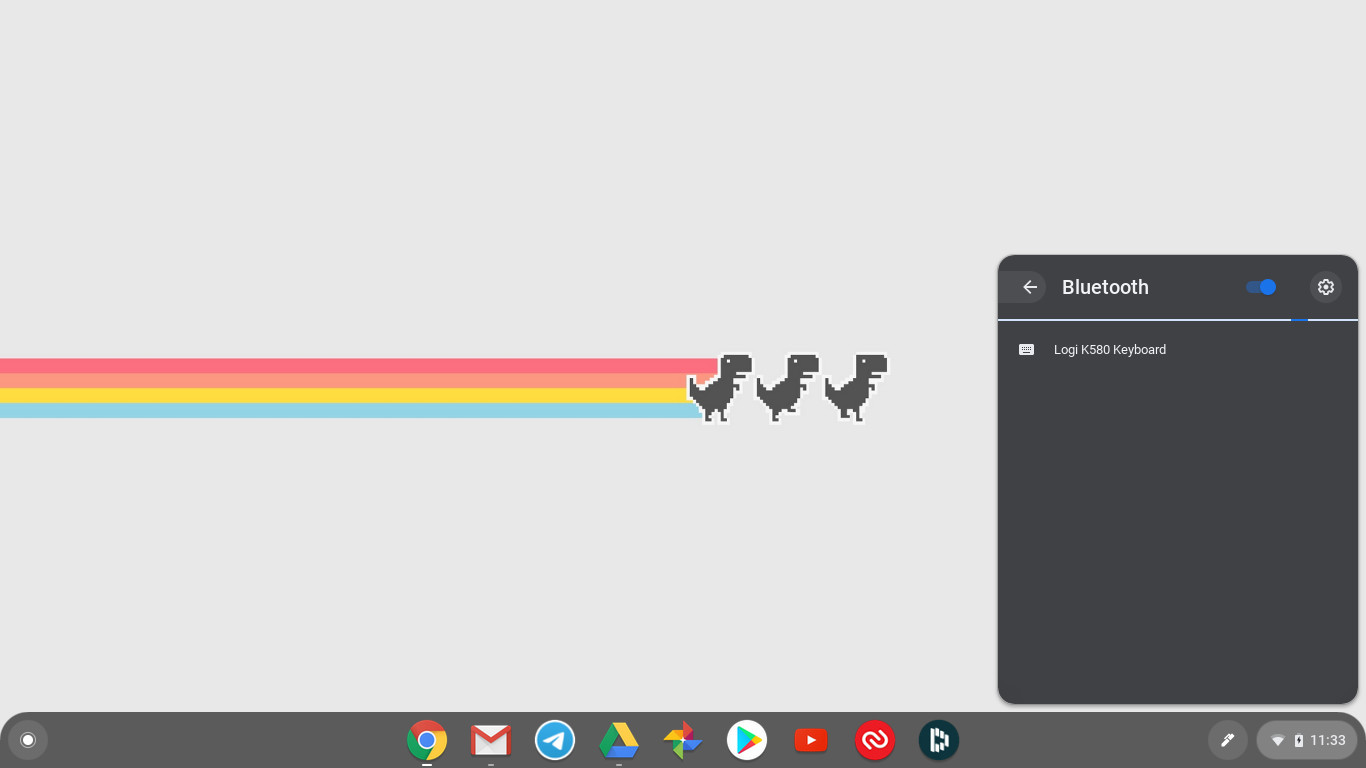
Connecting a Bluetooth keyboard is just like connecting a Bluetooth mouse.
Put the keyboard into pairing mode (usually by turning it on).
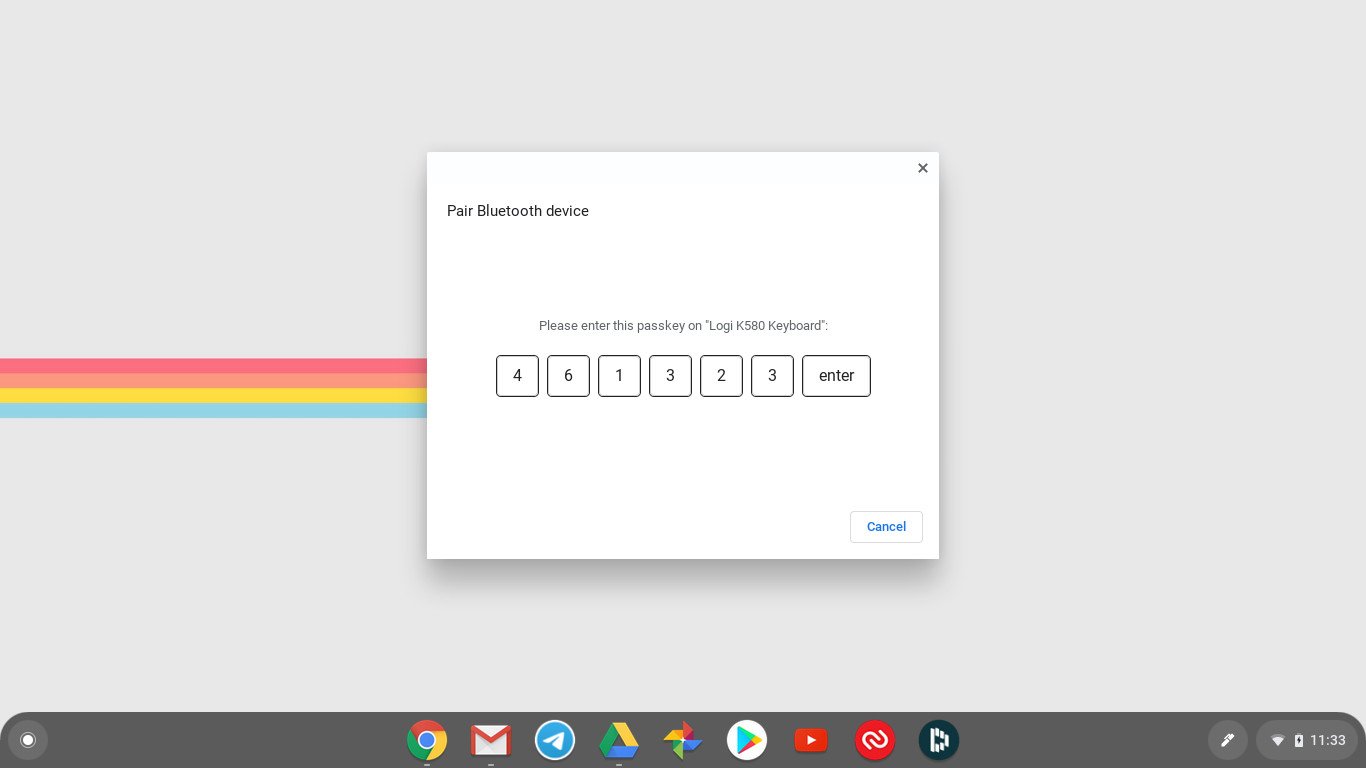
Open up the Bluetooth settings on your Chromebook from the status area and click on the Bluetooth icon.
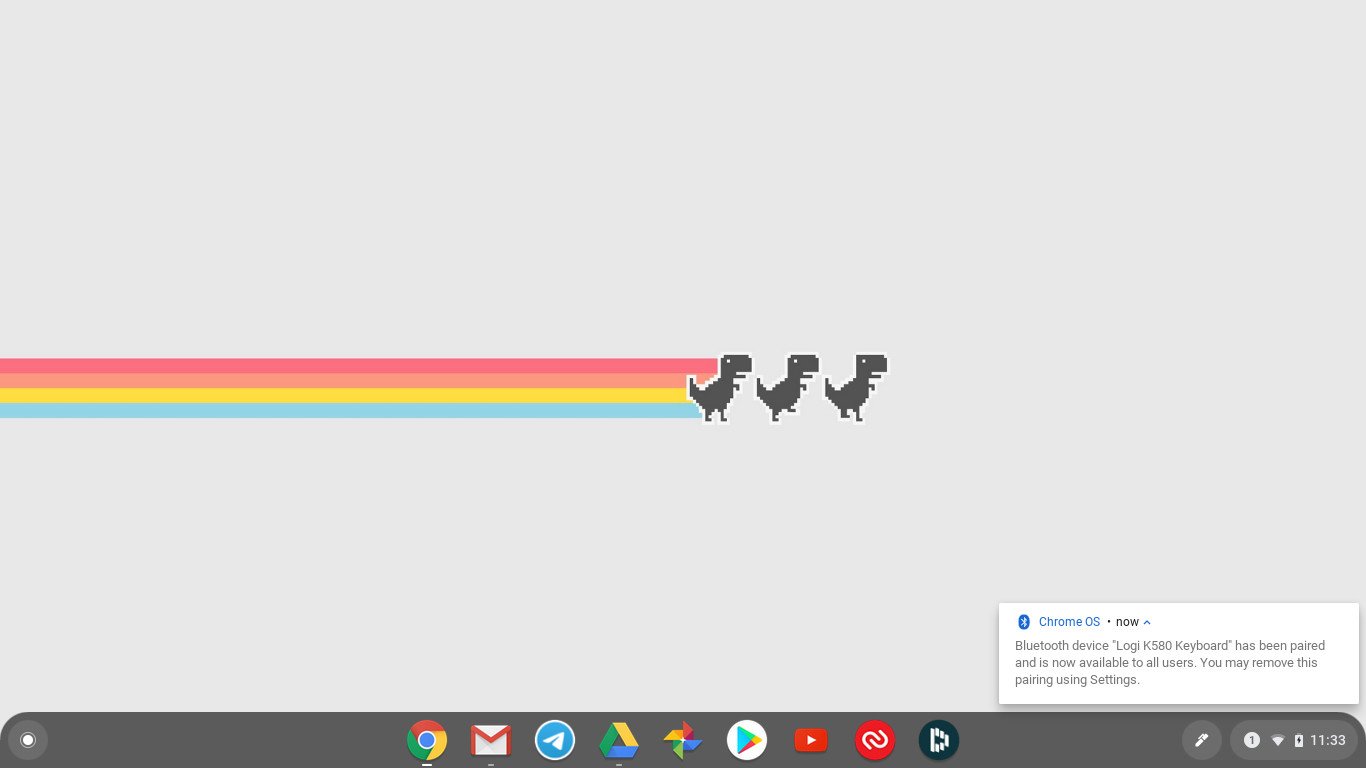
You'll be prompted to type a sequence of numbers on the keyboard, and press enter to pair.
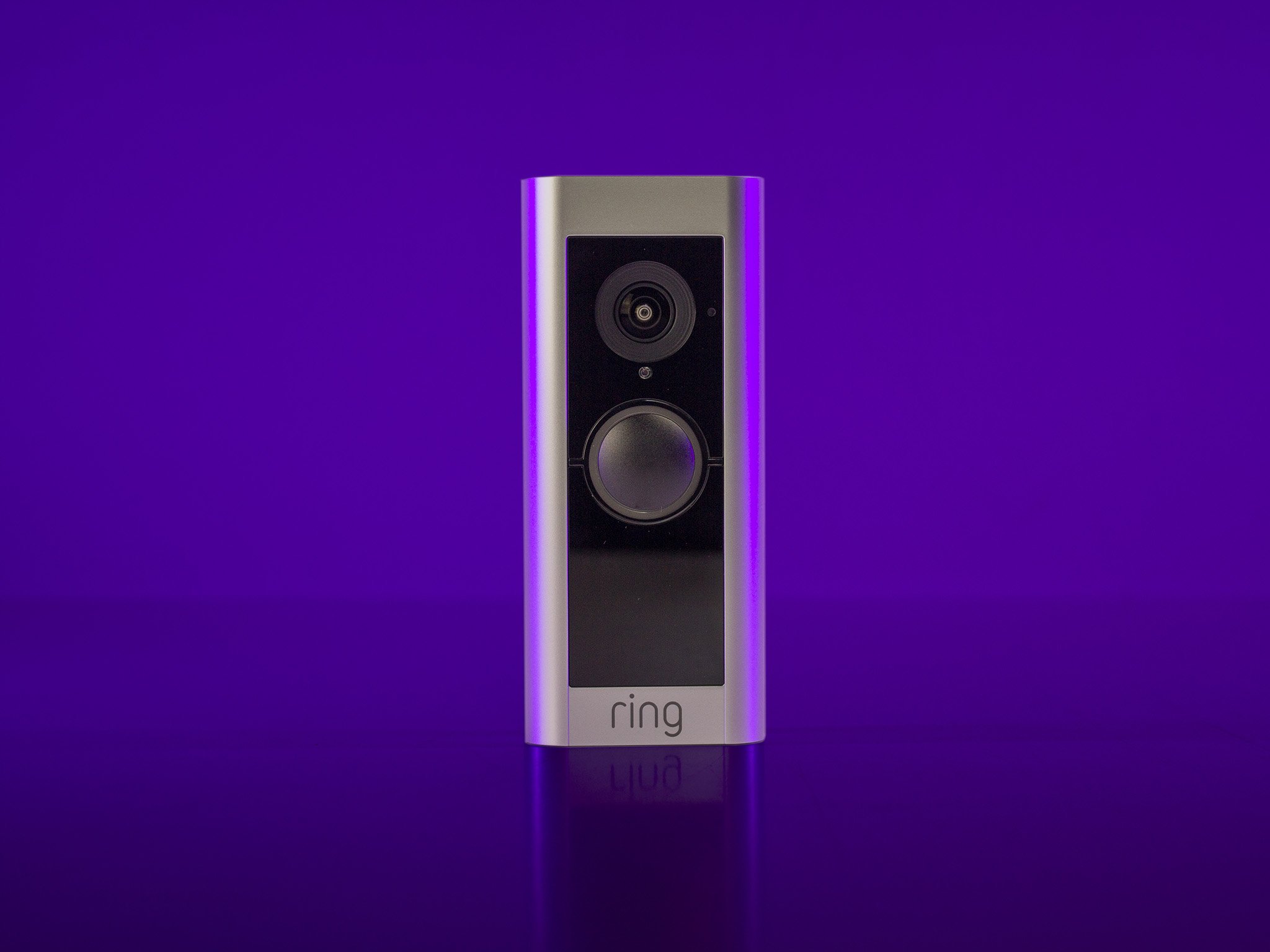
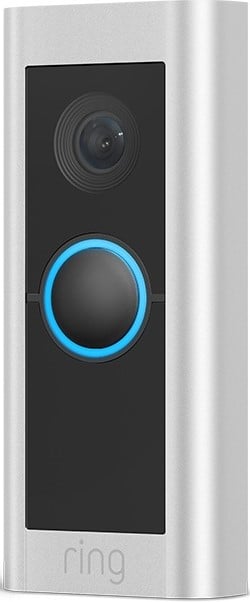
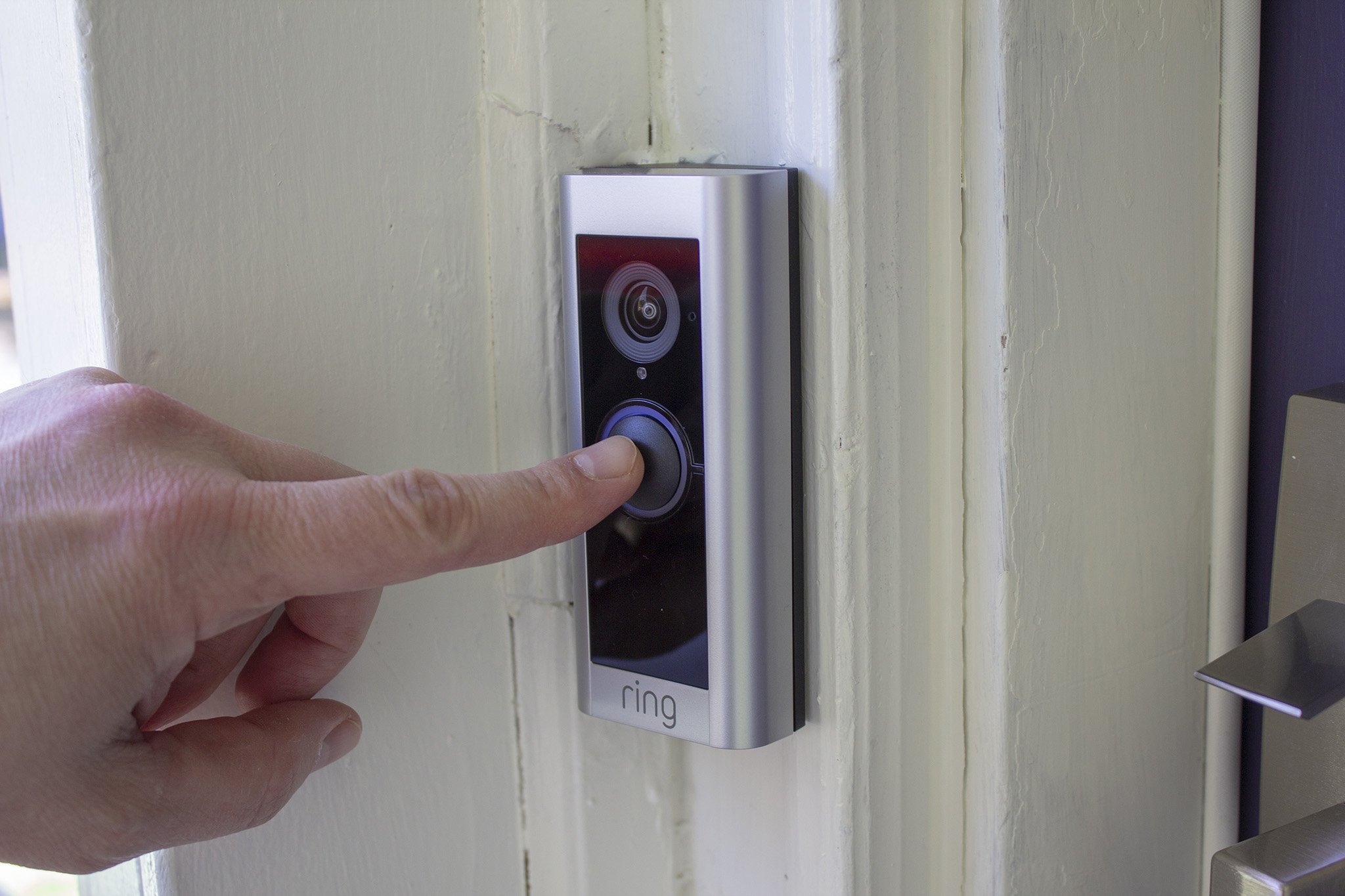
When people think of video doorbells, they probably think of Ring first. There's a good reason for that. Ring's name has become synonymous because of its pivotal contributions to the home security industry — including some of the best smart doorbells — and for the lessons in privacy we've learned from the company's missteps over the years. Ring Doorbell Pro 2 is the culmination of Ring's impressive motion detection technology research and introduces a brand new concept to video doorbells: 3D motion detection.
3D Motion detection enables the video doorbell to see motion and understand where that motion is happening in viewable space. Ring Doorbell Pro 2 is the debut Ring product with this feature, swapping out the passive infrared sensor that Ring has used for years with a brand new radar sensor. In conjunction with the brand new, higher-resolution camera, this new sensor creates the most accurate view of motion you'll get from any video doorbell on the market.
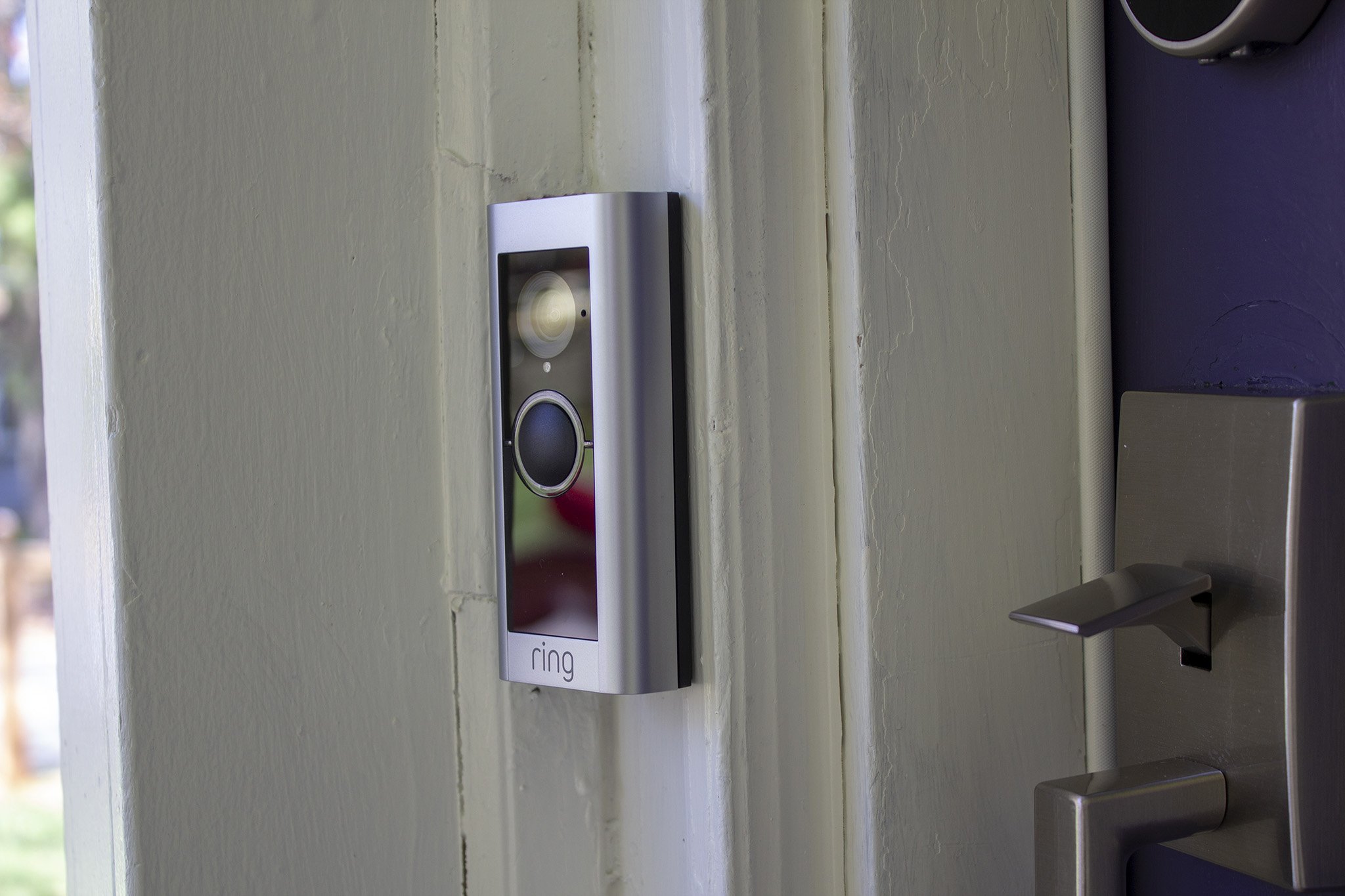
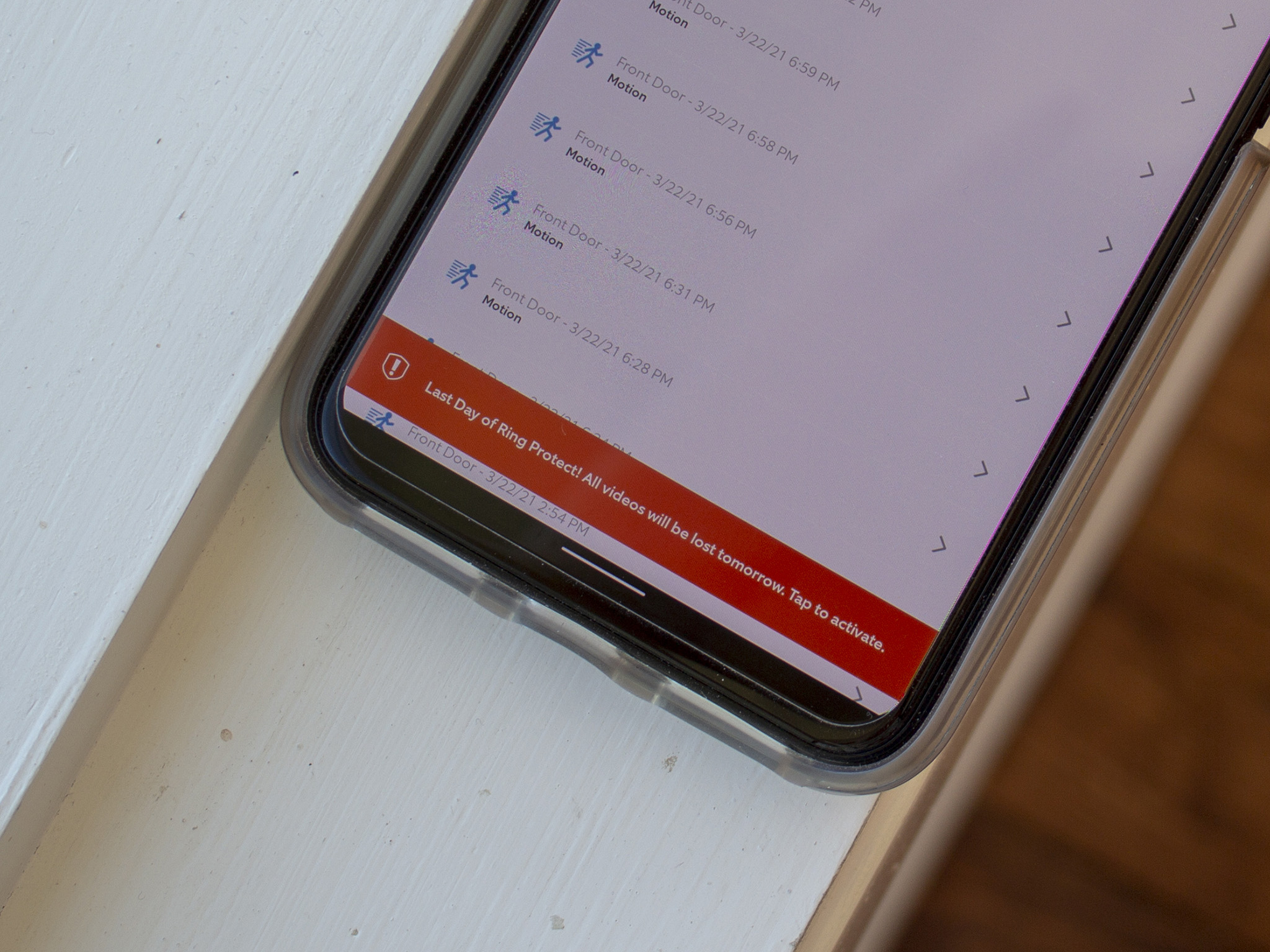
Despite many advanced sensors and features, Ring Doorbell Pro 2 remains one of the very smallest video doorbells on the market; in fact, it's roughly half the size of some of its competitors. You'll need hardwired power, so it'll probably cut out some renters from owning it. It's also definitely best when paired with a Ring Protect Plan as you'll get access to advanced motion zones options and be able to see 60 days of recorded history. That last part is particularly important with Ring Video Doorbell Pro 2 since it can record at all times.
Ring Video Doorbell Pro 2
Bottom line: Ring Video Doorbell Pro 2 flips the script on the trend of AI-powered object detection by using built-in radar sensors to tell you exactly where motion took place in your yard, complete with a birds-eye view of the situation. You'll need hardwired power for it, and a Ring Protect plan is required for video storage and most advanced features, but the diminutive size and integration with Alexa-based smart homes make this an absolute winner.
Ring Video Doorbell Pro 2 is available as of March 31, 2021, at the usual major retailers that stock Ring products. As an Amazon company, Ring always sells its products on its website and Amazon.com. Home Depot and Best Buy are typically the best retailers to find the product if you want to pick it up right now, and the $249.99 price is the same no matter where you buy it.
Ring also sells a $289.99 package with the Ring Video Doorbell Pro 2 and a Ring Chime Pro if your house is like mine and doesn't have a traditional doorbell chime in it, or if you just need to add another chime for other places in your home.
Ring Video Doorbell Pro 2 ships with a satin nickel faceplate but customers can claim one free additional faceplate color after purchasing the doorbell. A coupon is included in the app after you pair it with your Ring account and Ring offers several different color options.
Ring Video Doorbell Pro 2: You'll love what it sees
From the moment you unpack the impossibly small box that Ring Video Doorbell Pro 2 comes in to the time when you hang its tiny form-factor next to your door, you're going to love this video doorbell.
While the Ring Video Doorbell Pro 2 has plenty under the hood to differentiate itself from the first-generation model, the biggest change is how it sees the world. That change is both in the camera itself — which is both higher-resolution and uses a different aspect ratio — and the way it detects motion. Gone is the passive infrared sensor that detected heat and, in its place, is a new radar sensor that can actually detect movement up to 30ft away with near-pinpoint accuracy.
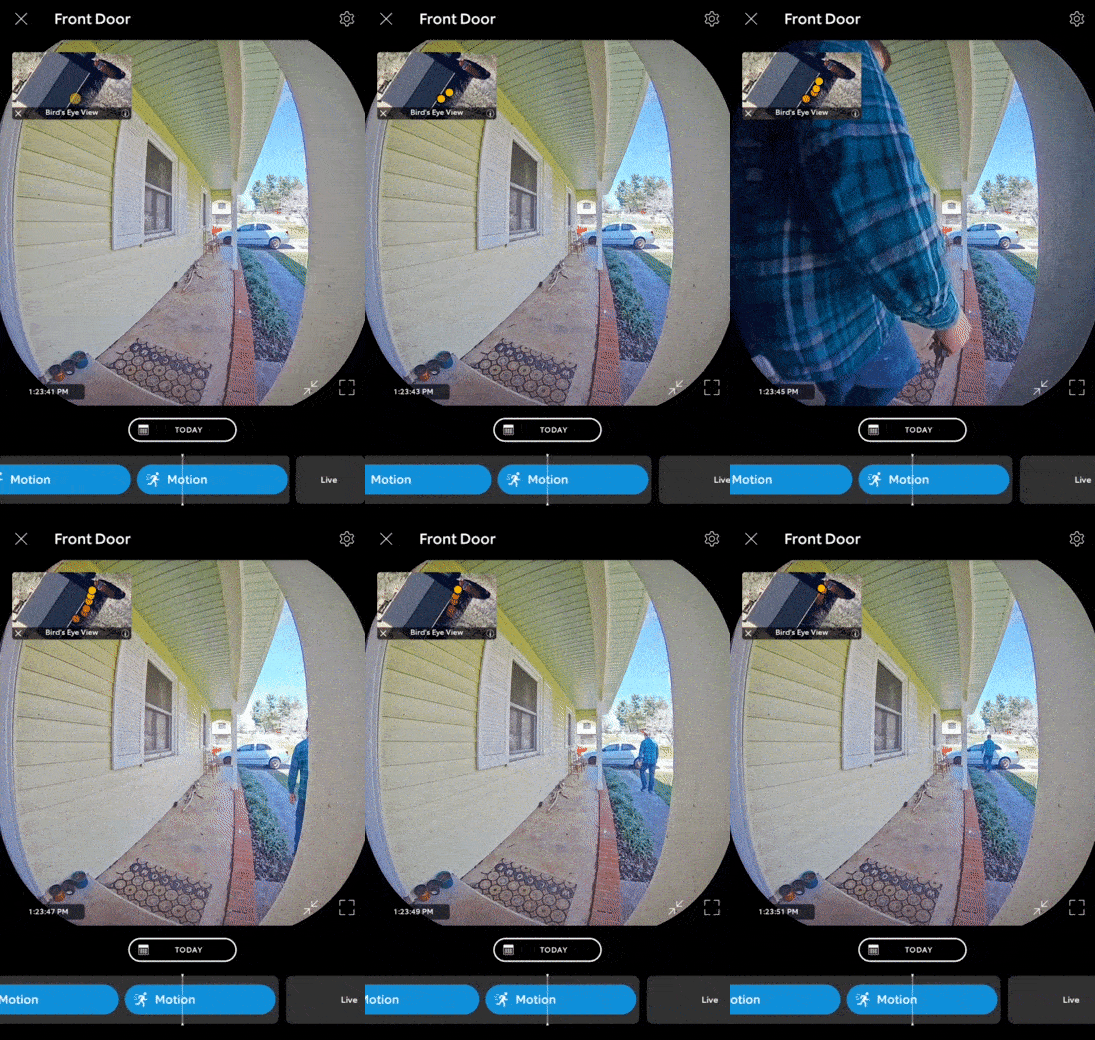
This kind of motion detection is particularly important if you live on a busy street — either foot or car traffic — or have a property with lots of trees or shrubbery that might block the otherwise perfect view your video doorbell has of your home's path of entry. When you set the Ring Video Doorbell Pro 2 up, you'll be presented with an overhead satellite view of your property, which is provided by MapBox. You'll place a pin at the approximate location of your front door, then rotate the view to line up with what your Ring Video Doorbell Pro 2 sees.
When a cat came strolling around the porch at 2 am, I knew exactly where it went, just in case it left me any presents to clean up later.
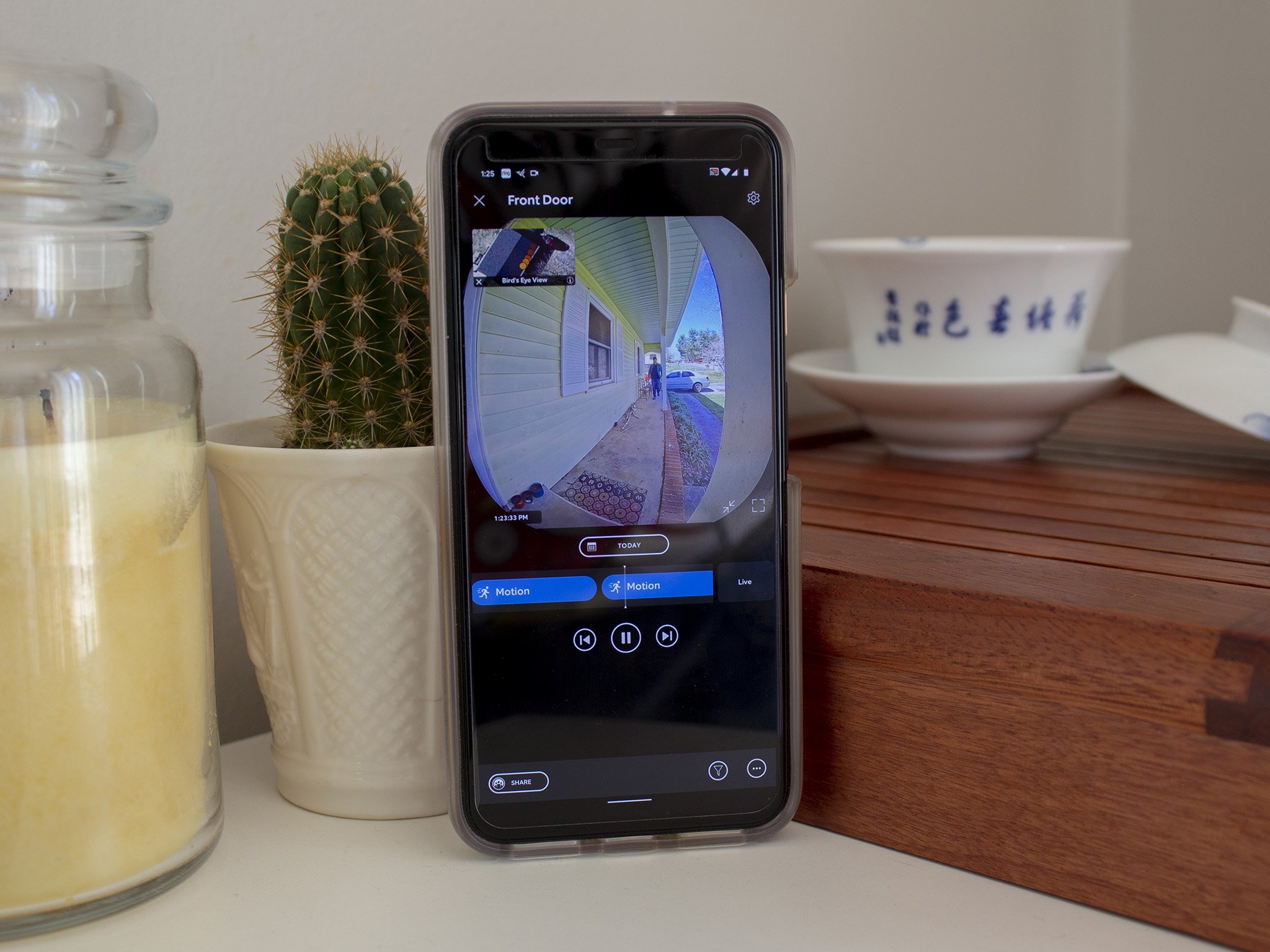
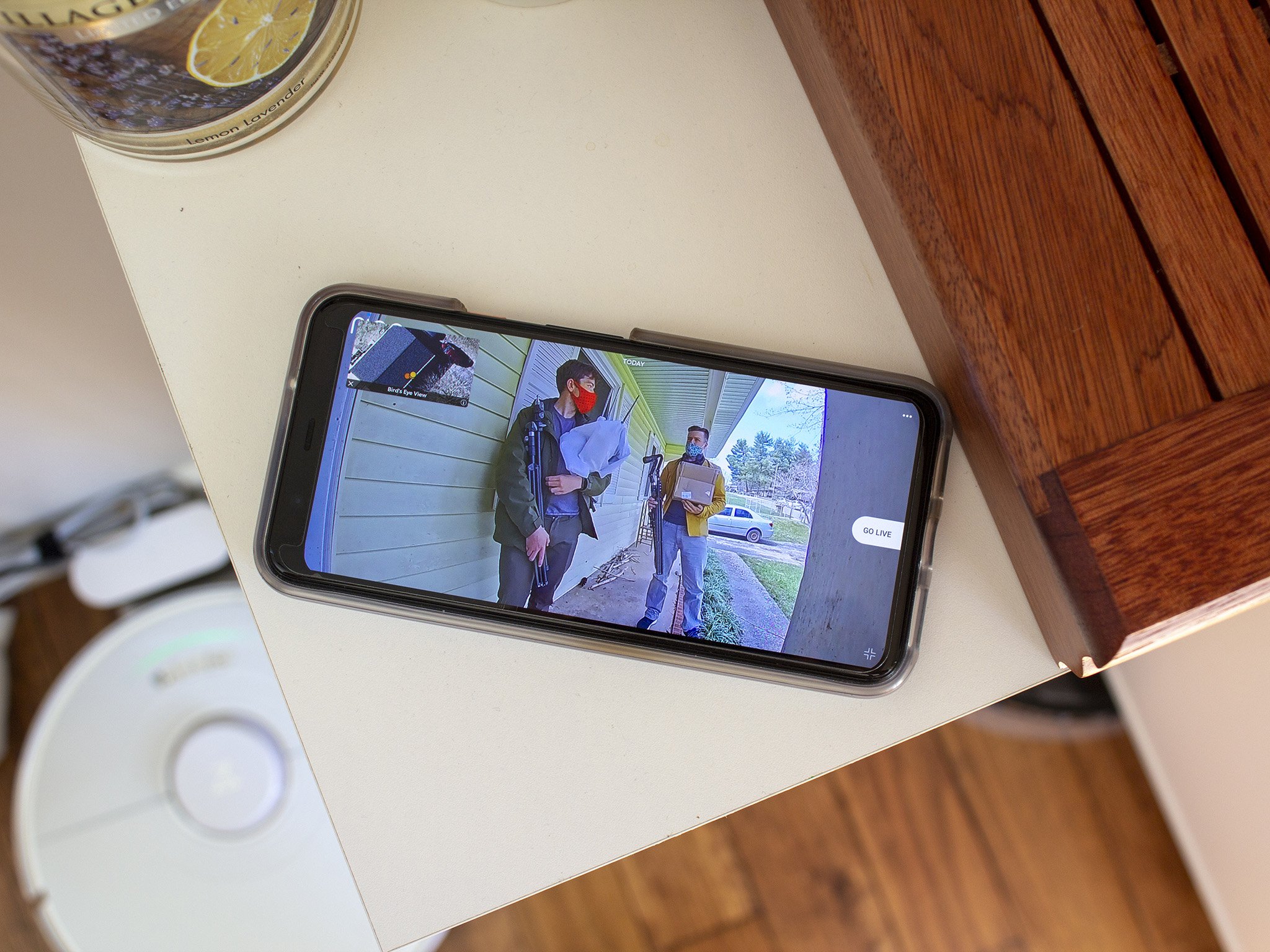
This calibration helps Ring understand where motion is located on said satellite image. You can configure movement alerts to take place anywhere in a 30ft radius of the doorbell, helping to avoid traffic or other visual noise that might cause false notifications. The motion detection from the radar — dubbed 3D motion detection by Ring — was stunningly accurate. That, complete with the birds-eye view that's created in a picture-in-picture-style over the live video gives you a glanceable view of which way movement originated and where it ended.
I loved seeing the motion history while scrubbing through the motion timeline on the Ring app, as it's perfectly laid out in a way that's easy to understand exactly where motion was detected. When a cat came strolling around the porch at 2 am, I knew exactly where it went, just in case it left me any presents to clean up later.
With a Ring Protect Plan, you'll have access to a brilliantly-designed timeline of all events that your Ring Video Doorbell Pro 2 recorded, as well as snapshots taken between each of these events. Snapshots can be taken on a configurable interval, helping you get some better context to motion events.
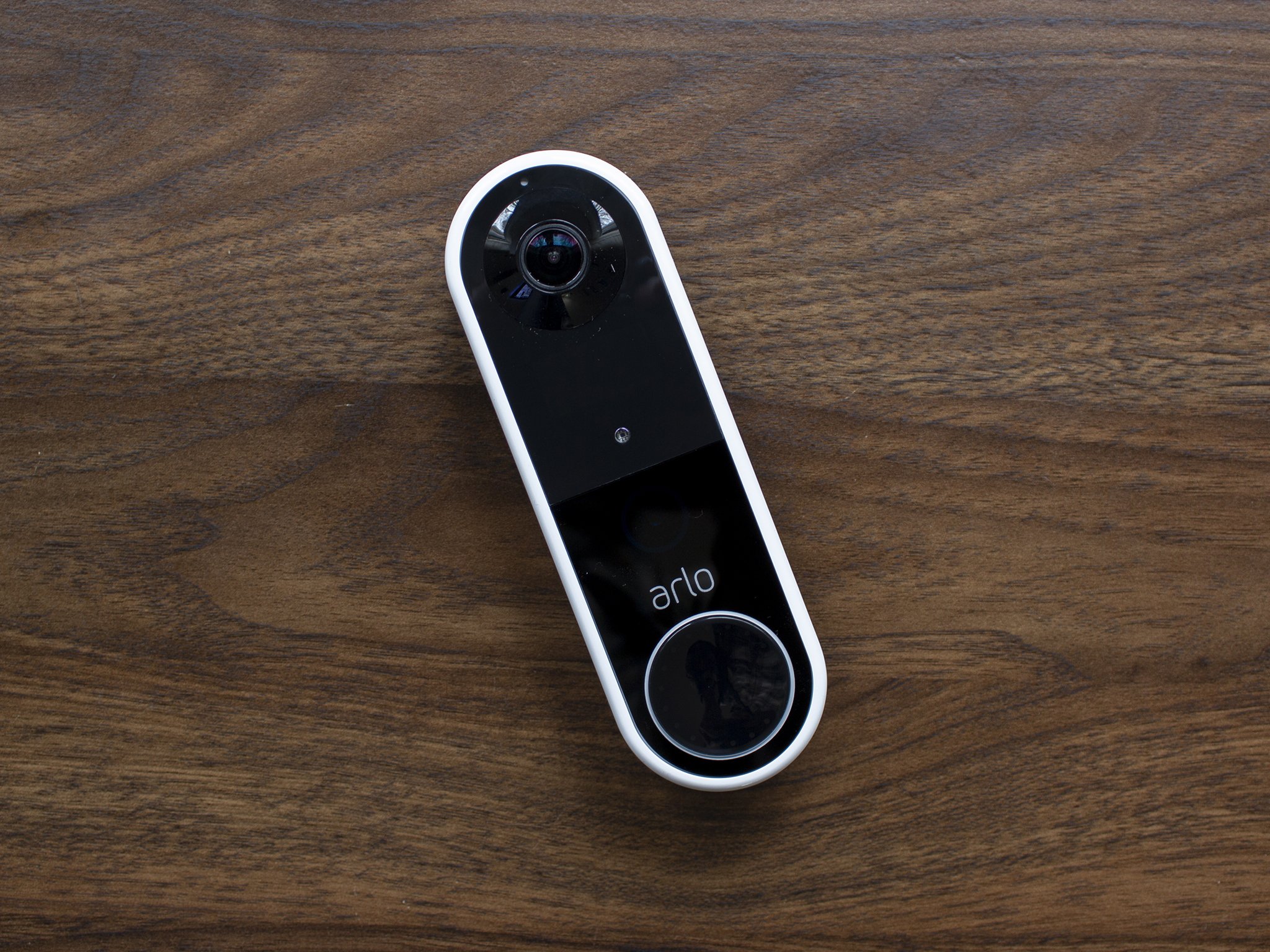
Video quality has been bumped up to 1536p which, just as the numbers suggest, is a 50% bump in resolution. That gives you better zoom detail than previous Ring efforts and, to make things even better, it's now displayed in a more helpful square aspect ratio that Ring calls "Head to Toe video." That makes it easier to see packages on the doorstep and, once again, get a better contextual view of what's going on in front of your home. Night vision, too, is stellar and even better on my porch than the Arlo Video Doorbell, with brighter shadows and fewer blown-out highlights from the infrared light shining off the white wall.
Alexa Greetings and Quick Replies are two new features in the Ring repertoire, and I couldn't love them any more if I tried. Some doorbells, like the Arlo Video Doorbell, give users the ability to select from a list of pre-canned responses, which, when selected, will be read to the person at your door via an automated voice. Ring Video Doorbell Pro 2 has the same kind of feature, called Quick Responses, but takes that concept a step further by connecting your visitors directly with Alexa.
This doorbell can answer itself, thanks to Alexa. That's something I never considered would even be possible.
That connection to Alexa allows your doorbell to answer itself. Unlike the radar-driven motion detection, this feature requires a Ring Protect subscription but may honestly be the most compelling reason that Ring has ever devised to subscribe. Once you enable the option, Alexa will answer any button presses, and visitors can chat with Alexa exactly as you might imagine.
Whether it's leaving a message for you to listen to later, get instructions for where to deliver packages or something else entirely, it's pretty comforting knowing that someone at the door isn't just standing there wondering if someone is home or not. The new microphone array makes it possible to actually understand what the person on the other end is saying, and video end-to-end encryption and 2-factor authentication support mean you won't have to worry about someone else intercepting your videos or messages.
Ring Video Doorbell Pro 2: It's hard to like subscriptions
While Ring Video Doorbell Pro 2 isn't useless without a subscription, it's going to deliver a severely limited set of functionality that would be better served by a cheaper doorbell. That is, of course, unless you really need that 3D motion detection. Ring, thankfully, kept this as part of the doorbell's basic functionality, as all live views — including both answering button presses and just manually viewing live video — will display the bird 's-eye view map complete with the detected motion path.
If you're not willing to pay $3 a month for a subscription, you should just buy a less expensive video doorbell.
There's no way to locally store video, though, so you'll be limited to live views only if you don't have a Ring Protect plan. These plans are only $3 per month for a single doorbell, though, so we're not talking about an exorbitant amount of money. To Ring's point (or, I assume, of course): if you have $250 to spend on a video doorbell, you can probably afford $3 a month for cloud storage and all of the features you're paying $250 for. Otherwise, you'd probably just buy something less expensive.
Taking subscriptions off the list of complaints, though, there are two things I'd love to see added in the future. First is package and animal detection. They're some of my favorite things about Arlo and Google's video doorbells and really do make a difference when knowing whether or not I should even bother looking at a motion notification. You can at least set your Ring Video Doorbell Pro 2 to people-only mode, keeping other types of movement out of your notifications, but I still prefer more granular options when I can get them.
Second, I'd love a way to run this thing on battery power. Many of Ring's other video doorbells have the option to run on a battery or be hardwired, and I'd love to be able to easily hook Ring Video Doorbell Pro 2 up to a battery and, at the least, have it run in a reduced-capacity if the power were to go out. I guess the lack of local storage and server-side processing would make it kind of useless, but I suppose those would have to be part of the package if this were an option.
Ring Video Doorbell Pro 2: Competition
Ring's products work best in an Alexa or Ring-powered smart home, but if your preference is a Google-powered smart home, you might want to pick Arlo Video Doorbells instead. Just as Ring's products integrate perfectly into the Amazon Alexa ecosystem, Arlo's works deeply with the Google ecosystem — and, actually, very well with Alexa, too. On top of this, the Arlo Video Doorbell comes in a wired and wire-free version and even offers more granular object-based motion detection like animals and packages. You'll still need an Arlo Smart subscription to get all the features, though, so that part isn't any better than what Ring offers.
If local storage is your thing, the best smart video doorbell that stores locally is, undoubtedly, the Eufy Video Doorbell. As is the case with basically all Eufy Security products, Eufy Video Doorbell keeps as many things local as possible. Instead of cloud-based AI processing, Eufy's onboard processors can differentiate between regular motion and a person. Similarly, all of your data can be stored locally for greater control of your data. Eufy also offers cloud storage plans if you like, but there are no features hidden behind a paywall which, to me, is a particularly excellent value that many people should consider.
If you're already entrenched in the Ring or Alexa ecosystems and just want to expand or upgrade your current video doorbell and want to save a few bucks, Ring Video Doorbell Wired is the company's smallest and least expensive video doorbell ever, retailing for only $60. It's still got people-only detection and cloud storage when you subscribe to a Ring Protect Plan, and it's even got the great always-on recording that'll give you a 6-second lead-up to motion events to understand the context better. If you don't need crazy advanced motion detection or the ability to answer itself, this is a fantastic choice.
Ring Video Doorbell Pro 2: Should you buy it?
You should buy this if ...
You want the most accurate motion detection of any video doorbell.
You're already running a Ring or Alexa-powered smart home.
You want a doorbell that can answer itself.
You shouldn't buy this if...
You're deeply invested in a Google-powered home.
You want to store videos locally.
You don't want to pay for a subscription to get all the features.
Ring Video Doorbell Pro 2 doesn't do much to change the fact that Ring's products don't play well with Google-powered smart homes but, realistically, there are a lot more Alexa-powered homes out there anyway. There's also no denying that paying for a monthly subscription (on top of all your other subscriptions these days) isn't fun, but at least it's darn cheap. If those things don't bother you, you're in for a real treat of a product, as Ring's expertise in the video doorbell realm shines through with a truly excellent product that detects motion like none other.
4out of 5
Ring Video Doorbell Pro 2 creates the most realistic view of what you'd see if you were the one standing at your own front door by not just providing a pretty moving picture but also giving you an understanding of the depth of the scene. Without this sense of depth, it would be almost as if someone were trying to paint a realistic picture without adding any shadows to the scene. Sure, the characters and scenery are all there, and the colors are great, but without that sense of depth, it's hard to understand what's truly going on.
The improvements made here are not just to the motion detection, though. That really would be short-selling the product. You'd be remiss for ignoring the optics improvements alone, which don't just deliver better zoom abilities or a proper view of your whole porch — thanks to the head-to-toe aspect ratio — but the ability to answer itself is truly a stunning feature. Having Alexa act as your personal butler feels nothing short of futuristic, and the ability to answer back with quick, contextual replies at the tap of a button (and without your own voice) is more than just handy; it feels like a necessity going forward for top-tier video doorbells.
Ring Video Doorbell Pro 2
Bottom line: If you've got an Alexa house or already have Ring devices, there's no better choice than Ring Video Doorbell Pro 2. Deep integration into the Amazon ecosystem and world-class 3D motion detection are hallmarks of this small but mighty crown of Ring's video doorbells.
The world of Teyvat will look even better when it lands on PS5.
What you need to know
Genshin Impact is a popular free-to-play fantasy RPG on PlayStation.
Developer miHoYo released a new trailer to announce it is coming to PS5 very soon.
The PS5 version of Genshin Impact will feature enhanced visuals, faster loading, and DualSense support.
It looks like Genshin Impact is finally launching on PS5 soon. Developer miHoYo released a new trailer to announced the PlayStation 5 version, and PlayStation's Twitter went on to confirm that the game will feature enhanced visuals, faster loading, and DualSense controller support. This makes it another title on the growing list of PS5 games that support DualSense haptic feedback and adaptive triggers.
Genshin Impact first released in September 2020 and became wildly successful shortly after. The free-to-play RPG is set in the fantasy world of Teyvat and features an art style pulled straight from anime. There are over 30 playable characters that people can collect through the game's gacha mechanics.
While miHoYo didn't reveal a release date for Genshin Impact on PS5, saying that it's coming soon would indicate that it should hit sometime later this year, maybe even before the summer. There's still a Nintendo Switch version in the works, though miHoYo hasn't said much about it at this time.
You can currently play Genshin Impact on PS5 through backward compatibility, but like most games, the dedicated PS5 version will improve resolution and performance. If you haven't been able to buy a PS5 yet, you'll want to keep an eye on restocks.
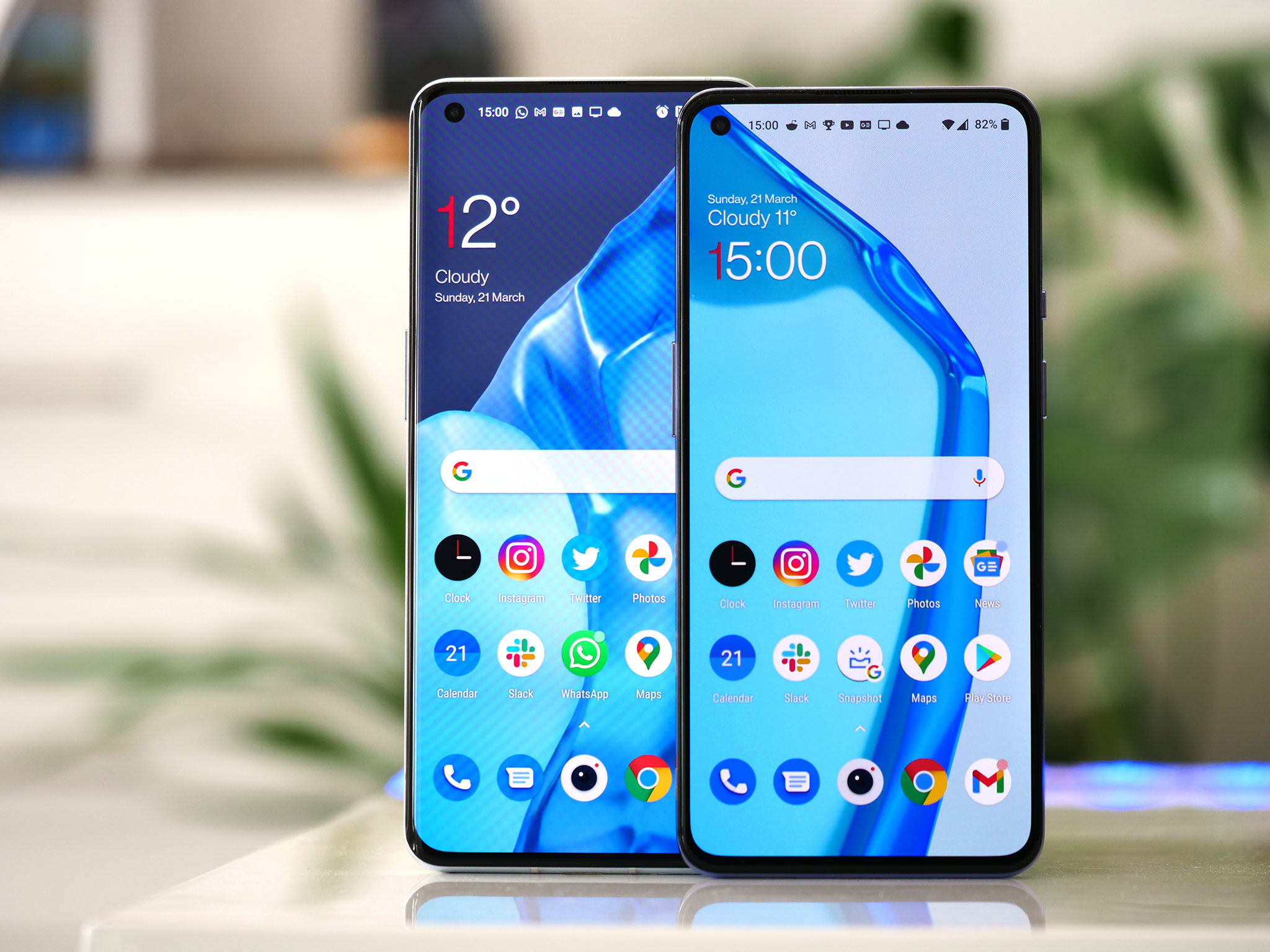
Ever since the Google Discover feed debuted, OnePlus fans have been begging to ditch the company's Shelf alternative in favor of the Android standard. Still, it wasn't until the OnePlus 8 series that this even became an option. With the OnePlus 9 series, users can access both the Google Discover feed and the OnePlus Shelf simultaneously, but not everyone wants that either. You see, the way you access the OnePlus shelf is via a pull-down gesture in the middle of your screen, but it's not immediately apparent that it is the way it's supposed to be. Some would prefer to just use that gesture as a way to reach the notification and settings shade better, and the good news is that now, you can set yours up to do just that. We'll show you how to disable OnePlus Shelf and enable notification gestures on your new OnePlus 9 or 9 Pro.
How to enable notification pane pull-down gesture on OnePlus 9/9 Pro
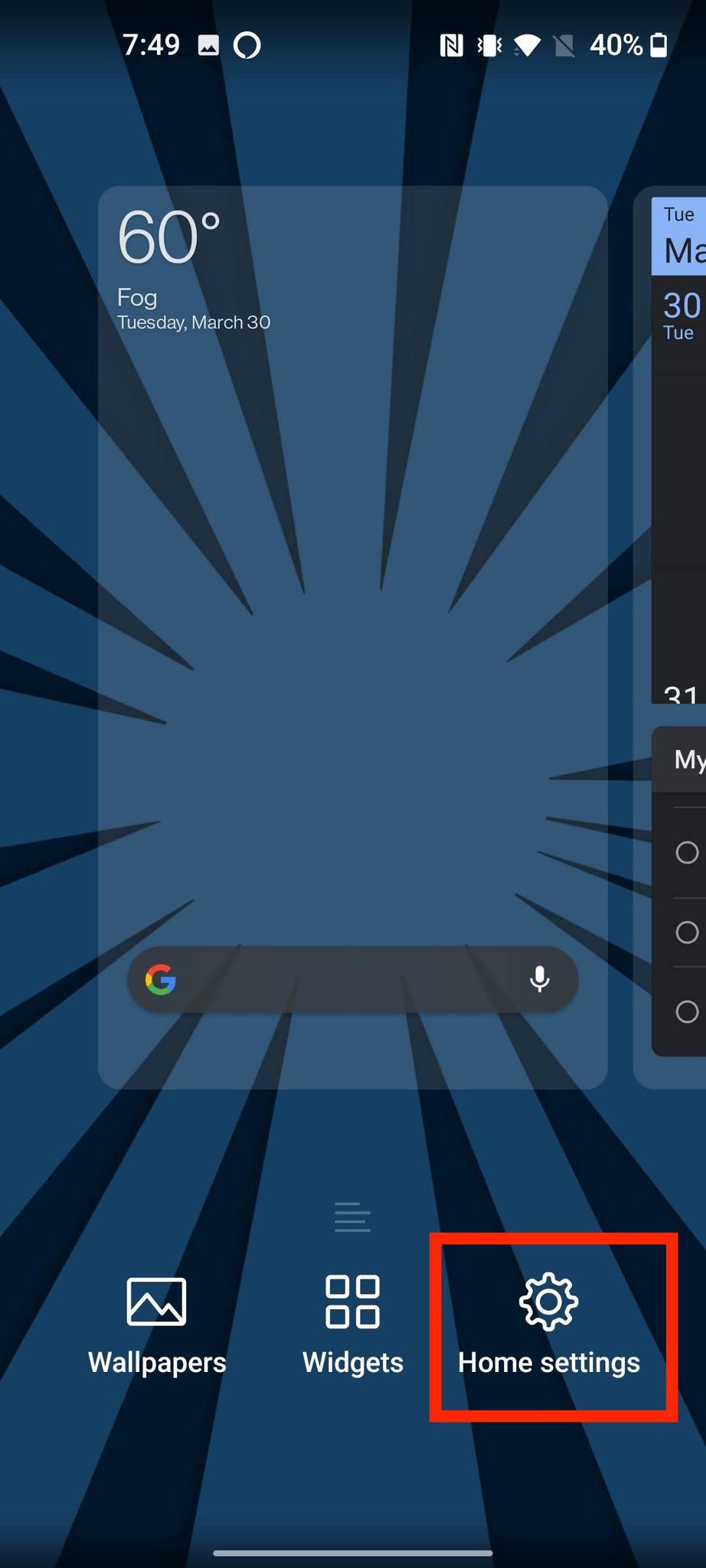
Press down firmly on your OnePlus 9 or 9 Pro's home screen.
Tap on Home settings.
Tap on Swipe down to access.
Toggle off the Enable switch to disable the gesture entirely.
Alternatively, you can leave the gesture enabled, but tap on the Notifications & Quick Settings radio button to change from the Shelf.
That's all there is to it! If you want to go back, you can just repeat the same steps as above, but tap on the Shelf radio button. Personally, I found it disorienting and distracting to invoke the OnePlus Shelf when holding the phone one-handed accidentally. Because it's such a large phone, I found the Notifications & Quick Settings gesture ideal for accessing the things that I needed from the top of the screen without using two hands or uncomfortably stretching my hand. It pretty much alleviates my needs for a one-handed or reachability mode, sense typically what I'm trying to get at from the top of the screen are my notifications and settings.
If you haven't yet decided between the OnePlus 9 and the 9 Pro, you really can't go wrong with either, though after spending a few weeks with the regular OnePlus 9, I can honestly say that it's one of the best value flagships of the year to date. Once your new device is in hand, be sure to check out these other tips and tricks to get it set up. For example, in step two of that guide, we show you how you can customize the OnePlus Shelf to display information relevant to you, like where you parked, your most frequently-used apps, or store loyalty cards.
Our top equipment picks
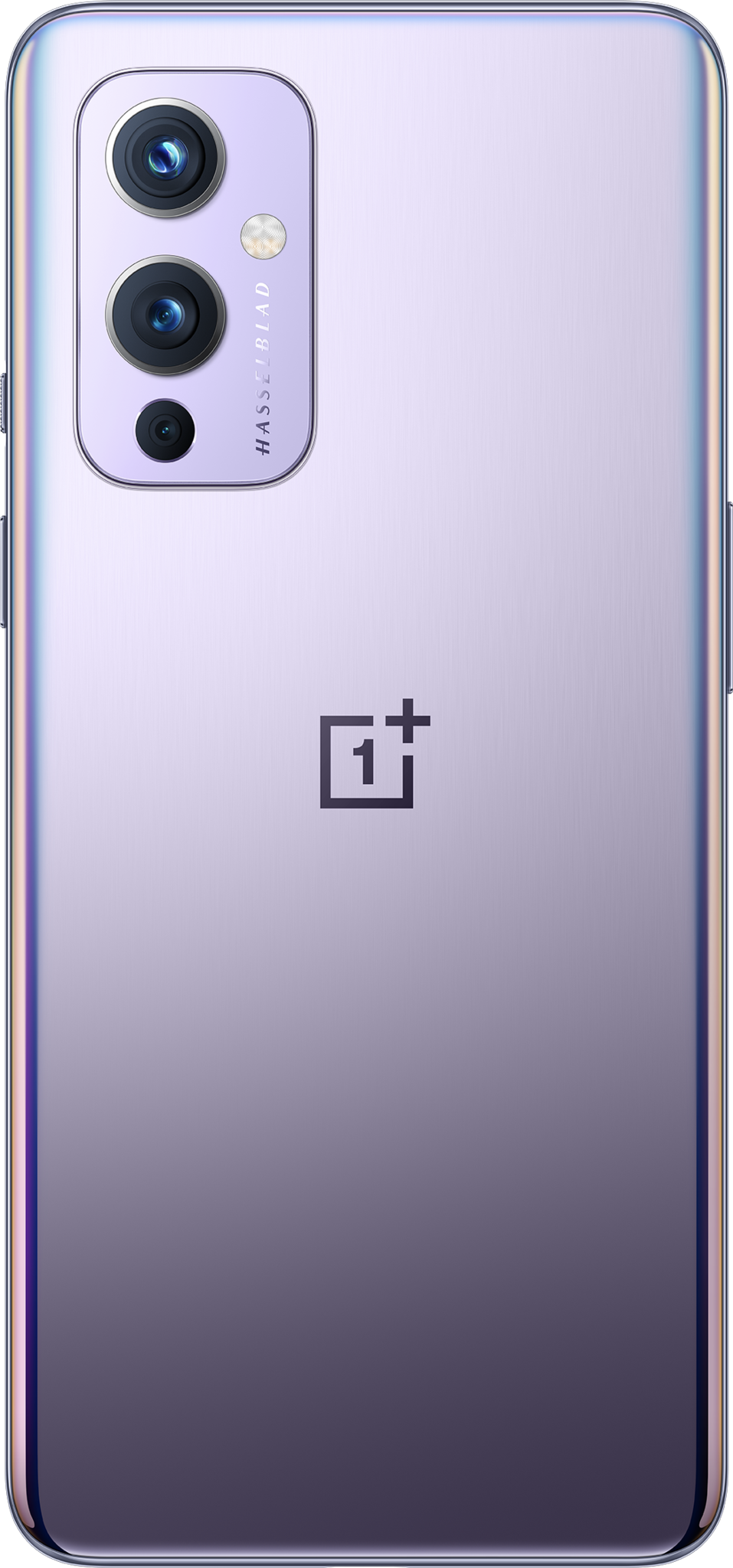
The OnePlus 9 and 9 Pro are two of 2021's best Android phones, and while the cameras and screen on the 9 Pro are amazing, the better choice for many just might be the regular 9.
2021 is expected to be an even more challenging year for the company than 2020.
What you need to know
Huawei has announced its financial results for 2020.
The company's revenue increased 3.8% YoY, while profits were up 3.2% YoY.
Huawei's consumer division managed to increase its revenue by 3.3% in 2020, but smartphone sales are starting to fall even in its home market.
As almost everyone is aware, 2020 was a tough year for Huawei. Despite all the challenges, however, its latest financial report reveals the company performed better than expected last year (via The Verge). The company posted 891.5 billion yuan ($136 billion) in revenue for 2020, an increase of 3.8% YoY. Similarly, net profit increased 3.2% YoY to 64.6 billion yuan ($9.86 billion).
Unsurprisingly, the annual report notes revenue from the Americas tumbled 24.5% last year. Even though its market share in the west fell significantly, sales in China jumped 59% YoY. In fact, nearly 66% of Huawei's total sales came from China.
Huawei's networking business performed well in China due to a rapid rollout of 5G services in the country. Apart from China, Huawei also saw strong growth in Europe, the Middle East, and Africa. The company says its revenue declined in the Americas due to "investment fluctuations in some countries' telecoms markets."
The company's consumer business unit posted a 3.3% increase in revenue in 2020, despite falling smartphone shipments. As revealed by a report from Counterpoint Research earlier this month, OPPO surpassed Huawei as the largest smartphone vendor in China in January. Counterpoint expects Huawei's market share in China to continue falling in 2021.
Thanks to the U.S. sanctions against it, Huawei is struggling to secure components that it needs to manufacture its best Android phones. The company has now shifted its focus towards the premium segment in a bid to boost profitability. It also plans to demand royalties from Samsung and Apple for its 5G patents to bring in additional revenue.
from Android Central - Android Forums, News, Reviews, Help and Android Wallpapers https://ift.tt/3fvFkyi
via IFTTT